CFTC Prediction Markets: Stunning Reversal as Agency Withdraws Biden-Era Ban Proposal
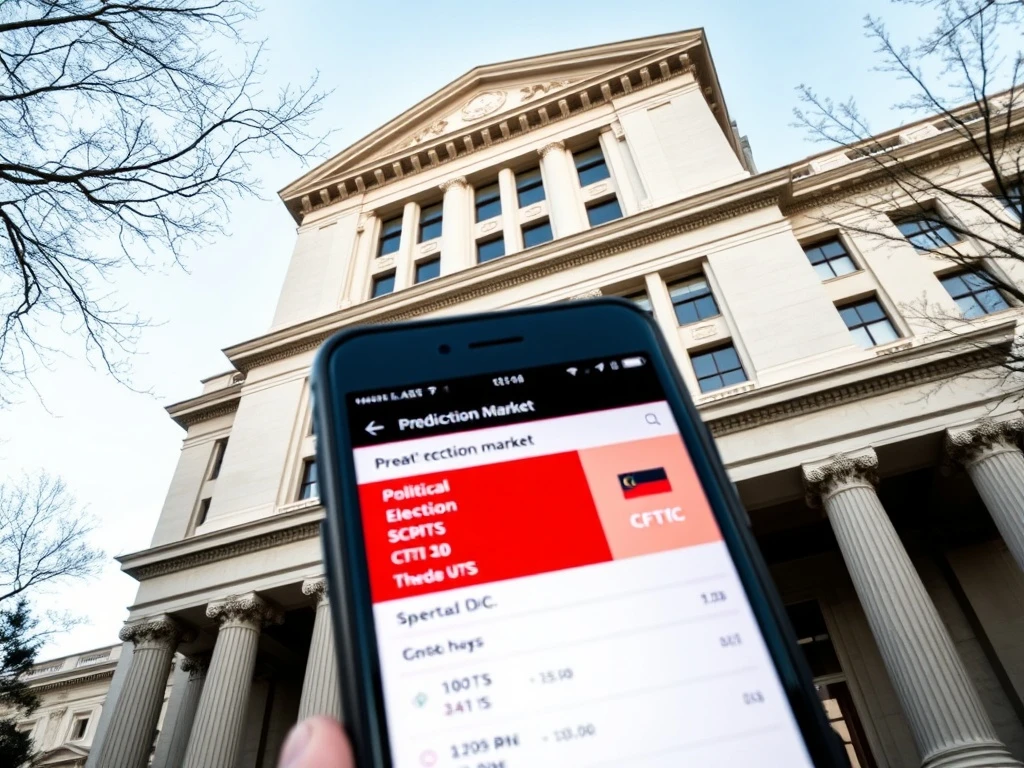
In a stunning regulatory reversal with profound implications for the cryptocurrency and fintech sectors, the U.S. Commodity Futures Trading Commission (CFTC) has formally withdrawn a contentious Biden administration-era proposal that sought to outlaw popular sports and political prediction markets. This decisive move, announced by newly confirmed CFTC Chair Mike Selig on Wednesday, October 15, 2025, marks a pivotal shift away from what the agency now characterizes as an overreach into “merit regulation” and signals a new era of potential growth for platforms like Polymarket and Kalshi. The withdrawal immediately alleviates a significant cloud of uncertainty that has loomed over the rapidly evolving event contracts industry for over a year.
CFTC Prediction Markets Proposal Officially Scrapped
The now-defunct proposal originated in 2024 as a Notice of Proposed Rulemaking (NPRM) from the CFTC under its previous leadership. Consequently, it aimed to ban event contracts—financial derivatives that allow users to speculate on the outcome of real-world events—if they were based on gaming, sports, politics, or war. Regulators at the time argued these contracts were “contrary to the public interest.” However, Chair Selig has now publicly repudiated that approach. He described the 2024 effort as a “frolic into merit regulation,” particularly criticizing its timing ahead of the 2024 presidential election. Selig emphasized that the CFTC’s mandate under the Commodity Exchange Act is to ensure market integrity and prevent fraud, not to judge the societal merit of specific contract types based on their underlying subject.
This regulatory pivot is not occurring in a vacuum. Instead, it follows a period of intense legal and commercial activity. Platforms offering these prediction markets have seen user bases and trading volumes surge. Major cryptocurrency exchanges, including Coinbase and Crypto.com, have launched their own offerings. Simultaneously, these companies have faced aggressive legal challenges from multiple state attorneys general. States like New York and Texas have filed suits alleging these platforms constitute unlicensed gambling operations. The companies have consistently countered that, as CFTC-regulated entities offering derivatives contracts, they fall under exclusive federal jurisdiction, a legal gray area now central to the debate.
The Legal and Commercial Battle Over Event Contracts
The CFTC’s withdrawal of the ban proposal represents a major victory for prediction market operators, but the broader regulatory war is far from over. The core tension lies in the classification of these products. Are they innovative financial instruments for hedging and price discovery, or are they simply online gambling dressed in fintech clothing? This question has sparked a complex jurisdictional conflict. The following table outlines the key arguments from both sides of this ongoing dispute:
| Perspective | Core Argument | Key Example |
|---|---|---|
| Prediction Market Platforms (e.g., Polymarket, Kalshi) | Offer regulated derivatives for “event exposure,” providing a public utility in the form of aggregated crowd wisdom on event probabilities. They argue this is distinct from gambling, which is based on chance. | Markets on election outcomes or Federal Reserve rate decisions are used by institutions and individuals to manage risk or gain insight. |
| State Regulators & Opponents | Contracts on sports, elections, or entertainment awards are based on recreational events with no underlying economic purpose, making them akin to betting, which is illegal under state law in many jurisdictions. | A bet on which team wins the Super Bowl or which actor wins an Oscar is purely for entertainment, not financial hedging. |
| The CFTC’s New Stance (Under Selig) | The agency’s role is to police fraud and manipulation within these markets, not to ban entire asset classes. A new, principles-based rulemaking is promised to provide clear guidelines. | Withdrawing the blanket ban to foster “responsible innovation” while preparing a new framework grounded in the Commodity Exchange Act. |
Furthermore, Chair Selig announced the concurrent withdrawal of a September staff advisory letter. This letter had warned CFTC-regulated entities about potential litigation risks from states regarding sports event contracts. Selig stated that while intended to highlight litigation considerations, the letter had “inadvertently created confusion and uncertainty for our market participants.” This one-two action—killing the proposed ban and retracting the litigation warning—sends a powerful, coordinated message of regulatory recalibration. The agency is clearly seeking to reduce immediate friction while it develops a more durable, legally sound framework.
Expert Analysis on the Regulatory Implications
Financial regulation experts view this move as highly significant. “This is a classic example of a regulatory reset following an administration change,” notes Dr. Alisha Vance, a professor of financial law at Georgetown University. “The previous CFTC leadership viewed these markets through a prism of potential harm and election interference. The new leadership appears to view them through a prism of technological innovation and market completeness. The critical test will be the substance of the new rulemaking Chair Selig has promised.”
The impact is already tangible. Prediction market platforms, which had been operating under a constant threat of a federal ban, can now plan with greater certainty. Their legal strategy will likely intensify, focusing their defense against state actions on the argument of federal preemption—the principle that federal regulation (by the CFTC) overrides conflicting state law. However, challenges remain immense. The specter of state-level enforcement continues, and the promised new CFTC rulemaking could still impose significant compliance burdens, such as:
- Enhanced Disclosure Requirements: Mandating clear explanations of contract mechanics and risks.
- Strict Position Limits: Capping the size of bets to prevent market manipulation or excessive influence on real-world events.
- Robust Anti-Fraud Surveillance: Requiring sophisticated monitoring for insider trading or misinformation campaigns.
- Clearer Contract Design Standards: Defining what constitutes a sufficiently unambiguous event for settlement.
A Timeline of Prediction Market Regulation and Future Pathways
To understand the full context of this withdrawal, it is essential to consider the recent timeline of events. The path has been marked by rapid technological adoption, regulatory skepticism, and now, a potential inflection point.
- 2022-2023: Platforms like Polymarket, built on blockchain technology, and Kalshi, a traditional fintech platform, gain mainstream traction. Trading volumes on political events and sports championships grow exponentially.
- Early 2024: The CFTC, under then-acting leadership, publishes the NPRM proposing a ban on event contracts for sports, politics, gambling, and war. The comment period draws thousands of responses, heavily divided between industry support and public interest group opposition.
- Mid-2024: State attorneys general in New York, Texas, and Illinois initiate lawsuits against prediction market platforms, alleging illegal gambling. The companies file motions to dismiss, citing CFTC oversight.
- September 2024: CFTC staff issue an advisory letter warning regulated entities of state litigation risks related to sports contracts, creating market anxiety.
- July 2025: Mike Selig is confirmed by the Senate as the new CFTC Chair, signaling a potential policy review.
- October 15, 2025: Chair Selig announces the withdrawal of both the 2024 ban proposal and the September staff letter, pledging a new, innovation-friendly rulemaking process.
Looking ahead, the industry’s future hinges on the CFTC’s next steps. A well-crafted rule could legitimize prediction markets as a niche but valuable part of the derivatives landscape, providing unique data on event probabilities. Conversely, a protracted rulemaking process or a framework that is too restrictive could stifle innovation and leave platforms vulnerable to continued state attacks. The coming months will be crucial for stakeholders to engage with the CFTC to shape rules that protect consumers without extinguishing a novel financial technology.
Conclusion
The CFTC’s decision to withdraw the Biden-era proposal to ban sports and political prediction markets is a landmark event in the convergence of finance, technology, and regulation. This move rejects a philosophy of prohibitive merit-based regulation in favor of a more nuanced approach focused on market integrity within the CFTC prediction markets sphere. While state-level legal battles persist, the federal regulatory threat has dramatically receded, offering a reprieve and a clearer runway for platforms like Polymarket and Kalshi. Ultimately, the true measure of this policy shift will be the CFTC’s ability to deliver a coherent, legally resilient framework that balances innovation with investor protection, finally providing the clarity this disruptive industry has sought for years.
FAQs
Q1: What exactly did the CFTC withdraw?
The CFTC withdrew two items: a 2024 Notice of Proposed Rulemaking that sought to ban event contracts based on sports, politics, gambling, and war, and a September 2024 staff advisory letter that warned regulated entities of litigation risks from states regarding sports contracts.
Q2: Does this mean prediction markets are now fully legal?
No. This withdrawal removes an active proposal for a federal ban, but it does not automatically grant legal status. Prediction markets still operate in a contested legal space, facing lawsuits from several states alleging they are unlicensed gambling. The CFTC has promised a new rulemaking to provide clearer federal guidelines.
Q3: What are examples of event contracts traded on these platforms?
Common contracts include predictions on presidential election winners, outcomes of major sports games like the Super Bowl, whether specific legislation will pass, and even entertainment awards like the Oscars. They allow users to buy “shares” in a yes or no outcome.
Q4: Why do proponents argue these are not gambling?
Proponents contend that unlike gambling, which is based on chance, prediction markets involve skill in analyzing information about real-world events. They also serve a broader economic purpose by aggregating dispersed information into a publicly visible price (probability), which can be useful for decision-making.
Q5: What is the significance of CFTC Chair Mike Selig’s “merit regulation” comment?
“Merit regulation” refers to regulators judging the inherent worth or social value of an investment. Selig’s criticism implies the previous proposal overstepped by trying to ban contracts deemed socially harmful rather than focusing on the CFTC’s core mission: preventing fraud, manipulation, and ensuring transparent, fair markets.