Bitcoin DeFi Breakthrough: Fireblocks’ Strategic Stacks Integration Unlocks Massive Institutional Potential
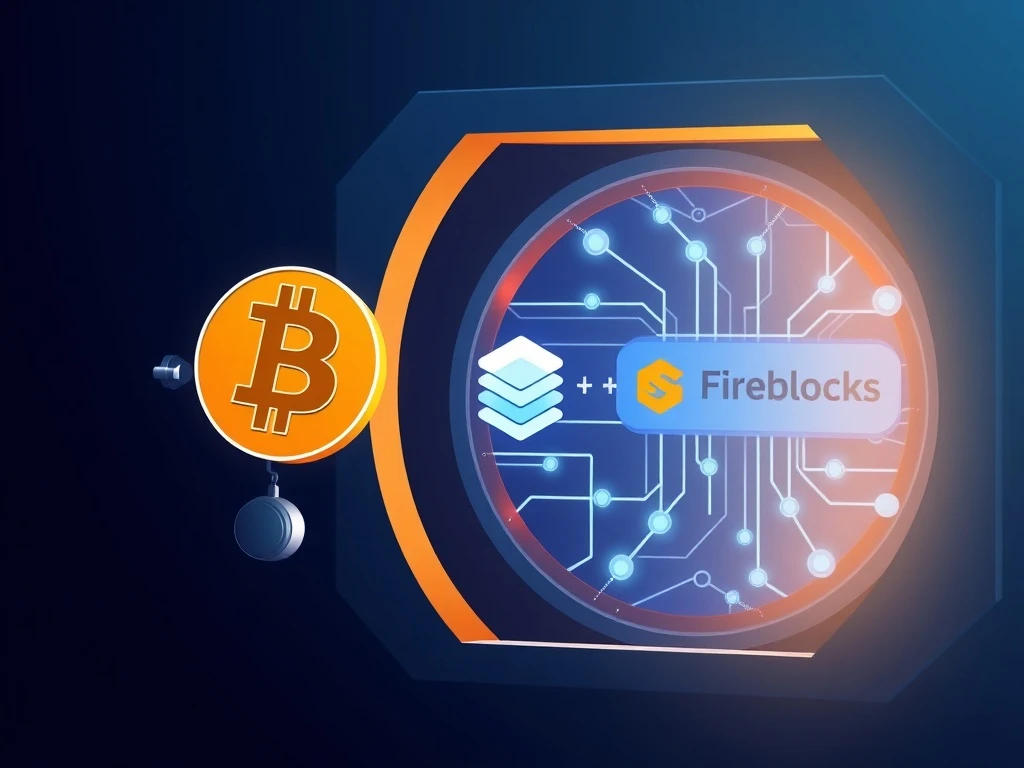
In a landmark move poised to reshape the financial landscape, institutional crypto custodian Fireblocks has announced a pivotal integration with the Stacks blockchain, directly addressing the most significant technical hurdle preventing major financial institutions from embracing Bitcoin-based decentralized finance. This strategic partnership, announced on Wednesday, November 26, 2025, targets an early 2026 launch and represents a calculated bet on the future of on-chain finance built atop the world’s most secure and recognized blockchain network.
Solving the Core Bitcoin DeFi Dilemma: The 10-Minute Barrier
For years, the Bitcoin network’s foundational security model has presented a unique challenge for decentralized applications. Specifically, its average 10-minute block time creates latency incompatible with the real-time demands of modern financial services like lending, borrowing, and trading. Consequently, this technical characteristic has served as a primary objection for regulated institutions considering Bitcoin DeFi. The Fireblocks and Stacks integration directly dismantles this barrier. By leveraging the Stacks layer, which finalizes transactions with an average block time of 29 seconds, the partnership creates a seamless user experience. Importantly, all transaction finality still settles securely to the immutable Bitcoin ledger, preserving the base layer’s unparalleled security guarantees.
Institutional Infrastructure Meets Bitcoin’s Security
Fireblocks provides the critical gateway. As a leading enterprise platform securing digital assets for over 1,800 financial institutions, its infrastructure is battle-tested for compliance, security, and operational scale. The integration will allow these clients to natively access yield-bearing opportunities and lending protocols built on Stacks. This move signals a maturation phase for Bitcoin DeFi, shifting from retail experimentation to institutional-grade product offerings. The timing is particularly notable, occurring amidst a broader market downturn where Bitcoin’s price has retreated approximately 40% from its October 2025 all-time high above $125,000. This suggests a long-term, fundamentals-driven strategy rather than a reaction to short-term market cycles.
The Data Behind the Institutional Thesis
The institutional interest is backed by compelling on-chain metrics. According to data from DeFiLlama, the Total Value Locked (TVL) in Bitcoin-based DeFi applications stands at approximately $5.5 billion at publication. This figure represents a monumental growth trajectory from roughly $704 million in October 2024, which peaked at over $9 billion in October 2025 before moderating. For context, the total TVL across the entire multi-chain crypto ecosystem is about $103 billion, indicating Bitcoin DeFi still holds substantial room for expansion. Analysts like Matt Hougan, Chief Investment Officer at Bitwise, have publicly forecasted the Bitcoin DeFi market growing to a $200 billion ecosystem, a vision this integration actively enables.
Technical Architecture and Market Impact
The technical synergy is clear. Stacks operates as a separate blockchain but uses the Bitcoin blockchain as its secure base layer through a consensus mechanism called Proof of Transfer (PoX). This design allows Stacks to inherit Bitcoin’s security while enabling fast, programmable transactions for smart contracts and DeFi applications. The integration with Fireblocks’ network means institutional capital can flow into this ecosystem using familiar, compliant rails. Potential immediate use cases include:
- Institutional Lending & Borrowing: Using Bitcoin as collateral for dollar-denominated loans on-chain.
- Yield Generation: Accessing decentralized protocols to earn returns on idle BTC holdings.
- Structured Products: Building complex financial derivatives secured by Bitcoin’s blockchain.
This development also intensifies the narrative around Bitcoin’s evolution from a ‘digital gold’ store of value to a productive, yield-generating financial asset.
A Note on Decentralization and Layer 2 Growth
The rapid growth of second layers like Stacks, Rootstock, and the Lightning Network does not come without philosophical debate. Some experts, like Markus Bopp, CEO of Trac Systems, caution that the proliferation of layers built atop Bitcoin could potentially introduce centralization pressures or complexity that challenges the base layer’s minimalist and decentralized ethos. However, proponents argue that these layers are essential for Bitcoin’s scalability and utility, allowing it to compete with newer smart contract platforms without compromising its core settlement layer’s integrity and security.
Comparative Landscape and Future Trajectory
The Fireblocks-Stacks partnership is part of a broader institutional push into Bitcoin’s expanding utility layer. For example, Latin America’s largest exchange, Mercado Bitcoin, recently announced a $20 million private credit initiative on the Rootstock sidechain. The table below contrasts key approaches to Bitcoin DeFi:
| Platform | Approach | Key Feature | Primary Use Case |
|---|---|---|---|
| Stacks (via Fireblocks) | Layer 1 Blockchain (PoX) | Smart Contracts, ~29s Blocks | Full DeFi Suite for Institutions |
| Lightning Network | Payment Channel Network | Instant, High-Volume Payments | Micropayments & Transactions |
| Rootstock (RSK) | Sidechain (Merged Mining) | EVM Compatibility | DeFi & Smart Contracts |
| Liquid Network | Federated Sidechain | Confidential Transactions | Exchange & Trading Settlement |
This diversification indicates a healthy, competitive ecosystem developing around Bitcoin, each layer optimizing for different trade-offs between speed, security, functionality, and decentralization.
Conclusion
The Fireblocks and Stacks integration marks a definitive inflection point for Bitcoin DeFi. By providing a secure, institutional-grade bridge that solves the practical problem of Bitcoin’s block time, the partnership unlocks a vast reservoir of traditional capital waiting to engage with decentralized finance on the most robust blockchain. While the full rollout is slated for early 2026, the announcement itself is a powerful signal of confidence in Bitcoin’s multi-layered future. It validates the growing thesis that Bitcoin will evolve beyond a passive asset into the foundational settlement layer for a new, open, and globally accessible financial system. The journey towards a $200 billion Bitcoin DeFi market now has a critical piece of infrastructure firmly in place.
FAQs
Q1: What problem does the Fireblocks and Stacks integration solve?
A1: It directly addresses the 10-minute average block time of the Bitcoin network, which is too slow for real-time DeFi applications. Stacks provides a ~29-second block time while settling finality on Bitcoin, removing a major technical barrier for institutional adoption.
Q2: When will this integration go live for users?
A2: Fireblocks has announced the integration will go live in “early” 2026. The company has not provided a more precise public timeline for the full rollout to its institutional client base.
Q3: How does Stacks maintain security while being faster than Bitcoin?
A3: Stacks uses a consensus mechanism called Proof of Transfer (PoX). It runs as its own blockchain but uses Bitcoin transactions to secure its own blocks, effectively inheriting Bitcoin’s security. All Stacks transactions ultimately settle and are recorded on the Bitcoin ledger.
Q4: Why is this significant during a market downturn?
A4: The announcement amidst a price decline highlights a focus on long-term infrastructure building rather than short-term speculation. It indicates that institutions are planning for the next cycle and believe in the fundamental utility of Bitcoin beyond its price as an asset.
Q5: What are the risks associated with Bitcoin layer 2 solutions like Stacks?
A5: Primary concerns among some experts include potential centralization pressures at the layer 2 level, increased systemic complexity, and the security model differing from Bitcoin’s base layer proof-of-work. Each layer 2 makes distinct trade-offs between speed, decentralization, and security.