Coinbase Predict: The Revolutionary Platform Transforming Event-Based Trading Across America
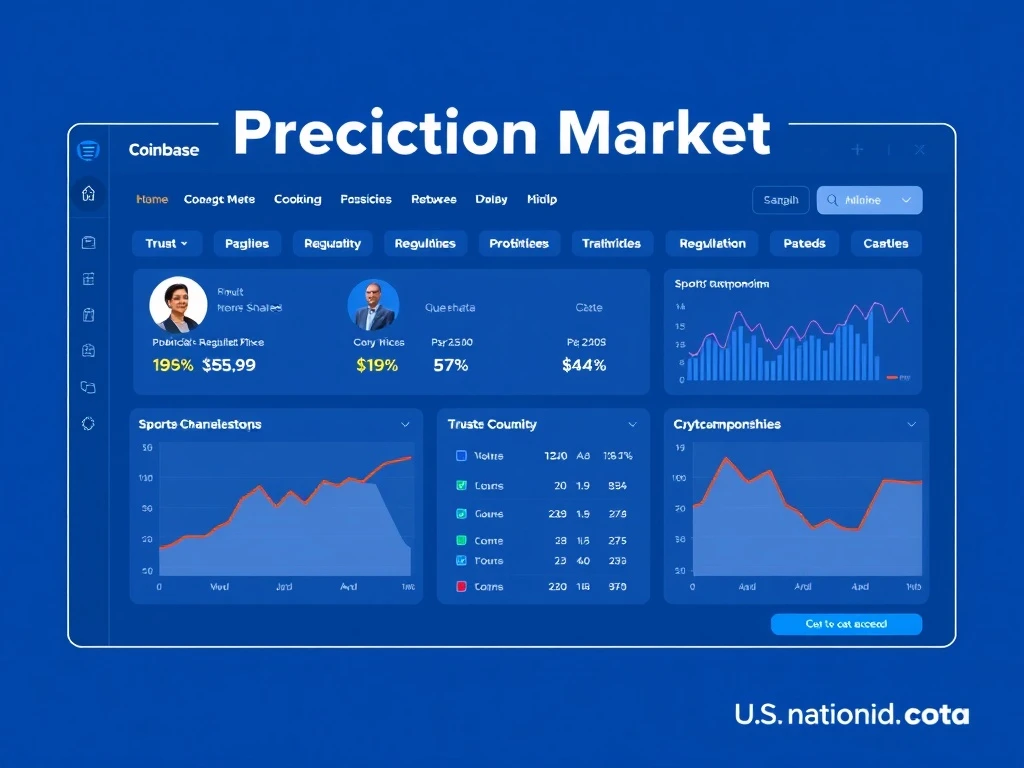
On October 26, 2024, Coinbase, the leading U.S.-based cryptocurrency exchange, fundamentally expanded its financial services portfolio by launching Coinbase Predict, a fully regulated event-based trading platform now available to users across all 50 states. This strategic move represents a significant evolution for the company, transitioning from a pure digital asset marketplace into the burgeoning arena of prediction markets. The platform enables participants to trade on the probabilistic outcomes of real-world events spanning politics, sports, cryptocurrency movements, and broader cultural phenomena. Consequently, this launch marks a pivotal moment for both retail trading accessibility and the mainstream acceptance of prediction markets under a regulated financial framework.
Coinbase Predict Platform: A Detailed Breakdown
Coinbase Predict operates as a distinct, regulated feature within the existing Coinbase ecosystem. The platform functions by creating financial contracts tied to specific yes/no questions about future events. For instance, users can trade contracts on questions like “Will Candidate X win the 2024 presidential election?” or “Will Bitcoin reach a new all-time high in Q1 2025?”. The contract price fluctuates between $0 and $1, directly reflecting the market’s collective probability of that outcome occurring. Following the event’s resolution, contracts for the correct outcome settle at $1, while incorrect outcomes settle at $0. This mechanism provides a clear, quantifiable method for gauging collective sentiment on future occurrences.
Notably, the platform’s nationwide availability stems from its regulatory design. Coinbase established Predict under a specific regulatory framework that treats these contracts as licensed gaming or financial prediction products, not as unregulated securities or gambling instruments in most jurisdictions. This careful legal structuring differentiates it from many decentralized prediction markets and was a prerequisite for the 50-state rollout. The company has implemented robust know-your-customer (KYC) and anti-money laundering (AML) protocols, aligning with its existing compliance standards for cryptocurrency trading.
Market Categories and Initial Offerings
The platform categorizes events into four primary verticals, each with specific, timely markets. This structured approach ensures relevance and engages diverse user interests.
- Politics: Markets for U.S. and international elections, policy decisions, and geopolitical events.
- Sports: Contracts for major league championships, player awards, and record-breaking performances.
- Cryptocurrency: Predictions on asset prices, protocol upgrades, regulatory announcements, and exchange metrics.
- Culture & Entertainment: Outcomes for awards shows, box office results, and significant tech product launches.
The Strategic Context and Industry Impact
Coinbase’s entry into prediction markets follows a clear strategic trajectory. The company has consistently sought to diversify its revenue streams beyond simple spot trading fees, which are susceptible to crypto market volatility. Products like Coinbase Earn, staking services, and its advanced trading platform represent previous steps in this direction. The prediction market sector, however, offers a unique value proposition by tapping into a fundamentally different user behavior: speculating on world events rather than asset prices. This expansion aligns with CEO Brian Armstrong’s stated vision of building the “cryptoeconomy”—a broader financial system enabled by crypto and blockchain technology.
Furthermore, this launch directly responds to growing demand for regulated avenues in this space. Decentralized prediction markets like Polymarket have gained popularity but often face regulatory scrutiny and accessibility barriers for average U.S. investors. By offering a compliant, user-friendly platform with the trusted Coinbase brand, the company positions itself to capture a significant portion of this demand. Industry analysts view this as a competitive move that leverages Coinbase’s massive existing user base and regulatory expertise to legitimize and scale event-based trading.
| Feature | Coinbase Predict | Decentralized Prediction Markets |
|---|---|---|
| Regulatory Status | Fully regulated in the U.S. | Often exist in regulatory gray areas |
| Accessibility | Integrated with existing Coinbase account | Requires crypto wallet, often blocked in U.S. |
| User Interface | Polished, consumer-grade app | Can be technical and complex |
| Asset Settlement | U.S. Dollars (USD) | Typically cryptocurrency (e.g., USDC, DAI) |
| KYC/AML | Mandatory, full compliance | Usually pseudonymous or anonymous |
Expert Analysis and Market Implications
Financial technology experts highlight several profound implications of Coinbase’s launch. Firstly, it introduces a powerful new tool for information aggregation. Prediction markets have a strong academic track record of forecasting outcomes more accurately than polls or pundits because they incentivize informed trading with real money. By scaling this mechanism, Coinbase Predict could become a significant sentiment indicator for elections, market movements, and cultural trends. Secondly, it represents a major test case for the integration of prediction markets into mainstream finance. Success could prompt other major fintech and brokerage firms to explore similar offerings, potentially leading to a new asset class.
From a cryptocurrency industry perspective, the launch is doubly significant. It provides a native crypto audience with a familiar platform to trade on crypto-specific events, creating a reflexive loop where market sentiment can be directly observed and acted upon. Moreover, it demonstrates how crypto-native companies can leverage their regulatory experience to pioneer new financial products in traditional domains. The rollout timeline suggests years of behind-the-scenes work with state regulators, underscoring Coinbase’s commitment to operating within established legal frameworks—a stance increasingly critical for long-term survival in the current regulatory climate.
Potential Challenges and Considerations
Despite the promising launch, analysts note inherent challenges. Regulatory landscapes can shift, and maintaining compliance across 50 distinct state jurisdictions will require ongoing legal diligence. Additionally, the platform must carefully curate markets to avoid contracts that could be seen as facilitating insider trading or manipulating real-world outcomes. Ensuring high liquidity across a wide range of markets will also be crucial for accurate price discovery and user engagement. Coinbase will need to actively market the product to educate its user base on how event-based trading differs from traditional crypto or stock investing.
Conclusion
Coinbase’s launch of the Predict platform marks a transformative step for both the company and the broader landscape of event-based trading in the United States. By offering a regulated, accessible venue for trading on real-world outcomes, Coinbase is not merely adding a new feature but pioneering a novel financial interface between information and value. The success of Coinbase Predict will hinge on user adoption, regulatory stability, and its ability to provide genuine predictive insight. Ultimately, this move solidifies Coinbase’s evolution from a cryptocurrency exchange into a multifaceted financial infrastructure provider, potentially setting a new standard for how prediction markets integrate into the mainstream digital economy.
FAQs
Q1: What exactly is Coinbase Predict?
Coinbase Predict is a regulated, event-based trading platform launched by Coinbase. It allows users to trade contracts on the outcomes of future events in politics, sports, crypto, and culture, with prices reflecting the market’s perceived probability.
Q2: Is Coinbase Predict available to everyone in the U.S.?
Yes, as of its launch in October 2024, the platform is available to eligible users in all 50 U.S. states and Washington D.C., following specific state-by-state regulatory approvals.
Q3: How is this different from sports betting or gambling?
Coinbase operates Predict under financial or gaming licenses that treat it as a prediction market, not traditional sports betting. The focus is on information aggregation and trading on probabilities, often involving non-sporting events, within a fully regulated and compliant financial framework.
Q4: Do I need cryptocurrency to use Coinbase Predict?
No. The platform is funded and settled in U.S. Dollars (USD). While it exists within the Coinbase ecosystem, it is separate from the main crypto trading platform, though users can leverage their existing Coinbase account for access.
Q5: What are the risks of using an event-based trading platform?
Key risks include the potential loss of capital based on incorrect predictions, the inherent volatility of contract prices as news develops, and the regulatory requirement that users understand they are trading on event outcomes. It is not a traditional investment product.