MetaMask’s Revolutionary Partnership with Ondo Unlocks Tokenized ETFs for Millions
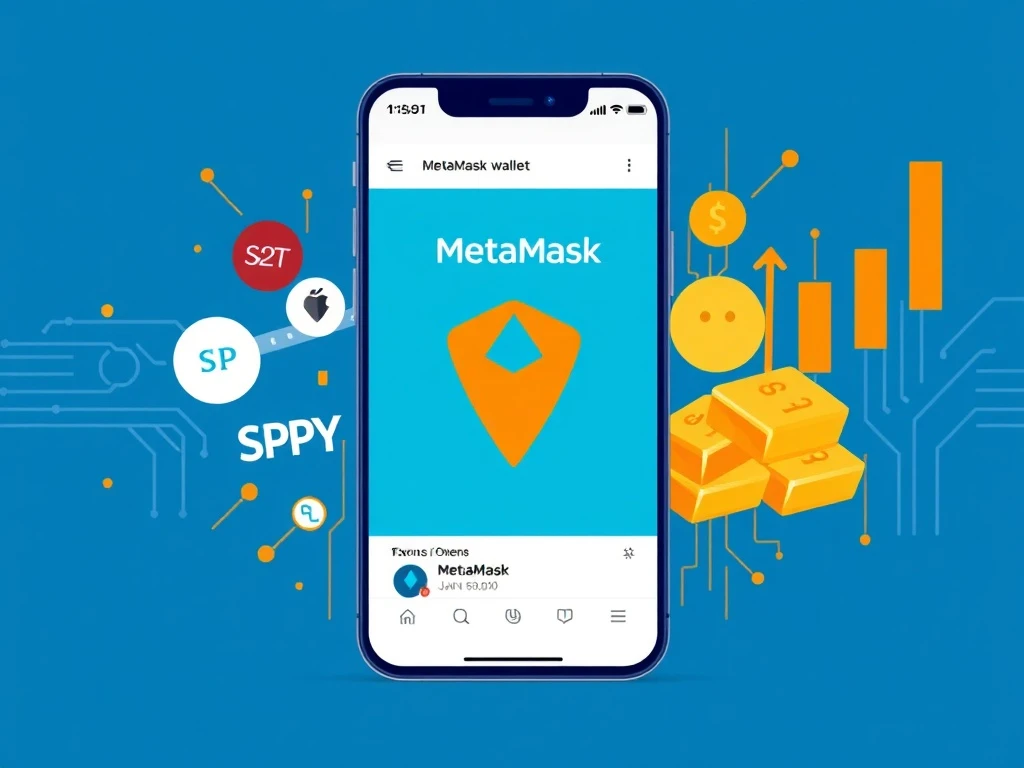
In a landmark move for the digital asset industry, the world’s most popular non-custodial cryptocurrency wallet, MetaMask, has announced a pivotal partnership with Ondo Finance. This integration, effective immediately, allows millions of users to directly access over 200 tokenized U.S. stocks, exchange-traded funds (ETFs), and commodities. Consequently, this development effectively bridges the once-separate worlds of traditional capital markets and decentralized finance (DeFi) within a single, self-custodial interface. The collaboration signifies a major step toward unified digital asset management, enabling 24/5 trading of these tokenized securities and 24/7 transfer of the underlying tokens.
MetaMask’s Strategic Expansion Beyond Crypto
ConsenSys, the developer behind MetaMask, has consistently expanded the wallet’s functionality beyond its origins as a simple Ethereum interface. Previously, users primarily managed cryptocurrencies, NFTs, and interacted with decentralized applications (dApps). However, the integration with Ondo Finance represents a deliberate and significant strategic shift. This move directly responds to growing user demand for exposure to traditional financial assets within the decentralized ecosystem. Furthermore, it leverages the inherent advantages of blockchain technology, such as transparency, programmability, and reduced settlement times.
The partnership utilizes Ondo’s compliant tokenization platform, which issues securities as digital tokens on public blockchains. These tokens, known as Ondo’s OUSG (for U.S. Treasuries) and other equity-based products, are fully backed by the real-world assets they represent. Therefore, users gain economic exposure to assets like the S&P 500 (via tokenized ETFs), shares of major tech companies, and commodities like gold, all while maintaining control of their private keys.
The Mechanics of the Integration
From a technical perspective, the integration works seamlessly within the existing MetaMask interface. Users can connect their wallet to supported decentralized exchanges (DEXs) or specialized platforms that list Ondo’s tokenized assets. Once acquired, these tokens appear in the user’s wallet balance alongside their other digital assets. The key innovation lies in the dual nature of these tokens: they are both a blockchain-based digital asset and a financial security. This duality allows for novel financial strategies, such as using tokenized Treasury bills as collateral in DeFi lending protocols—a concept often called “Real World Asset” (RWA) collateralization.
Tokenized ETFs: Merging Traditional and Digital Finance
Tokenization refers to the process of converting rights to a real-world asset into a digital token on a blockchain. For years, proponents have hailed it as the next evolution for capital markets. The MetaMask-Ondo partnership brings this theory into mainstream practice. Tokenized ETFs offer several distinct advantages over their traditional counterparts. Primarily, they enable fractional ownership of high-value assets, making them accessible to a broader global audience. Additionally, they facilitate near-instantaneous settlement and transfer, a process that traditionally takes two business days (T+2) in legacy systems.
Key benefits of this integration include:
- Unified Portfolio Management: Investors can now view and manage a blended portfolio of crypto assets and traditional securities in one application.
- Enhanced Liquidity: Tokenized assets can potentially be traded on global, 24/7 markets, unlike traditional stock exchanges with limited hours.
- Self-Custody Security: Users retain full ownership and control, eliminating counterparty risk associated with centralized brokers or custodians.
- Programmable Finance: These tokenized assets can be integrated into smart contracts for automated investing, lending, or structured products.
Regulatory Context and Compliance
Ondo Finance operates within existing U.S. regulatory frameworks. The tokenized securities offered are structured and issued in compliance with regulations, often under exemptions like the Investment Company Act of 1940. This compliance is a critical differentiator from purely synthetic or derivative-based crypto products. It provides a layer of institutional trust and legitimacy that is essential for broader adoption. Analysts view this compliant approach as a template for how traditional finance can safely and legally enter the blockchain space.
Impact on the Broader DeFi and TradFi Landscape
The implications of this partnership extend far beyond convenience for MetaMask users. It represents a tangible on-ramp for traditional finance (TradFi) capital into the decentralized ecosystem. Institutional investors and wealth managers exploring digital assets now have a familiar, regulated vehicle—tokenized ETFs—through which to gain exposure. Conversely, crypto-native users gain easy access to yield-generating traditional assets like U.S. Treasuries, which can act as a stabilizing “safe haven” component within a volatile crypto portfolio.
Market experts anticipate this will accelerate the convergence of both sectors. Nathan Allman, CEO of Ondo Finance, stated in a related announcement that the goal is to “bring the world’s traditional securities onto the blockchain.” This vision aligns with a broader industry trend where major financial institutions, including BlackRock and Franklin Templeton, are actively developing their own tokenization projects. The MetaMask integration provides a massive, ready-made distribution network for these future products.
Comparative Analysis: Before and After Integration
| Aspect | Traditional Investment Path | Via MetaMask & Ondo |
|---|---|---|
| Access Point | Brokerage Account (e.g., Fidelity, Vanguard) | MetaMask Wallet |
| Custody | Held by Broker (Custodial) | Held by User (Self-Custodial) |
| Trading Hours | Market Hours (9:30 AM – 4 PM ET, Mon-Fri) | 24/5 Trading for Orders* |
| Settlement Time | T+2 (Two Business Days) | Near-Instant on Blockchain |
| Asset Transfer | ACATS Process (Days) | Blockchain Transfer (Minutes) |
| Geographic Access | Often Restricted by Jurisdiction | Global (Subject to Local Regulations) |
*Note: While token transfers are 24/7, the underlying pricing and creation/redemption of tokenized ETFs are tied to traditional market hours.
Conclusion
The partnership between MetaMask and Ondo Finance marks a definitive milestone in the maturation of the digital asset industry. By bringing over 200 tokenized U.S. stocks and ETFs directly into the leading self-custody wallet, it dismantles a significant barrier between traditional and decentralized finance. This integration offers users unprecedented control, flexibility, and unification in managing their wealth. Ultimately, it paves the way for a more open, accessible, and efficient global financial system built on blockchain rails. The success of this MetaMask and Ondo collaboration will likely serve as a critical case study for the entire sector, demonstrating the practical viability and demand for tokenized traditional assets.
FAQs
Q1: What exactly are “tokenized” stocks and ETFs?
A1: Tokenized stocks and ETFs are digital representations of traditional securities issued on a blockchain. Each token is backed by the actual underlying asset held by a regulated custodian. They provide the same economic exposure as owning the stock or ETF share but with the added functionality of a digital asset.
Q2: Is this service available to users worldwide?
A2: While the MetaMask wallet is global, access to specific tokenized securities through Ondo is subject to local securities regulations. Users must ensure they are not in a restricted jurisdiction before attempting to purchase these assets, as Ondo complies with U.S. securities laws.
Q3: How does the 24/5 trading work if stock markets are closed?
A3: You can place buy or sell orders for the tokenized assets on supported platforms 24 hours a day during the business week. However, the execution price and the creation/redemption of new tokens are ultimately pegged to the live market price during traditional trading hours (9:30 AM – 4 PM ET). The 24/7 functionality applies to transferring already-owned tokens between wallets.
Q4: What are the risks associated with holding tokenized securities?
A4: Key risks include smart contract risk (potential bugs in the token’s code), regulatory uncertainty in some regions, and the custodial risk associated with the entity holding the underlying assets. While Ondo uses established, regulated custodians, it remains a different risk profile than holding securities directly with a traditional broker.
Q5: Can I use these tokenized ETFs as collateral in DeFi protocols?
A5: Yes, that is one of the primary innovations. Because they exist as tokens on-chain, they can be deposited into DeFi lending platforms as collateral to borrow other assets. This allows investors to unlock liquidity from their traditional security holdings without having to sell them.