Web3 Messaging Revolution: Creditlink and Dechat Forge Groundbreaking Alliance to Build Trust in Decentralized Identity
In a landmark move set to reshape the foundations of decentralized communication, blockchain innovators Creditlink and Dechat announced a strategic alliance on March 21, 2025. This partnership aims to fundamentally redefine trust within the Web3 ecosystem by integrating sophisticated on-chain credit intelligence directly into secure, decentralized messaging platforms. Consequently, this collaboration addresses one of the most persistent challenges in the space: establishing verifiable identity and reputation without compromising user sovereignty or security.
Web3 Messaging Integrates On-Chain Credit Intelligence
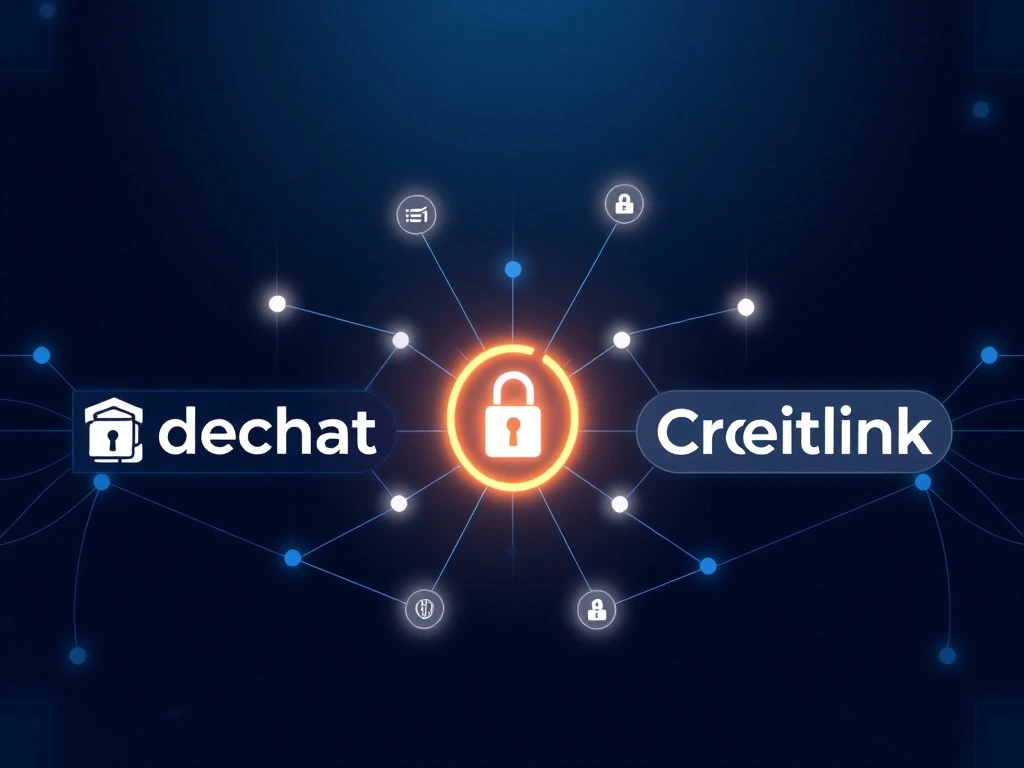
The core of this strategic alliance involves embedding Creditlink’s proprietary credit scoring algorithms into the Dechat messaging protocol. Dechat operates as a fully decentralized communication layer, enabling users to interact without relying on centralized servers that can censor or surveil. Meanwhile, Creditlink has developed a system that analyzes wallet transaction histories, DeFi participation, and on-chain behavior to generate a non-custodial credit score. By merging these technologies, the partnership creates a new paradigm where trust can be contextual and portable across different decentralized applications (dApps).
This integration directly responds to growing concerns about fraud and impersonation in Web3 communities. For instance, phishing attempts and rug pulls often exploit the anonymity of blockchain addresses. The Creditlink-Dechat model allows users to optionally display verified credentials or a trust score within a chat, providing a layer of social proof. Importantly, users retain full control over their data, choosing what to share and with whom. This human-centric approach prioritizes user agency while building a safer environment for financial and social interactions.
The Decentralized Identity Landscape in 2025
The alliance arrives at a critical juncture for decentralized identity (DID) solutions. According to a 2024 report from the World Economic Forum, adoption of DID frameworks grew by over 300% year-over-year, yet interoperability and practical use cases remained significant hurdles. Traditional Web2 identity models, reliant on centralized databases, are prone to breaches and offer users little control. Conversely, early Web3 identity solutions often struggled with the “cold start” problem—how to establish initial trust in a pseudonymous environment.
Creditlink and Dechat tackle this by leveraging existing on-chain data. A user’s history of successful loan repayments on Aave or consistent governance participation in a DAO can now contribute to a verifiable reputation within a messaging context. This creates a virtuous cycle: positive on-chain behavior enhances one’s ability to build trust in communal spaces, which in turn can lead to more collaborative opportunities. The table below outlines the key shifts this alliance represents:
| Previous Model | Creditlink-Dechat Model |
|---|---|
| Anonymous, high-risk interactions | Context-aware, reputation-informed chats |
| Isolated credit scores per dApp | Portable, user-controlled credit identity |
| Centralized messaging platforms | Decentralized, end-to-end encrypted communication |
| Manual background checks | Automated, transparent on-chain verification |
Expert Analysis on the Technical and Social Impact
Dr. Anya Petrova, a leading researcher in cryptographic identity at Stanford’s Blockchain Research Lab, provided context on the technical significance. “The fusion of messaging and verifiable credentials is not novel in theory, but its implementation at the protocol level within a truly decentralized stack is a substantial engineering achievement,” Petrova noted. “This moves us beyond simple proof-of-humanity checks and into the realm of nuanced, behavior-based reputation. The critical design choice here is user consent at every data-sharing step, which aligns with core Web3 principles.”
The potential impacts extend beyond individual users to decentralized autonomous organizations (DAOs) and DeFi protocols. A DAO could use integrated trust scores to filter proposal submissions or prioritize community feedback from long-term, positively-reputed contributors. Similarly, a lending protocol might allow users to signal their creditworthiness through a verified Dechat profile when negotiating off-chain terms. This bridges the gap between purely on-chain finance and the social layers necessary for complex collaboration.
Building a Secure and Human-Centric Ecosystem
Security remains a paramount concern. Both companies have emphasized that the system is designed with privacy-by-default principles. Credit scores are computed locally or via zero-knowledge proofs where possible, meaning the raw transaction data never needs to leave a user’s device. Dechat’s underlying encryption ensures messages remain private. Only the resulting attestation—a cryptographically signed claim about a user’s trust tier—is shared when permission is granted.
This architecture directly confronts the common critique that decentralization is inherently hostile to user-friendly experiences. By weaving trust signals into a daily-use application like messaging, the alliance makes Web3 security tangible and practical. Key features of the integrated system include:
- Selective Disclosure: Users choose which credentials to share in a specific chat or channel.
- Real-Time Verification: Credentials are checked against the blockchain in real-time to prevent forgery.
- Cross-Platform Portability: The trust identity is not locked to one app but follows the user’s wallet.
- Spam Reduction: Communities can set minimum trust thresholds for participation, reducing bot-driven spam.
The rollout will occur in phased public testnets throughout Q2 and Q3 of 2025, with a full mainnet launch scheduled for Q4. Initial integration is planned for several major DAO tooling platforms and DeFi community forums, where the need for verified communication is most acute.
Conclusion
The strategic alliance between Creditlink and Dechat represents a significant evolution in Web3 messaging and decentralized identity infrastructure. By seamlessly integrating on-chain credit intelligence into a secure communication layer, the partnership provides a scalable solution to the trust problem that has hindered broader adoption. This collaboration moves the ecosystem toward a more human-centric model where reputation is earned, transparent, and user-controlled. As this technology matures, it has the potential to become a foundational standard for how trust is established and managed across the entire decentralized internet.
FAQs
Q1: What is the main goal of the Creditlink and Dechat partnership?
The primary goal is to enhance trust and security in Web3 by integrating on-chain credit scoring and reputation data directly into a decentralized messaging environment, creating a more human-centric and secure ecosystem.
Q2: How does this alliance affect user privacy?
The system is designed with privacy-by-default. Credit analysis can occur locally or via privacy-preserving techniques like zero-knowledge proofs. Users have full control over what credential data is shared and with whom within the Dechat platform.
Q3: Can this technology be used for lending or credit decisions?
While the initial focus is on social trust and messaging security, the verifiable credentials generated could potentially be used as a component in decentralized finance (DeFi) underwriting processes, subject to user consent and specific protocol integrations.
Q4: Is this alliance only relevant for cryptocurrency experts?
No. The integration is designed to work in the background. Regular users in DAOs, NFT communities, or DeFi projects will benefit from reduced spam and more trustworthy interactions without needing deep technical knowledge.
Q5: How does this differ from traditional credit scores or social media verification?
Unlike traditional scores controlled by central agencies, this on-chain credit intelligence is user-permissioned, transparent in its sourcing from public blockchain data, and portable across different applications. It also avoids the data-harvesting model common in Web2 social media.