Prediction Markets Explode: Polymarket and Kalshi’s Fierce Grocery Clash Signals a $400M Daily Boom
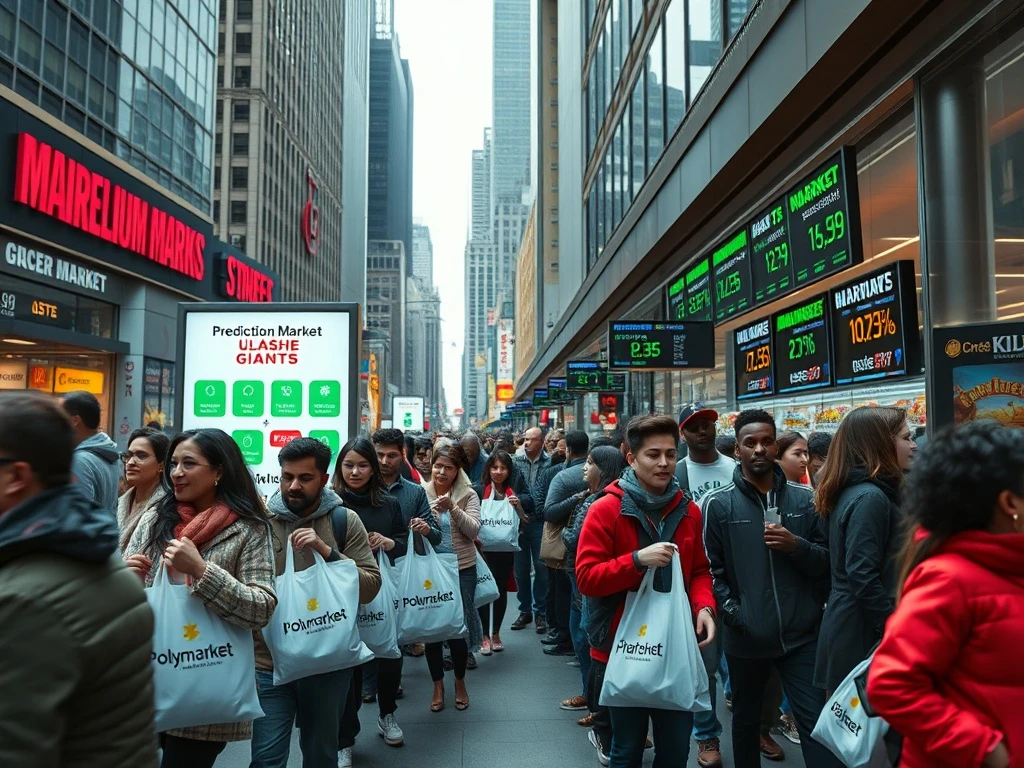
In a stunning display of competitive marketing, two titans of the burgeoning prediction market industry, Polymarket and Kalshi, have launched dueling grocery giveaways in New York City, signaling a sector now consistently processing over $400 million daily. This clash, unfolding in February 2026, highlights a fierce battle for user dominance as these platforms leverage real-world stunts to capture attention in a rapidly expanding financial niche.
Prediction Markets Boom Amidst a Grocery Giveaway War
The prediction market landscape is experiencing unprecedented growth. Consequently, daily trading volumes across leading platforms have surged to levels consistently above $400 million. This figure represents a staggering fourfold increase from just one year prior. Moreover, this explosive growth has fueled intense competition between the sector’s frontrunners.
Kalshi initiated the confrontation with a targeted promotion in Manhattan. Specifically, the platform offered a $50 grocery giveaway to over 1,000 people at the Westside Market on 3rd Avenue. Social media videos rapidly documented lines stretching for multiple city blocks. According to Kalshi’s internal data, 1,795 people registered for the event, while mainstream media reports estimated “thousands” in attendance.
Not to be outdone, competitor Polymarket announced a counter-move within hours. The platform revealed plans to open “The Polymarket,” described as New York’s first free grocery store. Additionally, Polymarket committed to donating $1 million to the Food Bank for NYC. This strategic escalation demonstrates how prediction market platforms are investing heavily in brand visibility and community goodwill.
Analyzing the Financial Powerhouses Behind the Promotions
The resources funding these high-profile giveaways are substantial. Kalshi reportedly generated a massive $263.5 million from fee revenue alone in 2025. Both Polymarket and Kalshi currently hold multibillion-dollar valuations. These valuations are supported by major integrations with established financial and media institutions.
Recently, both companies have aggressively pursued media partnerships to bolster credibility and reach. For instance, Polymarket secured a partnership with Dow Jones in January 2026. Simultaneously, Kalshi formed alliances with mainstream outlets like CNN and CNBC in late 2025. These collaborations aim to bridge the gap between novel prediction markets and traditional financial discourse.
The Strategic Battle for Mainstream Legitimacy
Industry analysts view these grocery campaigns as part of a broader strategy to achieve mainstream legitimacy. Prediction markets, which allow users to trade on the outcomes of future events, have historically faced regulatory scrutiny. By associating their brands with essential community support—like food access—Polymarket and Kalshi are crafting a more relatable and publicly positive image.
This public relations offensive extends beyond groceries. Polymarket recently launched an outdoor advertising campaign featuring billboards intentionally designed for public interaction and vandalism. Conversely, Kalshi has utilized digital billboards across New York to display real-time odds for various prediction markets. However, both platforms face advertising restrictions during major events like the Super Bowl, pushing them toward more creative, ground-level marketing.
The Core Technology and Market Context
Prediction markets operate by letting users buy and sell shares based on the predicted likelihood of specific events. These events range from economics and politics to entertainment and current affairs. The accuracy of crowd-sourced predictions has drawn significant interest from both retail participants and institutional analysts.
The sector’s growth is underpinned by several key factors:
- Increased Financial Integration: Smoother fiat on-ramps and blockchain interoperability.
- Regulatory Clarity: Evolving frameworks in key jurisdictions like New York.
- Media Normalization: Frequent discussion in mainstream business news.
- Product Diversification: Markets now cover a wider array of globally relevant topics.
New York City serves as the perfect battleground for this clash. As a global financial capital, it provides a dense population of financially literate potential users. The city’s high cost of living also makes grocery giveaways a particularly resonant and impactful promotional tool.
Potential Impacts and Industry Trajectory
The direct competition between Polymarket and Kalshi is driving rapid innovation. This rivalry benefits users through improved platform features, lower fees, and novel market types. Furthermore, the massive daily trading volume indicates a robust and liquid ecosystem, which is critical for market efficiency and trust.
Observers are now watching to see if this growth attracts further regulatory attention or inspires traditional financial institutions to develop competing products. The success of these marketing stunts may also set a precedent for how fintech companies engage with communities beyond digital interfaces.
Conclusion
The grocery giveaway clash between Polymarket and Kalshi is far more than a publicity stunt. It is a vivid symptom of the prediction markets boom, where daily volumes exceed $400 million and platforms battle fiercely for market share. As these companies leverage partnerships, philanthropy, and unconventional marketing, they are not just trading on future events—they are actively trying to shape their own. The outcome of this real-world competition will significantly influence the future trajectory of the entire prediction market industry.
FAQs
Q1: What are prediction markets?
Prediction markets are exchange-traded platforms where users can buy and sell shares based on the predicted outcome of future events. Prices reflect the crowd’s collective probability estimate of an event occurring.
Q2: Why are Polymarket and Kalshi giving away groceries?
The grocery giveaways are high-profile marketing campaigns designed to build brand awareness, foster community goodwill, and attract new users in a competitive market. They represent a move toward mainstream, real-world engagement.
Q3: How large is the prediction market industry?
As of early 2026, combined daily trading volumes on leading platforms consistently exceed $400 million. This activity has grown approximately fourfold from the previous year, indicating rapid sector expansion.
Q4: Are prediction markets legal?
The legality varies by jurisdiction. In the United States, platforms like Kalshi operate under specific CFTC regulations for event contracts, while others like Polymarket, which may use cryptocurrency, navigate a more complex regulatory landscape. Users should always check local laws.
Q5: What is the significance of the New York City location for these campaigns?
New York City is a global financial hub with a high concentration of potential users. It also has significant media presence, allowing marketing campaigns to gain maximum visibility. The high cost of living in NYC makes grocery promotions particularly impactful for residents.