Tether MOS: Revolutionary Open-Source Bitcoin Mining OS Transforms Industry Control

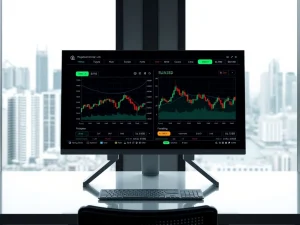
In a landmark announcement that could reshape cryptocurrency infrastructure, Tether Operations Limited unveiled its Mining OS (MOS) platform on February 2, 2026, during the Plan 9 Forum in San Salvador, El Salvador. This open-source Bitcoin mining operating system represents a significant technological advancement for managing large-scale mining operations. The Tether MOS platform integrates hardware monitoring, energy consumption analytics, and infrastructure management into a unified dashboard, potentially addressing longstanding industry challenges around efficiency and scalability.
Tether MOS Platform Architecture and Core Features
Tether’s Mining OS operates as a comprehensive management system for Bitcoin mining facilities. The platform aggregates data from multiple sources to provide operators with unprecedented visibility and control. MOS processes real-time information from ASIC miners, power infrastructure, cooling systems, and network connectivity. Consequently, operators can optimize their entire operation through a single interface. The system employs modular architecture that supports various hardware configurations and mining pool integrations.
Key technical specifications include:
- Hardware Abstraction Layer: Supports multiple ASIC manufacturers and models
- Energy Management Module: Monitors power consumption and efficiency metrics
- Predictive Maintenance System: Uses machine learning to anticipate hardware failures
- Multi-Pool Integration: Connects to major Bitcoin mining pools simultaneously
- API-First Design: Enables third-party developers to build extensions
Industry analysts immediately recognized the potential impact of this release. Historically, mining operations relied on fragmented software solutions that required extensive customization. By contrast, Tether MOS offers a standardized approach that could reduce operational complexity significantly. The open-source nature allows for community contributions and transparent security auditing, addressing concerns about proprietary systems.
Historical Context and Mining Industry Evolution
Bitcoin mining has undergone several technological transformations since the network’s 2009 launch. Initially, enthusiasts mined using standard computer processors before transitioning to graphics processing units (GPUs). The introduction of application-specific integrated circuits (ASICs) in 2013 created the modern industrial mining landscape. However, management software development lagged behind hardware advancements. Most large-scale operations developed custom solutions or adapted existing enterprise monitoring tools.
The 2021-2022 mining migration from China demonstrated the industry’s need for more portable and standardized management systems. Operations relocated to North America, Central Asia, and the Middle East faced integration challenges with local infrastructure. During this period, energy efficiency became increasingly critical as electricity costs rose globally. Tether’s entry into this space follows their established pattern of expanding beyond stablecoin services into adjacent cryptocurrency infrastructure.
Strategic Implications for Mining Centralization
Tether’s announcement raises important questions about mining centralization trends. The company’s documentation emphasizes that MOS enables “centralized control” of distributed mining operations. This capability allows operators to manage geographically dispersed facilities from a single dashboard. While this improves operational efficiency, blockchain researchers note potential implications for network decentralization. Historically, distributed control among independent miners has been a core Bitcoin security feature.
However, Tether representatives clarified during the announcement that the system actually promotes decentralization by lowering technical barriers. Smaller operators can now access enterprise-grade management tools previously available only to large mining corporations. The open-source model particularly benefits developing regions where mining represents economic opportunity. Already, early adopters in Latin America and Africa report reduced setup times and improved hardware utilization rates.
Technical Innovation and Competitive Landscape
Tether MOS enters a competitive marketplace with several established mining management solutions. Industry leaders like Braiins OS, Hive OS, and Awesome Miner currently dominate various market segments. What distinguishes MOS is its comprehensive integration of energy management with mining operations. The system directly interfaces with smart grid technology and renewable energy sources, enabling dynamic power allocation based on electricity pricing and availability.
| Feature | Tether MOS | Braiins OS | Hive OS |
|---|---|---|---|
| Open Source | Yes | Yes | No |
| Energy Integration | Advanced | Basic | Moderate |
| Multi-Hardware Support | Extensive | Limited | Extensive |
| Predictive Analytics | Included | Add-on | Basic |
| API Access | Comprehensive | Limited | Premium |
The timing of this release coincides with several industry developments. Bitcoin’s hash rate continues reaching new all-time highs, exceeding 600 exahashes per second in early 2026. Meanwhile, mining difficulty adjustments occur more frequently as competition intensifies. Under these conditions, efficiency improvements directly impact profitability margins. Early testing indicates that MOS can reduce power waste by 8-12% through intelligent workload distribution and cooling optimization.
Implementation Challenges and Security Considerations
Despite its promising features, Tether MOS faces implementation hurdles that merit examination. Mining operations represent critical infrastructure with substantial financial investments. Operators typically hesitate to adopt new management systems without extensive testing and proven reliability. The platform must demonstrate robust security measures, especially given increasing regulatory scrutiny of cryptocurrency operations worldwide. Fortunately, the open-source model allows independent security researchers to audit the codebase continuously.
Energy management features present both opportunity and complexity. While optimizing power consumption reduces operational costs, integrating with local utilities requires careful coordination. Regions with unstable electrical grids may experience compatibility issues. Furthermore, the system’s predictive maintenance capabilities depend on accurate sensor data from mining hardware. Manufacturers must provide proper documentation and access protocols for full functionality. Nevertheless, early documentation suggests Tether collaborated with major ASIC producers during development.
Regulatory Environment and Compliance Features
The cryptocurrency mining industry faces evolving regulatory requirements across multiple jurisdictions. Recent European Union regulations mandate detailed energy reporting for digital asset operations. Similarly, United States proposals would require mining facilities to disclose environmental impact data. Tether MOS includes compliance modules that automatically generate reports for regulatory purposes. These features track energy sources, carbon emissions, and operational transparency metrics that regulators increasingly demand.
San Salvador provides symbolic significance as the announcement location. El Salvador adopted Bitcoin as legal tender in 2021 and has since developed geothermal-powered mining operations. The country represents a model for renewable energy integration that other nations might emulate. Tether’s established presence in the region through various partnerships made this venue strategically appropriate. Observers note that developing nations with abundant renewable resources could benefit most from standardized mining management systems.
Future Development and Industry Impact Projections
Tether’s roadmap for MOS includes several planned enhancements throughout 2026 and 2027. The development team prioritizes integration with emerging technologies like zero-knowledge proofs for operational privacy. Additionally, they plan compatibility with alternative consensus mechanisms beyond proof-of-work. This forward-looking approach suggests Tether envisions MOS as a broader cryptocurrency infrastructure platform rather than just a Bitcoin mining tool.
The economic implications warrant careful analysis. Standardized management software could reduce operational expenses by 15-25% according to preliminary estimates. These savings might lower the Bitcoin production cost, potentially affecting market dynamics during periods of price volatility. Moreover, improved efficiency extends hardware lifespan, addressing environmental concerns about electronic waste from frequent equipment replacement. Industry observers will monitor adoption rates among different operator segments to gauge real-world impact.
Conclusion
Tether’s MOS represents a significant advancement in Bitcoin mining technology through its open-source operating system approach. The platform addresses critical industry challenges around scalability, efficiency, and management complexity. By integrating hardware, energy, and infrastructure data into a unified system, Tether MOS enables operators to optimize their operations more effectively than previously possible. While implementation challenges remain, the system’s architecture and feature set position it as a potentially transformative tool for cryptocurrency mining infrastructure. As the industry continues evolving toward greater professionalization and efficiency, standardized management solutions like Tether’s Mining OS will likely play increasingly important roles in supporting network security and sustainability.
FAQs
Q1: What exactly is Tether MOS?
Tether MOS (Mining OS) is an open-source operating system specifically designed for managing Bitcoin mining operations. It integrates hardware monitoring, energy management, and infrastructure analytics into a single platform.
Q2: How does Tether MOS improve mining efficiency?
The system employs predictive analytics to optimize hardware performance, reduces power waste through intelligent workload distribution, and provides comprehensive monitoring that enables proactive maintenance before failures occur.
Q3: Is Tether MOS compatible with all mining hardware?
MOS supports multiple ASIC manufacturers and models through its hardware abstraction layer, though full functionality depends on manufacturer cooperation with sensor data access and documentation.
Q4: Why does the open-source nature matter for mining software?
Open-source code allows independent security auditing, community improvements, and transparency that addresses concerns about proprietary systems potentially containing vulnerabilities or backdoors.
Q5: What are the potential risks of adopting Tether MOS?
As with any new management system, potential risks include implementation complexity, compatibility issues with existing infrastructure, and the need for operator training on the new platform’s features and interface.