MetaMask Tokenized Stocks Integration: Revolutionary Ondo Partnership Expands Real-World Asset Access
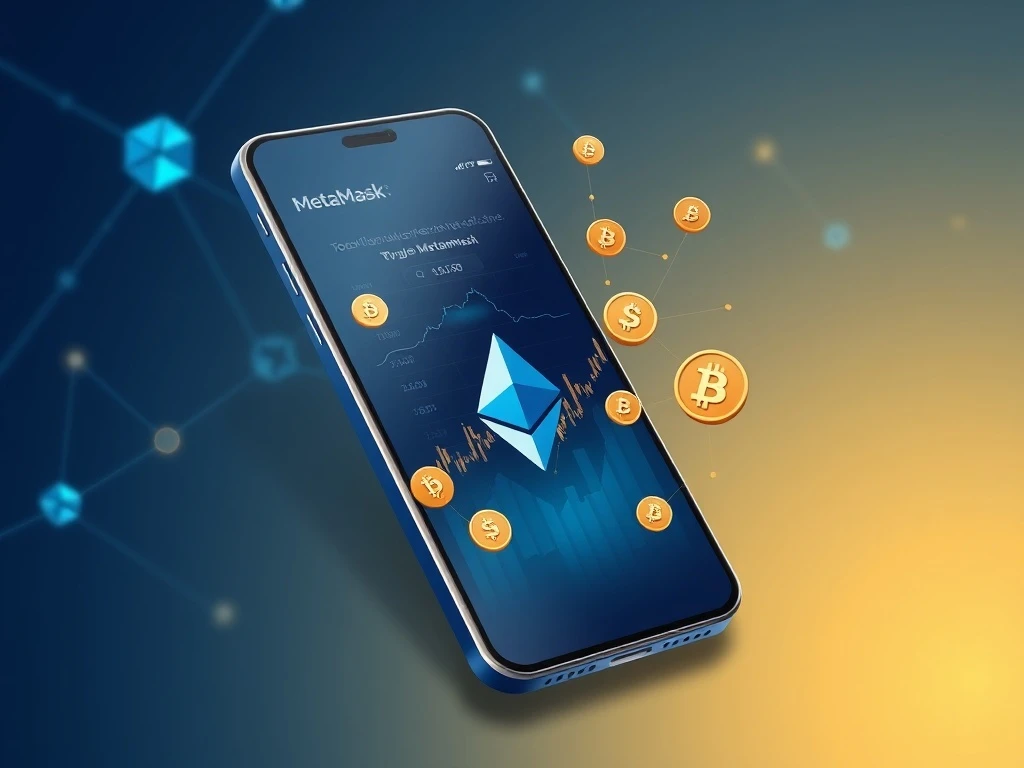
In a landmark development for decentralized finance, MetaMask has fundamentally transformed its platform by integrating tokenized US stocks, exchange-traded funds, and commodities through Ondo Finance’s Global Markets tokens. This strategic expansion, announced on February 18, 2025, represents a significant milestone in bridging traditional finance with blockchain technology, offering non-US users unprecedented access to real-world assets through self-custodial wallet infrastructure. The integration enables eligible MetaMask users across most global jurisdictions to trade tokenized versions of approximately 200 traditional financial instruments directly from their mobile wallets, marking a pivotal shift toward the “everything app” vision that has been gaining momentum throughout the cryptocurrency industry.
MetaMask Tokenized Stocks Integration Mechanics
The technical implementation involves a sophisticated swap mechanism through MetaMask’s existing infrastructure. Users can exchange Circle’s USDC stablecoin for Ondo Global Markets (GM) tokens, which maintain a precise 1:1 value correlation with their underlying assets. This process occurs entirely on the Ethereum blockchain, leveraging smart contract technology to ensure transparency and security. The initial rollout focuses exclusively on MetaMask’s mobile application, with desktop support scheduled for implementation through browser extensions by late February 2025. This phased approach allows Consensys, MetaMask’s developer, to optimize user experience and ensure regulatory compliance across different platforms.
Ondo Finance’s tokenization technology represents the backbone of this integration. The company has developed specialized financial instruments that track traditional assets while maintaining blockchain-native characteristics. Each GM token corresponds directly to specific stocks like Apple or Tesla, popular ETFs such as SPDR S&P 500, or commodities including gold and silver. This system eliminates traditional intermediaries while preserving the economic exposure that investors seek from conventional markets. The architecture demonstrates how blockchain technology can create more efficient financial markets with reduced settlement times and enhanced accessibility.
Geographical Restrictions and Regulatory Compliance
MetaMask’s implementation includes significant geographical limitations reflecting current regulatory landscapes. The service excludes users in 30 specific jurisdictions, most notably the United States, Canada, the European Economic Area, and the United Kingdom. Consensys employs multiple verification methods to enforce these restrictions, primarily utilizing IP address geolocation technology. When users from restricted regions attempt to access tokenized assets, they receive specific error messages indicating unavailable trade routes. This careful approach demonstrates MetaMask’s commitment to operating within existing regulatory frameworks while exploring compliant expansion pathways.
The exclusion of major markets highlights ongoing regulatory challenges surrounding tokenized securities. Different jurisdictions maintain varying approaches to securities tokenization, with the United States Securities and Exchange Commission providing specific guidance on issuer versus third-party tokenized securities in late 2024. MetaMask’s strategic decision to initially target non-US markets follows a pattern established by other cryptocurrency platforms navigating complex regulatory environments. Company representatives emphasize their ongoing dialogue with regulators worldwide, suggesting future expansions may occur as legal frameworks evolve toward greater clarity for blockchain-based financial instruments.
Industry Context and Competitive Landscape
MetaMask’s move represents part of a broader industry trend toward real-world asset (RWA) integration within cryptocurrency ecosystems. Major exchanges and wallet providers have increasingly incorporated tokenized assets throughout 2024 and 2025. Coinbase, the largest US cryptocurrency exchange by volume, announced its proprietary RWA platform called Coinbase Tokenize in late 2024. Similarly, Trust Wallet, the self-custodial solution associated with Binance, integrated Ondo’s tokenized assets in September 2025. This competitive landscape demonstrates growing institutional recognition of RWA’s potential to bridge traditional and decentralized finance.
The integration also aligns with expanding prediction market functionality across major platforms. Both Coinbase and Trust Wallet have incorporated prediction market features alongside their RWA offerings. MetaMask itself partnered with Polymarket in October 2025 to provide prediction market access directly through its mobile application. These parallel developments suggest a strategic vision where self-custodial wallets evolve into comprehensive financial interfaces, offering diverse investment and speculation opportunities within single applications. Industry analysts interpret this trend as responding to user demand for consolidated financial management tools that transcend traditional sector boundaries.
Technical Architecture and User Experience
From a technical perspective, the integration leverages MetaMask’s existing swap functionality, enhanced to accommodate Ondo’s specialized tokens. The process begins when users select desired tokenized assets within the MetaMask interface. The application then routes swap requests through appropriate liquidity pools, exchanging USDC for corresponding GM tokens. Settlement occurs on-chain with typical Ethereum transaction times, significantly faster than traditional market settlements that often require multiple business days. This technical efficiency represents one of tokenization’s primary advantages over conventional financial systems.
User experience considerations have guided the implementation strategy. The initial mobile-only release allows MetaMask to refine interface elements for smaller screens before expanding to desktop environments. The company has designed intuitive asset discovery tools, categorization systems, and educational resources to help users navigate this new financial territory. Security remains paramount, with all transactions requiring standard MetaMask confirmations and maintaining the platform’s characteristic self-custody model. This approach ensures users retain complete control over their assets without intermediary risk exposure.
Market Impact and Ondo Finance Background
Ondo Finance brings particular market significance to this partnership. The company previously gained attention through its collaboration with World Liberty Financial (WLFI), a cryptocurrency project endorsed by former US President Donald Trump. Despite this high-profile association, Ondo’s native ONDO token has experienced substantial volatility, declining approximately 80% over the past year according to CoinGecko market data. This performance highlights the distinction between Ondo’s utility tokens and its structured financial products, with GM tokens representing separate instruments designed specifically for asset tracking rather than speculative investment.
The partnership’s market implications extend beyond immediate trading opportunities. By integrating tokenized traditional assets, MetaMask potentially attracts new user demographics previously hesitant to engage with purely cryptocurrency-based platforms. This expansion could increase overall platform adoption while demonstrating practical blockchain applications beyond speculative trading. Furthermore, the integration provides existing cryptocurrency users with portfolio diversification tools previously inaccessible through self-custodial wallets. This bidirectional value proposition strengthens MetaMask’s position within the competitive wallet landscape while advancing broader cryptocurrency adoption goals.
Future Developments and Industry Trajectory
Consensys leadership has articulated a clear vision for future development. Ethereum co-founder and Consensys CEO Joe Lubin emphasized the limitations of traditional market infrastructure during the announcement, specifically noting fragmented applications and rigid trading windows. Lubin stated that bringing Ondo’s tokenized assets directly into MetaMask demonstrates a superior financial model characterized by unified access, self-custody, and continuous availability. This vision aligns with broader industry movements toward decentralized finance applications that replicate and improve upon traditional financial services.
The roadmap includes several anticipated developments beyond the initial rollout. Desktop integration represents the most immediate priority, scheduled for completion by February 28, 2025. Longer-term plans may involve expanding asset categories, incorporating additional tokenization partners, and potentially revisiting geographical restrictions as regulatory environments evolve. MetaMask representatives have explicitly mentioned exploring compliant expansion methods that align with developing regulatory frameworks worldwide. This cautious yet progressive approach reflects the platform’s commitment to sustainable growth within increasingly scrutinized cryptocurrency markets.
Conclusion
MetaMask’s integration of tokenized US stocks, ETFs, and commodities through Ondo Finance represents a transformative development in decentralized finance accessibility. This strategic partnership enables non-US users to access traditional financial instruments through self-custodial wallet technology, bridging conventional and blockchain-based markets. The implementation demonstrates sophisticated technical execution while navigating complex regulatory landscapes through carefully defined geographical restrictions. As the cryptocurrency industry continues evolving toward comprehensive financial platforms, MetaMask’s tokenized stocks integration establishes a significant precedent for real-world asset accessibility within decentralized ecosystems. This development advances the “everything app” vision while providing practical utility that may attract new user segments and expand cryptocurrency’s role within global finance.
FAQs
Q1: What exactly are tokenized stocks and how do they work in MetaMask?
Tokenized stocks are blockchain-based representations of traditional company shares that track the underlying asset’s value. In MetaMask, users swap USDC stablecoin for Ondo Global Markets tokens that correspond 1:1 with specific stocks, ETFs, or commodities, enabling traditional market exposure through cryptocurrency infrastructure.
Q2: Which countries are excluded from accessing MetaMask’s tokenized assets?
The service excludes 30 jurisdictions including the United States, Canada, all European Economic Area countries, and the United Kingdom. MetaMask uses IP address geolocation to enforce these restrictions, displaying error messages when users from excluded regions attempt access.
Q3: How does the tokenization process ensure accurate asset tracking?
Ondo Finance’s GM tokens utilize smart contract technology and reserve mechanisms to maintain precise 1:1 value correlation with underlying assets. The system regularly verifies reserves and employs price oracle feeds to ensure accurate tracking despite operating on blockchain infrastructure.
Q4: What advantages do tokenized assets offer over traditional brokerage accounts?
Tokenized assets provide faster settlement times (minutes versus days), continuous 24/7 trading availability, reduced intermediary requirements, and integration with other cryptocurrency holdings within a single self-custodial interface, though they currently offer fewer regulatory protections than traditional accounts.
Q5: When will desktop users gain access to tokenized assets in MetaMask?
MetaMask plans to release desktop integration through browser extensions by late February 2025. The initial rollout focuses exclusively on mobile applications to optimize user experience before expanding to additional platforms.