Real-World Assets Demand Permissionless Tokenization: Why New Gatekeepers Threaten Financial Innovation
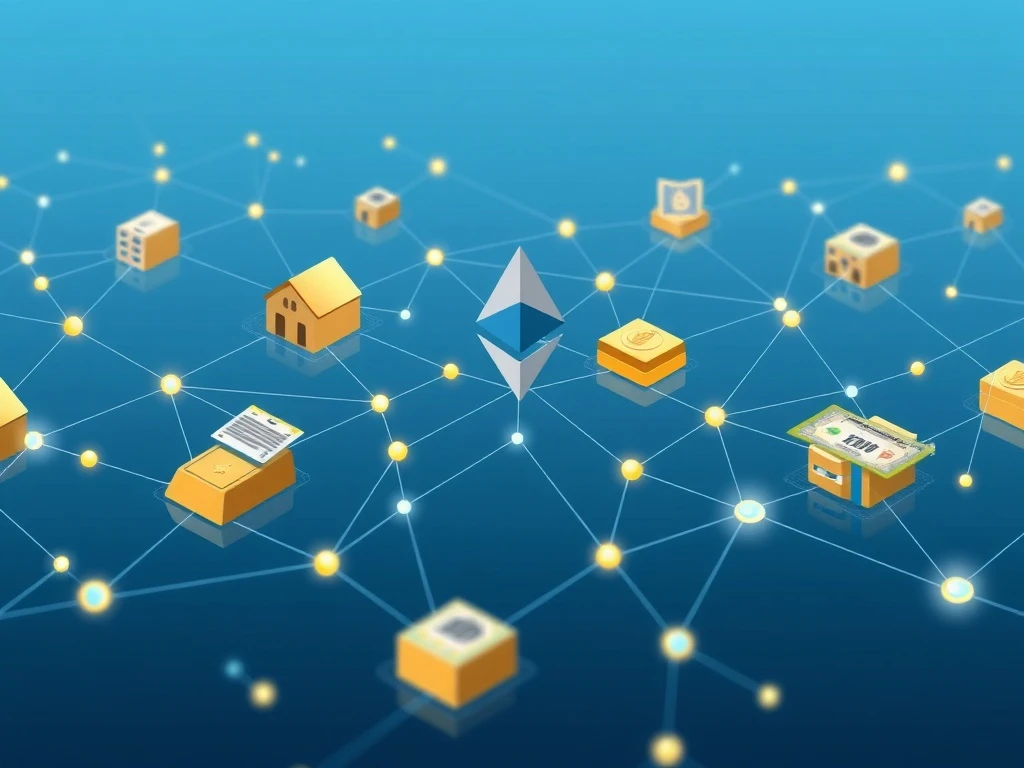
As financial institutions accelerate real-world asset tokenization in 2025, a critical debate emerges about infrastructure choices that could either democratize access or recreate traditional financial barriers on new technological platforms. The fundamental question facing the industry remains whether blockchain technology will eliminate intermediaries or simply digitize existing gatekeepers.
The Historical Evolution of Asset Exchange and Modern Complications
Throughout economic history, asset exchange evolved from simple bilateral agreements to complex institutional frameworks. Ancient markets operated through direct peer-to-peer transactions where participants determined value through mutual agreement without third-party intervention. However, modern financial systems introduced multiple layers of intermediaries including banks, brokers, custodians, and regulatory bodies that now control access, determine eligibility, and establish transaction terms.
This institutional framework created efficiency at scale but simultaneously diminished individual agency in financial transactions. Today, major financial institutions like BlackRock, Fidelity, and Grayscale dominate asset management, collectively controlling trillions in traditional and emerging digital assets. Their recent forays into real-world asset (RWA) tokenization represent both opportunity and potential risk for blockchain’s foundational principles.
Current Institutional Approaches to RWA Tokenization
Financial institutions currently employ three primary blockchain architectures for tokenizing real-world assets, each with distinct implications for decentralization:
- Permissioned Blockchains: Private networks requiring approval for participation
- Centralized Layer 2 Solutions: Scaling solutions controlled by single entities
- Private Networks: Completely closed systems with operator-controlled access
These approaches fundamentally reintroduce gatekeepers to blockchain ecosystems, contradicting the technology’s original purpose of eliminating trusted third parties. For example, a tokenized commercial property valued at $50 million on a permissioned chain still requires institutional approval for fractional ownership participation, effectively recreating traditional barriers to entry.
Regulatory Compliance Versus Decentralization
Institutions cite regulatory requirements as justification for centralized approaches, particularly concerning Know Your Customer (KYC) protocols, Anti-Money Laundering (AML) monitoring, and transaction reversal capabilities. Traditional finance operates through regulated intermediaries, leading many to assume blockchain implementations must follow similar patterns. However, this perspective overlooks alternative compliance frameworks that maintain decentralization while meeting regulatory obligations.
Public blockchain networks with application-layer compliance mechanisms demonstrate that regulatory requirements don’t necessitate centralized infrastructure. Ethereum-based solutions, for instance, enable identity verification and transaction monitoring while preserving network neutrality and accessibility. The European Union’s Markets in Crypto-Assets (MiCA) regulations, implemented in 2024, specifically address decentralized finance without mandating centralized control points.
Technical Solutions for Permissionless RWA Tokenization
Several technological approaches enable real-world asset tokenization without reintroducing centralized gatekeepers:
| Solution Type | Key Features | Security Model |
|---|---|---|
| Based Rollups | Ethereum validator sequencing, inherited security | Decentralized consensus |
| ZK-Rollups | Zero-knowledge proofs, batch processing | Cryptographic verification |
| Optimistic Rollups | Fraud proofs, challenge periods | Economic incentives |
These Layer 2 solutions provide institutional-grade settlement finality while maintaining Ethereum’s security guarantees. Based rollups, in particular, eliminate single points of failure by distributing sequencing responsibilities across Ethereum’s validator network. This architecture ensures transaction integrity through cryptographic and economic consensus rather than institutional trust.
Market Implications and Future Trajectories
The real-world asset tokenization market represents one of blockchain technology’s most significant opportunities, with projections ranging from $4 trillion to $16 trillion by 2030 according to Boston Consulting Group and Citigroup research. Infrastructure choices made today will determine whether this market develops as an open, accessible ecosystem or a digitized version of traditional finance with familiar barriers.
Permissionless approaches offer several distinct advantages for market development:
- Enhanced Liquidity: Broader participation increases trading volume
- Reduced Counterparty Risk: Eliminates dependence on single entities
- Improved Price Discovery: Market-driven valuation versus platform-determined pricing
- Global Accessibility: Borderless participation expands investor base
Conversely, permissioned approaches concentrate control, create single points of failure, and potentially introduce new regulatory classifications that could subject blockchain operators to unexpected licensing requirements. The 2023 collapse of several centralized crypto platforms demonstrated the systemic risks of concentrated control in digital asset ecosystems.
Institutional Adoption Patterns and Industry Response
Major financial institutions exhibit divergent approaches to blockchain infrastructure. While some embrace permissioned systems, others explore hybrid models that balance regulatory compliance with decentralization principles. JPMorgan’s Onyx network, for instance, operates as a permissioned system, while newer entrants like Taiko advocate for based rollup architectures that maintain Ethereum’s permissionless foundation.
Industry organizations including the Global Financial Markets Association and International Swaps and Derivatives Association have begun developing standards for decentralized finance that acknowledge both regulatory requirements and technological capabilities. Their 2024 working papers specifically address real-world asset tokenization frameworks that don’t necessitate centralized gatekeepers.
Conclusion
Real-world asset tokenization stands at a critical juncture where infrastructure choices will determine whether blockchain technology fulfills its promise of democratizing finance or merely digitizes existing power structures. Permissionless solutions based on Ethereum’s security model demonstrate that regulatory compliance and decentralization aren’t mutually exclusive objectives. The financial industry must resist recreating traditional gatekeepers on new technological platforms and instead embrace architectures that maintain blockchain’s foundational principles while meeting institutional requirements. As tokenization accelerates through 2025, the choice between permissioned and permissionless approaches will fundamentally shape financial accessibility for decades to come.
FAQs
Q1: What are real-world assets (RWAs) in blockchain context?
Real-world assets represent tangible or traditional financial instruments tokenized on blockchain networks, including real estate, commodities, equities, and debt instruments converted into digital tokens for fractional ownership and streamlined transfer.
Q2: How do permissioned blockchains differ from permissionless networks?
Permissioned blockchains require approval for network participation and transaction validation, typically controlled by a consortium or single entity. Permissionless networks allow anyone to participate without approval, maintaining decentralized governance and open access.
Q3: Can regulatory compliance be achieved on permissionless networks?
Yes, compliance mechanisms like KYC and AML can be implemented at the application layer while maintaining permissionless network infrastructure. Several jurisdictions have developed regulatory frameworks that acknowledge this distinction.
Q4: What advantages do based rollups offer for RWA tokenization?
Based rollups inherit Ethereum’s security through validator sequencing, eliminate single points of failure, provide institutional-grade settlement finality, and maintain permissionless access while enabling application-layer compliance mechanisms.
Q5: How might gatekeepers affect RWA market development?
Gatekeepers could limit participation, control pricing, create systemic risks through centralization, restrict interoperability between platforms, and potentially subject tokenized assets to unexpected regulatory classifications that hinder market growth.