XRP Escrow: Ripple’s Strategic 300 Million Token Lockup Signals Market Confidence
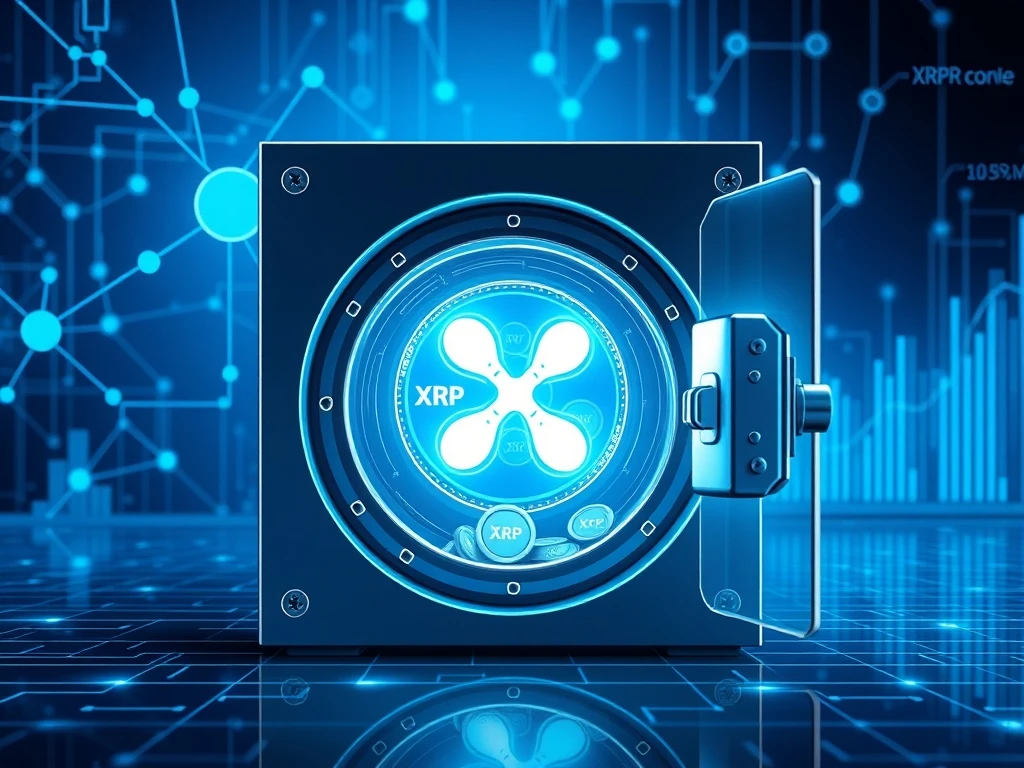
Blockchain tracking service Whale Alert reported a significant transaction on March 15, 2025, revealing that Ripple has placed 300 million XRP tokens into escrow, representing a strategic move in the company’s ongoing supply management protocol that directly impacts the cryptocurrency’s circulating availability.
XRP Escrow Mechanism: Understanding Ripple’s Supply Strategy
Ripple’s escrow system represents a fundamental component of the XRP ecosystem’s economic design. The company established this mechanism in December 2017 to create predictable supply release schedules. Consequently, market participants can anticipate monthly distributions rather than face unexpected token dumps. This systematic approach provides transparency that distinguishes XRP from many other digital assets.
The escrow system functions through a series of smart contracts that automatically release one billion XRP each month. Ripple typically returns unused portions to new escrow contracts extending 55 months forward. Therefore, the recent 300 million XRP lockup represents either a return of unutilized tokens or a strategic adjustment to the release schedule. This process maintains consistent supply dynamics while preventing market flooding.
Historical Context of Ripple’s Escrow Transactions
Ripple’s escrow strategy has evolved significantly since its implementation nearly eight years ago. Initially, the company held approximately 55 billion XRP in escrow, representing over half of the total 100 billion token supply created at the network’s inception. Over time, consistent monthly releases and subsequent returns have created a predictable pattern that market analysts monitor closely.
Historical data reveals that Ripple has returned substantial amounts to escrow previously. For instance, in Q4 2023, the company returned approximately 800 million XRP across multiple transactions. Similarly, Q2 2024 saw returns exceeding 400 million tokens. These patterns demonstrate Ripple’s commitment to its declared supply management framework despite market fluctuations.
Market Impact Analysis from Financial Experts
Cryptocurrency analysts emphasize that escrow returns typically signal reduced selling pressure on XRP markets. When Ripple returns tokens to escrow rather than selling them on exchanges, the circulating supply remains constrained. This action often precedes periods of relative price stability or gradual appreciation, assuming consistent demand.
Market data from previous escrow events supports this analysis. Following substantial escrow returns in 2023, XRP experienced reduced volatility compared to broader cryptocurrency markets. Additionally, institutional investors frequently view escrow returns as positive signals regarding Ripple’s long-term commitment to orderly market development rather than short-term profit-taking.
Technical Implementation of XRP Escrow Contracts
The XRP Ledger’s design enables sophisticated escrow functionality through its native features. Escrow transactions utilize time-based release conditions encoded directly on the blockchain. These smart contract equivalents execute automatically without requiring third-party intervention, ensuring trustless operation that participants can verify independently.
Each escrow creation transaction includes several key parameters:
- Amount: The specific XRP quantity being locked
- Destination: The receiving address upon release
- CancelAfter: An optional expiration timestamp
- FinishAfter: The mandatory release timestamp
This technical architecture provides complete transparency, allowing services like Whale Alert to detect and report significant movements instantly. The immutable nature of these transactions creates an auditable trail that enhances institutional confidence in XRP’s supply management.
Comparative Analysis with Other Cryptocurrency Supply Mechanisms
Ripple’s escrow approach contrasts significantly with other major cryptocurrencies’ supply strategies. Bitcoin employs a predetermined mining schedule with halving events every four years. Ethereum transitioned to a deflationary model following its merge to proof-of-stake. Meanwhile, XRP’s escrow system represents a unique hybrid approach combining programmed releases with corporate discretion.
The table below illustrates key differences:
| Cryptocurrency | Supply Mechanism | Maximum Supply | Current Circulating |
|---|---|---|---|
| XRP | Programmed escrow releases | 100 billion | Approximately 54 billion |
| Bitcoin | Mining rewards with halvings | 21 million | Over 19 million |
| Ethereum | Variable issuance with burning | No fixed maximum | Approximately 120 million |
This comparative perspective highlights XRP’s distinctive position within cryptocurrency economics. The escrow system provides supply predictability that appeals particularly to payment institutions requiring certainty for liquidity management.
Regulatory Considerations for Escrow Transactions
Financial regulators globally monitor cryptocurrency supply mechanisms closely. Ripple’s transparent escrow approach potentially addresses several regulatory concerns regarding market manipulation. By publishing predictable release schedules and returning unused tokens, Ripple demonstrates commitment to orderly markets that regulatory bodies increasingly demand.
The ongoing SEC litigation against Ripple has brought additional scrutiny to XRP distribution practices. Consequently, the company maintains meticulous records of all escrow transactions. These records provide verifiable evidence supporting Ripple’s claims regarding its responsible supply management practices during legal proceedings.
Future Implications for XRP Market Dynamics
The 300 million XRP escrow lockup suggests several potential developments for future market conditions. First, reduced immediate selling pressure may support price stability during periods of broader market volatility. Second, institutional adoption could accelerate as supply predictability increases. Third, developer activity might intensify with greater certainty regarding token distribution timelines.
Market analysts project that continued escrow discipline could position XRP favorably within the evolving regulatory landscape. Payment providers particularly value predictable supply when integrating digital assets into cross-border settlement systems. Therefore, Ripple’s escrow management directly supports its core use case as a bridge currency for international value transfer.
Conclusion
Ripple’s 300 million XRP escrow lockup represents a routine yet significant component of the company’s sophisticated supply management strategy. This transaction reinforces Ripple’s commitment to predictable token distribution while potentially reducing near-term selling pressure. The XRP escrow mechanism continues providing transparency that distinguishes this digital asset within the cryptocurrency ecosystem. Market participants should monitor future escrow activities as indicators of Ripple’s strategic direction and the evolving dynamics of XRP supply economics.
FAQs
Q1: What does it mean when XRP is placed in escrow?
Escrowing XRP involves locking tokens in time-released smart contracts on the XRP Ledger. Ripple uses this mechanism to create predictable monthly token distributions while preventing market flooding.
Q2: How does escrow affect XRP’s price?
Escrow returns typically reduce immediate selling pressure, potentially supporting price stability. However, multiple factors influence cryptocurrency prices, including broader market conditions and adoption trends.
Q3: How much XRP remains in escrow currently?
Following this transaction, approximately 41 billion XRP remains in escrow contracts. Ripple’s monthly releases and returns create fluctuating balances within the programmed schedule.
Q4: Can Ripple cancel escrow contracts early?
Escrow contracts include optional cancellation parameters, but Ripple historically honors the programmed release schedules. Early cancellations would require specific technical conditions and would be visible on the public ledger.
Q5: How do escrow returns differ from token burns?
Escrow returns temporarily remove tokens from circulation with planned future release, while token burns permanently remove them from existence. XRP’s design doesn’t include burning mechanisms like some other cryptocurrencies.