BlackRock’s IBIT ETF Faces Stark Reality as Average Investor Returns Plunge Into Negative Territory
NEW YORK, April 2025 – BlackRock’s pioneering spot Bitcoin ETF, IBIT, has encountered a significant milestone that reveals the complex dynamics of cryptocurrency investing: the average return for investors has turned negative following Bitcoin’s recent price correction. This development marks a crucial moment for the financial giant’s foray into digital assets and provides valuable insights into market behavior during volatility periods.
BlackRock’s IBIT ETF Records Negative Average Returns
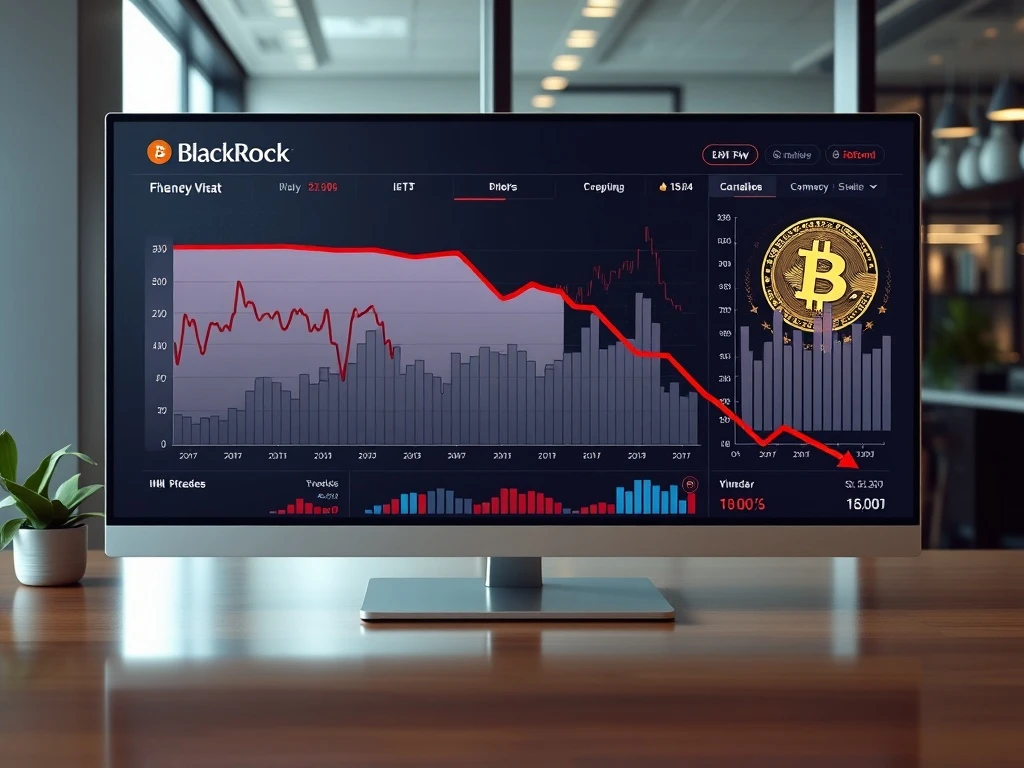
Following Bitcoin’s sharp decline last Saturday, BlackRock’s iShares Bitcoin Trust (IBIT) has reached an important inflection point. According to market analysis, the dollar-weighted average return for IBIT investors has dipped below zero, meaning the typical investor who entered the fund now faces unrealized losses. This situation developed when Bitcoin’s price fell to the mid-$70,000 range, dropping below the average entry price for IBIT participants.
Bob Elliott, former executive at global hedge fund Bridgewater, provided crucial context about this development. He explained that substantial capital inflows during Bitcoin’s peak diluted the average return for investors. Consequently, while early investors who entered at lower price points remain profitable, the cumulative return across all investors has shifted to negative territory. This phenomenon demonstrates how timing and market cycles significantly impact ETF performance.
Understanding the Bitcoin ETF Performance Dynamics
The recent performance of BlackRock’s IBIT reveals several important aspects of cryptocurrency ETF mechanics. First, the dollar-weighted return for IBIT peaked at approximately $35 billion last October when Bitcoin reached its all-time high. Since that peak, returns have steadily declined, increasing pressure on investor portfolios. This pattern highlights the correlation between Bitcoin’s price movements and ETF performance.
Several factors contribute to this negative return scenario:
- Timing of investments: Many investors entered the ETF during Bitcoin’s price peak
- Capital flow patterns: Significant inflows occurred at higher price levels
- Market volatility: Bitcoin’s inherent price fluctuations affect ETF valuations
- Investor psychology: Retail investors often enter markets near peaks
Expert Analysis of ETF Market Behavior
Financial analysts emphasize that this development represents normal market behavior rather than a fundamental flaw in the ETF structure. Spot Bitcoin ETFs like IBIT directly track Bitcoin’s price, making them susceptible to the cryptocurrency’s volatility. The current situation provides valuable data about investor behavior patterns in emerging asset classes.
Market data shows that IBIT has attracted substantial assets since its launch, becoming one of the largest Bitcoin investment vehicles globally. However, this scale means that price movements affect a broad investor base. The transition to negative average returns serves as a reminder about the risks associated with cryptocurrency investments, even through regulated financial products.
Historical Context and Market Comparisons
To understand IBIT’s current position, examining historical ETF performance patterns proves valuable. Traditional equity ETFs often experience similar cycles where average investor returns fluctuate between positive and negative territory during market corrections. The key difference with Bitcoin ETFs lies in the underlying asset’s volatility characteristics.
A comparison of major cryptocurrency investment vehicles reveals important insights:
| Investment Vehicle | Average Investor Return Status | Primary Factors |
|---|---|---|
| BlackRock IBIT | Negative | Peak inflows, BTC correction |
| Grayscale Bitcoin Trust | Mixed | Longer history, varied entry points |
| Fidelity Wise Origin | Marginally positive | Different inflow timing |
This comparative analysis demonstrates how timing and investor behavior create divergent outcomes across similar investment products. The data suggests that investor education about entry timing remains crucial for cryptocurrency exposure through traditional financial instruments.
Market Impact and Investor Implications
The shift to negative average returns for IBIT investors carries several important implications. First, it may influence future investment patterns as potential investors become more cautious about entry timing. Second, it provides real-world data about how mainstream investors interact with cryptocurrency markets through regulated channels.
Financial advisors note that this development underscores the importance of dollar-cost averaging and long-term perspectives when investing in volatile assets. While short-term returns have turned negative, the fundamental investment thesis for Bitcoin exposure through regulated ETFs remains unchanged for many institutional and retail investors.
Market observers also highlight that negative average returns don’t necessarily indicate poor fund management. Instead, they reflect market conditions and investor behavior patterns. BlackRock’s IBIT continues to provide transparent Bitcoin exposure with institutional-grade custody and regulatory compliance, maintaining its value proposition despite current return metrics.
The Regulatory and Institutional Perspective
From a regulatory standpoint, the transparency of ETF structures allows clear visibility into performance metrics like average investor returns. This transparency represents a significant advancement over earlier cryptocurrency investment vehicles. Regulators and institutional investors can now access standardized performance data that facilitates better decision-making.
The current situation also demonstrates how traditional financial metrics apply to cryptocurrency investments. Concepts like dollar-weighted returns, average entry prices, and performance attribution become meaningful tools for analyzing digital asset exposure through regulated channels.
Future Outlook and Market Development
Looking forward, several factors will influence IBIT’s performance trajectory. Bitcoin’s price recovery potential, continued institutional adoption, and regulatory developments will all play crucial roles. Market analysts emphasize that cryptocurrency investments require different evaluation frameworks than traditional assets due to their unique volatility and growth characteristics.
The current negative return period may present opportunities for new investors to enter at more favorable price levels. Additionally, existing investors might consider strategic adjustments to their positions based on their investment horizons and risk tolerance. The situation highlights the importance of portfolio diversification and risk management when including cryptocurrency exposure.
Conclusion
BlackRock’s IBIT Bitcoin ETF reaching negative average investor returns represents a significant market development that provides valuable insights into cryptocurrency investment dynamics. This situation demonstrates how market timing, capital flows, and underlying asset volatility interact within regulated investment structures. While current returns have turned negative, the long-term implications for Bitcoin adoption through traditional financial channels remain substantial. The IBIT experience offers important lessons about risk management, investor behavior, and market cycles in the evolving digital asset landscape.
FAQs
Q1: What does negative average return mean for BlackRock’s IBIT ETF?
Negative average return indicates that the typical investor who purchased IBIT shares now faces unrealized losses based on their entry price versus current Bitcoin valuation.
Q2: How does Bitcoin’s price drop affect ETF investors?
Since spot Bitcoin ETFs directly track Bitcoin’s price, any decline in BTC valuation proportionally reduces the ETF’s net asset value, affecting all shareholders.
Q3: Do all IBIT investors have losses now?
No, investors who entered at lower price points before Bitcoin’s peak remain profitable, but the average across all investors has turned negative due to substantial inflows at higher prices.
Q4: How does this compare to other Bitcoin investment vehicles?
Different Bitcoin funds show varied performance based on their investor base and timing of capital inflows, with some maintaining positive average returns despite market corrections.
Q5: What should current IBIT investors consider?
Investors should review their investment horizon, risk tolerance, and portfolio allocation, considering that cryptocurrency investments typically experience significant volatility cycles.