Crypto Fear & Greed Index Stagnates at 14: A Deep Dive into Persistent Market Fear
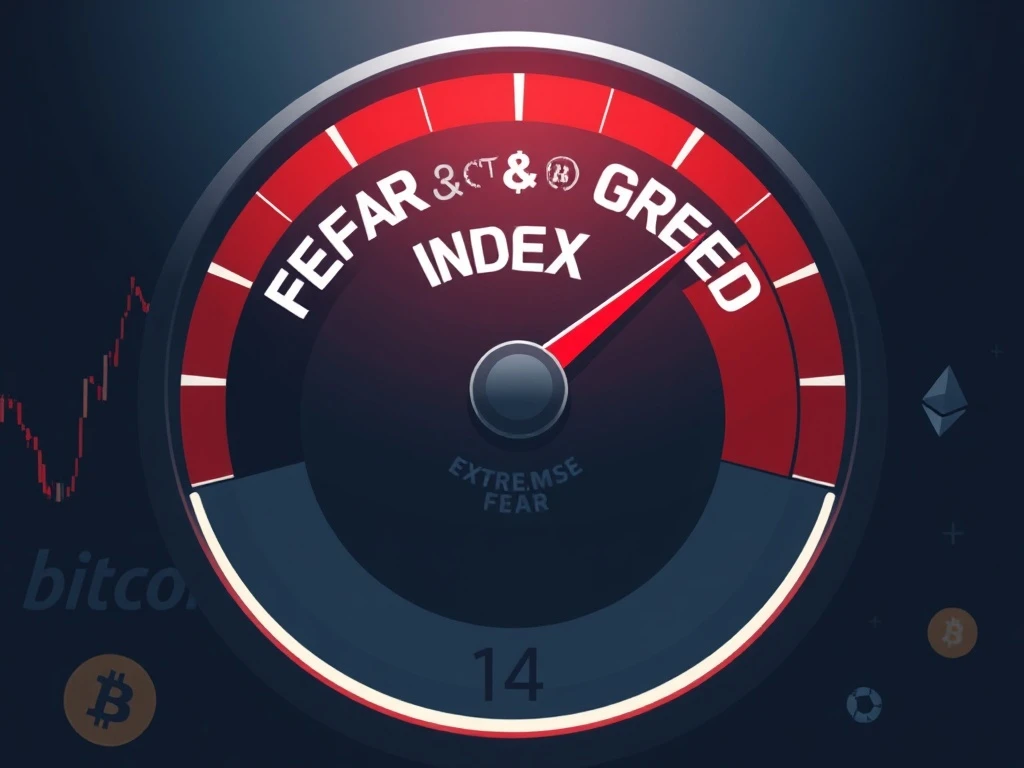
Global cryptocurrency markets continue to exhibit signs of deep-seated anxiety as the widely monitored Crypto Fear & Greed Index remains firmly entrenched at 14, a level signaling extreme fear among investors. This stagnation, reported by sentiment analytics firm Alternative.me on April 10, 2025, marks a prolonged period of negative market psychology that has significant implications for trading behavior and asset valuations. The index’s failure to climb from this depressed level suggests a market grappling with sustained uncertainty, regulatory developments, and macroeconomic pressures.
Understanding the Crypto Fear & Greed Index and Its 14 Reading
The Crypto Fear & Greed Index serves as a crucial barometer for digital asset markets. It quantifies investor sentiment on a scale from 0 to 100. A score of 0 represents maximum fear, while 100 indicates extreme greed. Consequently, a reading of 14 sits deep within the “Extreme Fear” zone, typically defined as scores below 25. This metric does not rely on a single data point. Instead, it synthesizes multiple market signals into a cohesive snapshot of collective psychology.
Analysts often view extreme fear as a potential contrarian indicator. Historically, prolonged periods of fear have sometimes preceded market recoveries. However, the current persistence at this level underscores a lack of positive catalysts. Market participants are clearly reacting to a complex set of factors, including recent volatility spikes and cautious trading volumes. The index’s calculation methodology ensures it reflects real-time market dynamics rather than speculative opinion.
Deconstructing the Index: The Six Components of Market Sentiment
The index’s current score of 14 results from a weighted average of six distinct components. Each component provides a different lens on market behavior. Understanding these elements is key to interpreting the stagnant fear reading.
- Volatility (25% Weight): This measures the rate and magnitude of price swings in major cryptocurrencies like Bitcoin and Ethereum. High volatility often correlates with fear, as it indicates uncertainty and risk.
- Market Volume (25% Weight): Trading volume analysis looks at the momentum and strength behind price movements. Low or declining volume during downturns can amplify fear signals.
- Social Media Sentiment (15% Weight): This component scans platforms like Twitter and Reddit for the volume and tone of cryptocurrency discussions. A surge in negative or anxious commentary pulls the score lower.
- Surveys (15% Weight): Periodic polls of market participants provide direct insight into trader and investor outlook, adding a qualitative layer to the quantitative data.
- Bitcoin Dominance (10% Weight): This metric tracks Bitcoin’s share of the total cryptocurrency market capitalization. Rising dominance can signal a “flight to safety” during fearful periods, as investors retreat to the most established asset.
- Google Trends Data (10% Weight): Search volume for cryptocurrency-related terms offers a gauge of mainstream interest and concern. Spikes in searches for “crypto crash” or “Bitcoin drop” contribute to fear readings.
The following table illustrates how these components might currently be influencing the overall score:
| Component | Weight | Likely Current Contribution |
|---|---|---|
| Volatility | 25% | High – Contributing to Fear |
| Market Volume | 25% | Low/Stagnant – Contributing to Fear |
| Social Media | 15% | Negative Tone – Contributing to Fear |
| Surveys | 15% | Cautious Outlook – Contributing to Fear |
| BTC Dominance | 10% | Potentially Rising – Mixed Signal |
| Google Trends | 10% | Elevated Concern Searches – Contributing to Fear |
Historical Context and the Psychology of Extreme Fear
Placing the current 14 reading in historical context reveals its significance. The index has dipped into extreme fear territory numerous times, often during major market corrections. For instance, it reached single digits during the market troughs following the 2018 bubble and the 2022 downturn. However, the duration at such low levels is as critical as the depth. A brief spike to extreme fear may indicate a panic sell-off, while a sustained plateau, as seen currently, suggests a more entrenched bearish sentiment.
This psychological state directly impacts market mechanics. Fearful investors are more likely to sell assets, avoid new purchases, or move holdings into stablecoins. This behavior can create a self-reinforcing cycle: selling pressure lowers prices, which validates fearful sentiment, leading to more selling. Furthermore, developers and projects may find it harder to secure funding during these periods, potentially slowing innovation in the blockchain ecosystem. The sentiment index thus acts as a mirror, reflecting these underlying behavioral and capital flow trends.
Expert Analysis on Sentiment as a Lagging and Leading Indicator
Financial behavioral analysts note that sentiment indicators like the Fear & Greed Index often function as both lagging and coincident indicators. They confirm what price action has already shown. However, at extremes, they can also offer forward-looking signals. When fear becomes pervasive and reaches a climax, it can indicate that most weak-handed investors have already sold, potentially setting a stage for a reversal. The critical question for 2025 is whether the current stagnation at 14 represents that climactic exhaustion or the beginning of a longer, drawn-out period of caution.
Market strategists compare this to traditional finance’s VIX index, or “fear gauge.” Sustained high readings typically align with high volatility and risk aversion across asset classes. The crypto-specific fear index now shows a market that is highly sensitive to news flow and macroeconomic data. Upcoming decisions on interest rates, regulatory clarity from major governments, and institutional adoption trends will likely be the key drivers needed to shift sentiment from its current frozen state of extreme fear.
Conclusion
The Crypto Fear & Greed Index holding at 14 provides a clear, data-driven confirmation of the extreme fear permeating cryptocurrency markets. This sentiment, derived from volatility, volume, social media, surveys, Bitcoin dominance, and search trends, paints a picture of a cautious and risk-averse investor base. While historical patterns show that such extreme fear has sometimes marked cyclical lows, the current persistence warrants close observation of fundamental catalysts. Understanding this index is essential for any market participant, as it encapsulates the powerful psychological forces that drive volatility and opportunity in the digital asset space. The path out of extreme fear will likely require a combination of stabilizing prices, positive regulatory developments, and renewed institutional confidence.
FAQs
Q1: What does a Crypto Fear & Greed Index score of 14 mean?
A score of 14 falls into the “Extreme Fear” category. It indicates that current market data from volatility, trading volume, social media, and other sources collectively reflect very negative and anxious investor sentiment towards cryptocurrencies.
Q2: Who creates the Crypto Fear & Greed Index and how often is it updated?
The index is created and maintained by the data analytics website Alternative.me. It is updated daily, providing a near real-time gauge of market sentiment based on the previous 24 hours of data.
Q3: Is extreme fear always a bad sign for cryptocurrency prices?
Not necessarily. While it coincides with falling prices, extreme fear readings are often watched by contrarian investors. Historically, prolonged periods of extreme fear have sometimes preceded market bottoms, as selling pressure exhausts itself. However, it is not a timing tool and should be considered alongside fundamental analysis.
Q4: How does Bitcoin’s market dominance affect the Fear & Greed Index?
Bitcoin dominance accounts for 10% of the index’s calculation. A rising dominance percentage can sometimes indicate a “flight to safety,” where investors sell riskier altcoins and hold Bitcoin during uncertain times. This behavior is often associated with fearful markets.
Q5: Can the Fear & Greed Index predict short-term price movements?
The index is not designed as a short-term price prediction tool. It is a sentiment indicator that describes the current emotional state of the market. Prices can remain low or continue falling even if sentiment improves slightly, or they can rally sharply while fear is still high. It is best used for context rather than precise trading signals.