Bitcoin Price Forecasts Plunge Below $50K as BTC Mirrors Historical Bear Market Patterns

Bitcoin faces renewed downward pressure as price forecasts target sub-$50,000 levels, with the cryptocurrency exhibiting patterns strikingly similar to previous bear market cycles according to technical analysts and on-chain data researchers. The digital asset’s failure to maintain critical support levels has shifted market sentiment toward caution, with multiple indicators suggesting potential extended weakness ahead. This development comes amid broader cryptocurrency market volatility and follows Bitcoin’s recent retreat from all-time highs achieved earlier in 2026.
Bitcoin Price Forecasts Signal Extended Downturn
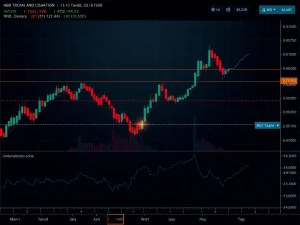
Technical analysts observe concerning parallels between current Bitcoin price action and historical bear market formations. The cryptocurrency recently breached the crucial $80,700 level, representing what many consider the true market mean. Consequently, traders now identify $74,400 and $49,180 as primary downside liquidity targets for the current correction phase. Market data from February 2026 shows Bitcoin trading approximately 17% below recent highs, with the asset struggling to reclaim lost ground despite intermittent recovery attempts.
Several key technical events have amplified bearish sentiment across trading communities. Most notably, Bitcoin has lost the 21-week exponential moving average (EMA), a development that historically preceded significant bear markets. Additionally, the crossover between the 21-week and 50-week EMAs, which last occurred in April 2022, has repeated according to market observers. This technical pattern typically signals potential continuation of downward momentum rather than immediate reversal.
On-Chain Metrics Reinforce Bearish Outlook
Beyond technical analysis, on-chain data provides substantial evidence supporting cautious market forecasts. Research from analytics platforms indicates Bitcoin’s spot price has fallen below the realized price of investors holding BTC between 12 and 18 months. This metric represents the aggregate cost basis at which these investors acquired their Bitcoin. Historically, sustained breaks below this level have transitioned markets from normal corrections into structural bearish regimes rather than temporary pullbacks.
Realized Price as Overhead Resistance
The realized price itself remains stable according to recent analysis, reinforcing its role as overhead resistance rather than support. When spot price persists below a flat or rising realized cost, supply tends to seek breakeven exits during rallies, causing those upward movements to fail. From a market cycle perspective, the combination of price below realized cost, negative unrealized profitability, and slowing balance growth has historically aligned with extended bearish phases lasting several months.
Analysts emphasize that these conditions differ meaningfully from typical bull market corrections. The current environment shows characteristics more aligned with structural shifts in market regime rather than healthy consolidation within an ongoing uptrend. This distinction carries significant implications for investor positioning and risk management strategies across both retail and institutional participants.
Historical Patterns and Market Psychology
Market observers note that Bitcoin’s current trajectory mirrors previous bear market developments with concerning accuracy. The loss of key moving averages, breakdown of realized price support, and specific EMA crossovers all occurred during prior extended downturns. While historical patterns don’t guarantee future outcomes, the convergence of multiple technical and on-chain signals creates a compelling case for continued caution.
Traders highlight that Bitcoin’s price action since the bull market EMA crossover has followed historical precedent closely. The cryptocurrency declined approximately 17% from $90,000 to $78,000 following this technical event, matching the magnitude and timing of similar developments in previous cycles. This consistency across multiple timeframes strengthens the bearish case among technical analysts monitoring the situation.
Potential Short-Term Relief Factors
Despite the predominantly bearish outlook, some market participants identify potential sources of short-term relief. Newly opened “gaps” in CME Group’s Bitcoin futures market often act as price magnets on lower timeframes. The nearest such gap currently resides near $84,000, providing a plausible target for any near-term recovery attempts. Several traders anticipate this level will be tested within coming weeks, though they caution that such movements may represent temporary relief rather than trend reversal.
Market structure analysis suggests that reclaiming the range low around $80,000 would represent a minimum requirement for establishing safer long entry points. Without such reclaims, most technical traders consider the risk-reward ratio unfavorable for establishing new bullish positions. This cautious approach reflects broader uncertainty about whether current conditions represent a deep correction within an ongoing bull market or the early stages of a more prolonged bear phase.
Market Impact and Broader Implications
The potential extension of Bitcoin’s downturn carries significant implications across cryptocurrency markets. Historically, Bitcoin price movements have correlated strongly with broader digital asset performance, suggesting possible weakness across altcoins and related sectors. Institutional investors monitoring these developments may adjust their cryptocurrency allocations accordingly, potentially reducing exposure until clearer trend direction emerges.
Furthermore, regulatory developments and macroeconomic factors continue influencing cryptocurrency valuations alongside technical considerations. The intersection of these fundamental drivers with current technical deterioration creates a complex environment for market participants. Analysts recommend monitoring multiple data streams rather than relying solely on price charts when assessing Bitcoin’s medium-term trajectory.
Conclusion
Bitcoin price forecasts targeting sub-$50,000 levels reflect growing concern among analysts observing similarities between current market conditions and historical bear patterns. The convergence of technical breakdowns, on-chain deterioration, and specific indicator alignments suggests potential for extended weakness rather than immediate recovery. While short-term factors like CME gaps may provide temporary relief, the broader evidence points toward cautious positioning until clearer bullish signals emerge. Market participants should monitor key levels including $74,400 and $49,180 as potential downside targets, while watching for reclaims above $80,000 as early signs of stabilization. The Bitcoin price forecast remains fluid, but current data strongly suggests prioritizing risk management amid uncertain market conditions.
FAQs
Q1: What key support level did Bitcoin recently lose?
Bitcoin recently breached the $80,700 level, which many analysts consider the true market mean. This breakdown represents a significant technical development that has shifted sentiment toward caution among market participants.
Q2: How does the current market compare to previous Bitcoin bear cycles?
Current conditions show striking similarities to historical bear markets, including loss of the 21-week EMA, specific EMA crossovers, and price falling below realized cost metrics. These patterns previously signaled extended downturns rather than temporary corrections.
Q3: What are the primary downside targets identified by analysts?
Technical analysts currently identify $74,400 and $49,180 as major downside liquidity targets for Bitcoin. These levels represent significant support zones that could be tested if current bearish momentum continues.
Q4: What potential short-term relief exists for Bitcoin prices?
Newly opened gaps in CME Bitcoin futures near $84,000 may provide temporary upward pressure as these gaps often act as price magnets. However, most analysts view such movements as potential relief rallies rather than trend reversals.
Q5: How does realized price analysis influence current market outlook?
Bitcoin trading below the realized price of 12-18 month holders historically signals transition to structural bearish regimes rather than normal corrections. This on-chain metric provides fundamental confirmation of technical breakdowns observed in price charts.