US Sanctions Crypto Platforms Linked to Iran: A Historic Crackdown Sends Shockwaves
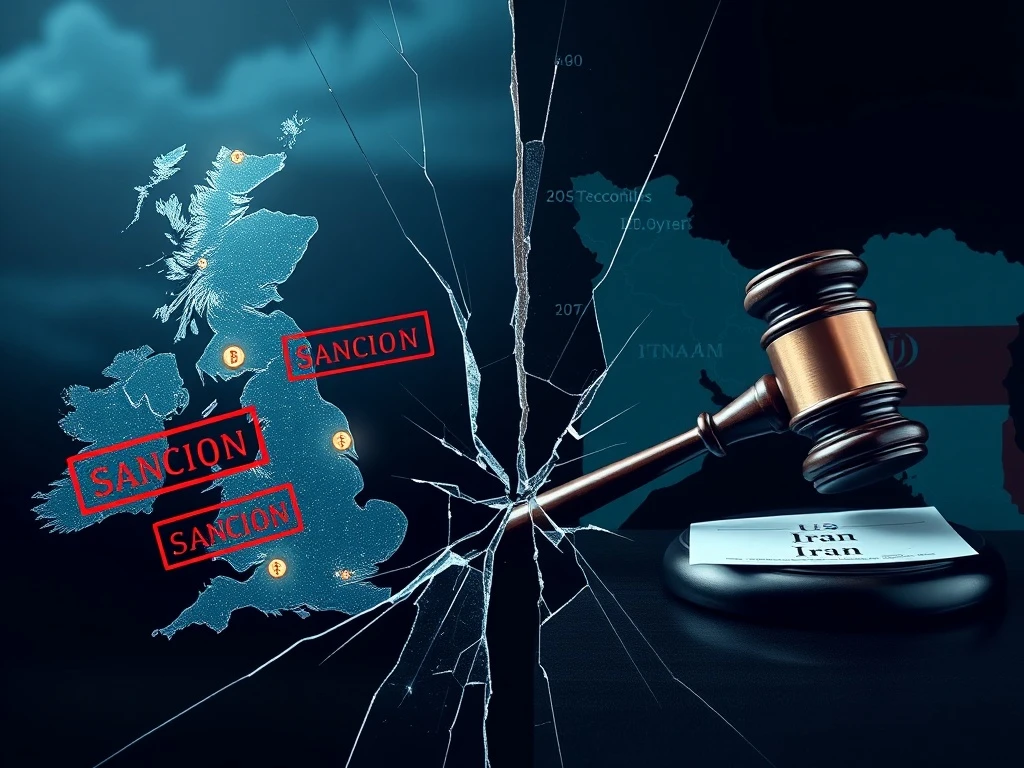
In a landmark move that signals a new front in modern economic statecraft, the United States government has, for the first time, directly sanctioned cryptocurrency exchanges for their alleged ties to Iran. This unprecedented action, announced by the U.S. Department of the Treasury on January 30, 2026, targets two British-based platforms—Zedex Exchange Ltd. and Zedxion Exchange Ltd.—accused of processing billions in transactions for sanctioned Iranian entities. Consequently, this decision marks a pivotal moment, intertwining digital asset regulation with high-stakes geopolitics and triggering immediate volatility across global crypto markets.
US Sanctions Crypto Platforms in Unprecedented Iran Move
The Treasury’s Office of Foreign Assets Control (OFAC) designated the two exchanges for allegedly facilitating significant financial transactions for the Islamic Revolutionary Guard Corps (IRGC) and other Iranian entities under U.S. and international embargo. According to the official release, these platforms are accused of processing over $94 billion in transactions since 2022, creating a critical alternative financial channel. Deputy Treasury Secretary Scott Bessent emphasized the action’s goal, stating it aims to “systematically close doors to networks exploiting digital assets to finance illicit activities.” This represents a clear escalation beyond traditional banking sanctions, directly confronting the crypto sector’s role in potential sanctions evasion.
Historically, U.S. sanctions have focused on banks, oil exports, and specific individuals. The direct targeting of cryptocurrency exchanges establishes a powerful new precedent. It demonstrates regulators’ growing sophistication in tracking blockchain-based transactions and their willingness to apply traditional financial enforcement tools to the digital asset ecosystem. The move follows increased warnings from Treasury officials throughout 2025 about the risks posed by decentralized finance (DeFi) and certain stablecoins to the efficacy of sanctions regimes.
Geopolitical Context and Escalating Tensions
This sanctions decision did not occur in a vacuum. It unfolds against a backdrop of significantly heightened tensions between the United States and Iran. Key events leading to this point include renewed concerns over Iran’s nuclear program, allegations of violent internal repression, and a series of regional proxy conflicts. Furthermore, military exercises by Iran in the Strait of Hormuz and threats of retaliation for previous strikes have created a volatile security environment.
The U.S. strategy appears multifaceted. Firstly, it aims to cripple Iran’s access to foreign currency and hard assets. Secondly, it seeks to close loopholes provided by emerging technologies. By sanctioning these crypto platforms, the U.S. is explicitly warning the global digital finance industry that facilitating transactions for comprehensively sanctioned regimes will incur severe penalties. Tehran has vehemently denied any illegal use of cryptocurrencies, framing the sanctions as an act of “economic war.” Analysts suggest this could push Iran toward deeper financial partnerships with other sanctioned states or toward developing more opaque, privacy-focused crypto solutions.
Expert Analysis on the Regulatory Shift
Financial compliance experts view this as an inevitable maturation of crypto regulation. “The era of assuming crypto operates in a legal gray zone is conclusively over,” notes a former OFAC compliance officer. “These sanctions demonstrate that exchanges, regardless of physical location, must enforce robust Know-Your-Customer (KYC) and Anti-Money Laundering (AML) protocols aligned with global sanctions lists. The precedent is now set, and other jurisdictions may follow.” The action also intensifies scrutiny on stablecoins, particularly those pegged to the U.S. dollar like Tether (USDT), which are often used as a medium of exchange in cross-border transactions that may seek to bypass traditional finance.
Immediate Market Reaction and Volatility
The announcement sent immediate shockwaves through cryptocurrency markets, underscoring the sector’s sensitivity to regulatory news. Bitcoin (BTC), the leading digital asset, experienced a sharp sell-off, breaching the key psychological support level of $78,000 in early February 2026. This decline precipitated a broader market downturn, pulling down major altcoins like Ethereum (ETH) and Solana (SOL). The fear, as reflected in market sentiment indices, stems from two primary concerns:
- Increased Regulatory Risk: Investors fear a wave of similar actions against other exchanges, leading to a contraction in liquidity and trading access.
- Stablecoin Scrutiny: Potential crackdowns on the use of major stablecoins for sanctions evasion could disrupt a core piece of crypto market infrastructure.
The volatility index for cryptocurrencies spiked, indicating trader expectation of continued large price swings. This event serves as a stark reminder that crypto markets, while decentralized in theory, remain deeply interconnected with traditional geopolitical and regulatory forces.
Long-Term Implications for the Crypto Industry
Beyond the immediate price action, this historic sanction carries profound long-term implications for the entire cryptocurrency ecosystem. The industry now faces a new compliance reality. Exchanges worldwide will likely accelerate the implementation of more stringent geofencing and transaction monitoring systems to avoid similar repercussions. This may lead to the delisting of tokens or the blocking of users from jurisdictions under comprehensive sanctions, such as North Korea, Syria, and Russia.
The table below outlines the potential shifts for key industry stakeholders:
| Stakeholder | Short-Term Impact | Long-Term Adaptation |
|---|---|---|
| Centralized Exchanges (CEXs) | Tighter KYC/AML checks, review of user bases. | Heavy investment in compliance tech, possible licensing demands. |
| Decentralized Protocols (DeFi) | Pressure on front-ends, scrutiny of governance tokens. | Development of compliance-focused tools or increased decentralization. |
| Stablecoin Issuers | Demands for transparency on reserve holdings and user audits. | Proactive blacklisting of addresses, closer work with regulators. |
| Investors & Traders | Market volatility, withdrawal of risky capital. | Increased due diligence on exchange compliance standards. |
This regulatory pivot may also accelerate the institutional adoption of blockchain analytics firms, whose tools are essential for tracing the flow of funds across public ledgers. Ultimately, the sector’s growth may become more tightly coupled with its ability to demonstrate robust compliance with international law, moving further into the mainstream financial regulatory perimeter.
Conclusion
The United States’ decision to sanction crypto platforms linked to Iran represents a watershed moment in financial regulation. It definitively bridges the worlds of digital asset innovation and traditional geopolitical enforcement. This action has immediately impacted market stability, triggered a necessary industry-wide conversation about compliance, and set a clear precedent for future state actions against the misuse of cryptocurrency networks. While the long-term effectiveness in isolating Iran remains to be seen, the message to the crypto industry is unambiguous: operating within the bounds of international sanctions law is no longer optional. The event marks the end of one chapter for crypto and the challenging beginning of another, defined by greater scrutiny and the imperative of legitimacy.
FAQs
Q1: Which crypto platforms did the US sanction?
The U.S. Treasury sanctioned two British-based cryptocurrency exchanges: Zedex Exchange Ltd. and Zedxion Exchange Ltd., for allegedly facilitating over $94 billion in transactions for sanctioned Iranian entities like the Islamic Revolutionary Guard Corps (IRGC).
Q2: Why is this sanctions action significant?
This is the first time the United States has directly sanctioned cryptocurrency exchanges in relation to Iran. It marks a major escalation in applying traditional financial enforcement tools to the digital asset sector, setting a powerful new precedent for global crypto regulation.
Q3: How did the cryptocurrency market react?
The market reacted with high volatility and a sharp sell-off. Bitcoin’s price fell below $78,000, dragging down other major cryptocurrencies. The reaction reflected investor fears of increased regulatory crackdowns and heightened scrutiny on stablecoins used for cross-border transactions.
Q4: What does this mean for other crypto exchanges?
Exchanges worldwide are now on clear notice. They will likely implement stricter geofencing, enhance KYC/AML procedures, and potentially delist users from comprehensively sanctioned countries to avoid similar penalties, leading to increased compliance costs.
Q5: How does this affect the use of stablecoins like USDT?
Stablecoins, particularly dollar-pegged ones, face intense new scrutiny. Regulators are concerned they are used to evade sanctions. This pressure may force issuers to increase transparency, proactively blacklist addresses, and work more closely with law enforcement.