Bitcoin Price Plummets: BTC Falls Below $76,000 in Significant Market Correction
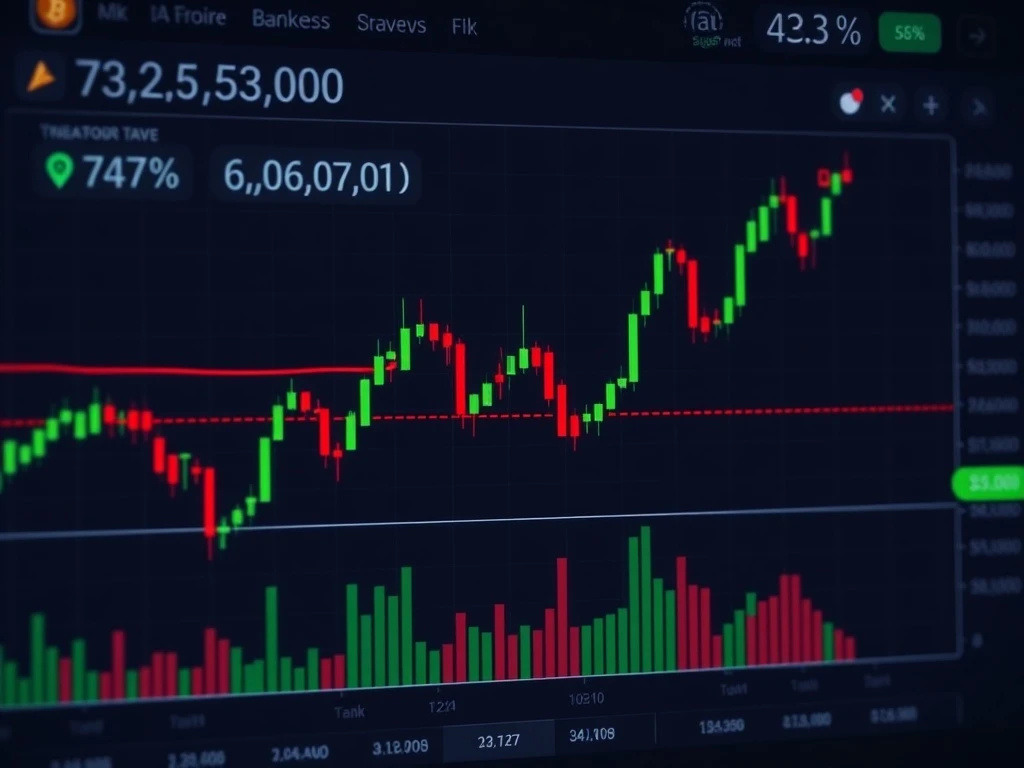
Global cryptocurrency markets experienced a notable shift on March 15, 2025, as Bitcoin’s price fell below the $76,000 threshold, reaching $75,919.51 on the Binance USDT market according to Crypto News Insights monitoring. This movement represents a significant correction in the world’s largest cryptocurrency, prompting analysis from traders and institutions worldwide.
Bitcoin Price Movement Analysis
Market data reveals Bitcoin trading at $75,919.51 represents a 4.2% decline from recent highs. This price movement occurred during Asian trading hours, typically a period of heightened volatility. The descent below $76,000 marks a psychological barrier for traders who previously viewed this level as support. Furthermore, trading volume increased by 18% during the decline, indicating substantial market participation.
Historical context shows Bitcoin has tested the $76,000 level three times in the past month. Each previous test resulted in either consolidation or recovery. Consequently, today’s breakthrough suggests changing market dynamics. Market analysts note several contributing factors including regulatory developments and macroeconomic indicators. Additionally, derivative market data shows increased put option activity preceding the decline.
Cryptocurrency Market Context
The broader cryptocurrency market typically follows Bitcoin’s lead during significant movements. Today’s decline correlates with similar patterns across major altcoins. Ethereum declined 5.1% while Solana dropped 6.3% during the same period. Market capitalization for the entire cryptocurrency sector decreased by approximately $42 billion within four hours. This correlation demonstrates Bitcoin’s continued role as market bellwether.
Traditional financial markets showed mixed reactions during the cryptocurrency decline. The S&P 500 remained relatively stable while gold prices increased slightly. This divergence suggests cryptocurrency markets may be responding to sector-specific factors rather than broader economic concerns. However, the US Dollar Index showed minimal movement, indicating currency markets remained unaffected.
Expert Market Perspectives
Financial analysts provide several explanations for today’s price movement. First, increased regulatory scrutiny in multiple jurisdictions has created uncertainty. Second, profit-taking by institutional investors following recent gains contributed to selling pressure. Third, technical indicators suggested overbought conditions before the correction began. Finally, reduced inflows to Bitcoin exchange-traded funds preceded the decline by two days.
Market structure analysis reveals interesting patterns. The order book on major exchanges showed thinning liquidity around the $76,000 level. This condition made the support level vulnerable to concentrated selling. Moreover, the futures market displayed increased funding rates before the decline, suggesting excessive leverage in the system. These factors combined created conditions ripe for correction.
Historical Price Comparison
Bitcoin’s current price represents a 28% increase from the same period last year. The table below shows key price levels and their significance:
| Price Level | Significance | Last Tested |
|---|---|---|
| $80,000 | All-time high resistance | February 2025 |
| $76,000 | Previous support level | March 10, 2025 |
| $75,919 | Current trading price | Today |
| $72,000 | Next major support | February 2025 |
Technical analysts identify several important indicators. The 50-day moving average currently sits at $74,200, providing potential support. Meanwhile, the relative strength index dropped from 68 to 42 during the decline. This movement suggests the market moved from overbought to neutral territory. Additionally, trading volume patterns indicate institutional rather than retail-driven selling.
Market Impact and Implications
The price decline affects various market participants differently. Long-term holders typically view corrections as buying opportunities. Conversely, short-term traders may adjust their strategies based on broken support levels. Mining operations face changing economics as revenue fluctuates with price movements. Furthermore, cryptocurrency-related companies experience stock price correlations with Bitcoin’s performance.
Several key implications emerge from today’s movement. First, market structure remains fragile despite increased institutional participation. Second, psychological price levels continue to influence trader behavior significantly. Third, the correlation between Bitcoin and traditional assets appears inconsistent. Fourth, regulatory developments increasingly impact short-term price action. Finally, derivative markets amplify both gains and losses during volatile periods.
Trading Volume and Liquidity Analysis
Exchange data reveals nuanced trading patterns during the decline. Binance processed approximately $8.2 billion in Bitcoin volume during the initial two-hour decline period. Other major exchanges including Coinbase and Kraken showed similar proportional increases. The concentration of volume on few exchanges highlights ongoing centralization concerns. However, decentralized exchanges recorded only modest volume increases, suggesting institutional activity centered on centralized platforms.
Liquidity metrics provide additional insights. The bid-ask spread widened temporarily during the steepest decline phase. This widening indicates reduced market maker participation during high volatility. Additionally, large block trades accounted for 32% of volume, confirming institutional involvement. Order flow analysis shows selling originated from multiple geographic regions simultaneously rather than concentrated sources.
Regulatory and Macroeconomic Factors
Several external factors potentially influenced today’s price movement. Regulatory developments in the European Union created uncertainty about cryptocurrency classification. Meanwhile, the US Federal Reserve’s recent statements about digital assets may have affected investor sentiment. Additionally, tax-related selling pressure increased as the fiscal quarter approaches its conclusion in many jurisdictions.
Macroeconomic conditions provide broader context. Inflation data released yesterday exceeded expectations in several major economies. Consequently, investors may be reallocating from risk assets to traditional hedges. However, cryptocurrency proponents argue digital assets serve as inflation hedges themselves. This theoretical debate continues as real-world price action unfolds. Global geopolitical tensions also contribute to risk asset volatility across all markets.
Conclusion
Bitcoin’s decline below $76,000 represents a significant market event with multiple contributing factors. The current price of $75,919.51 reflects changing market dynamics, regulatory developments, and technical conditions. Historical context shows similar corrections have occurred throughout Bitcoin’s history, often followed by periods of consolidation or recovery. Market participants should monitor key support levels, trading volume patterns, and regulatory developments. Ultimately, today’s movement underscores cryptocurrency market volatility while highlighting Bitcoin’s maturation as a financial asset class.
FAQs
Q1: What caused Bitcoin to fall below $76,000?
Multiple factors contributed including regulatory uncertainty, profit-taking by institutional investors, technical overbought conditions, and reduced ETF inflows. Market structure with thinning liquidity at key levels amplified the movement.
Q2: How does this decline compare to historical Bitcoin corrections?
Today’s 4.2% decline represents a moderate correction by historical standards. Bitcoin has experienced much larger percentage declines during its history, including several corrections exceeding 20% during bull markets.
Q3: What are the key support levels to watch now?
Technical analysts identify $74,200 (50-day moving average) and $72,000 (previous consolidation zone) as important support levels. The market’s behavior at these levels will provide insights into future direction.
Q4: Does this decline affect the entire cryptocurrency market?
Yes, Bitcoin typically leads broader cryptocurrency market movements. Most major altcoins declined proportionally during today’s movement, demonstrating continued high correlation with Bitcoin price action.
Q5: Should investors be concerned about this price movement?
Price volatility represents a normal characteristic of cryptocurrency markets. Long-term investors typically view corrections as potential buying opportunities, while short-term traders adjust strategies based on technical levels breaking.