PancakeSwap CAKE: Critical $2.5 Rally Hinges on Pivotal Demand Zone Survival
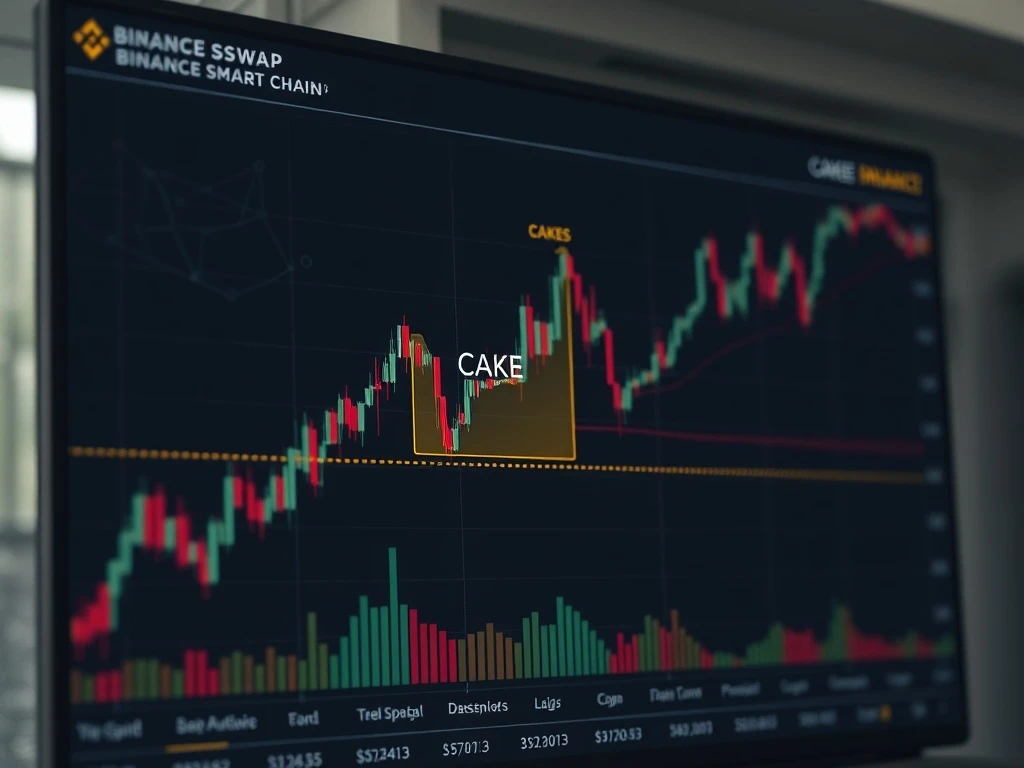
The PancakeSwap CAKE token faces a decisive moment in early 2026 as its potential recovery toward $2.50 depends entirely on holding a critical historical demand zone. Market analysts observe intense pressure on the Binance Smart Chain-affiliated token, with trading data revealing a fascinating divergence between different market participants. This technical analysis examines the precise conditions needed for CAKE to initiate a meaningful rally.
PancakeSwap CAKE Confronts Sustained Bearish Pressure
CAKE experienced one of its most prolonged bearish phases in recent months, driving prices to their lowest levels since April 2025. The decline reflects broader market sentiment shifts affecting decentralized finance tokens throughout late 2025. Despite this downward trajectory, the token now approaches a technically significant area that previously catalyzed substantial upward movements.
Market structure currently favors sellers, but several indicators suggest potential inflection points. The severity of the recent drop—over 11% in a single day—has pushed CAKE into oversold territory according to key momentum measurements. Historically, such conditions often precede short-term reversals when combined with strong support levels.
Binance Traders Create Market Divergence
A clear split emerged among Binance traders across CAKE’s spot and perpetual markets. Given Binance’s dominance in overall trading volume, these participants significantly influence short-term price direction. This analysis focuses specifically on trading volume, a core metric for assessing genuine market intent.
When volume rises while price falls, it typically signals distribution and confirms bearish momentum. CAKE currently exhibits this exact scenario, with trading volume surging 115% to $76 million while price declined substantially. CoinMarketCap data indicates Binance traders contributed approximately 14% of total volume and 11% of net selling activity.
Perpetual Market Reveals Contradictory Signals
The perpetual market presents a slightly different narrative. Data from the Taker Buy/Sell Ratio shows dominant sell-side pressure across multiple exchanges. However, Binance’s largest position holders deviate from this trend. These substantial traders position for potential bullish reversal, reflected in a Taker Buy/Sell Ratio of 2.43 at analysis time.
This divergence between retail and institutional-sized traders creates market tension. Typically, such conditions precede volatility expansions as conflicting positions resolve. The substantial volume increase suggests heightened interest at current price levels, potentially indicating accumulation despite apparent selling pressure.
Critical Demand Zone Defines CAKE’s Path Forward
CAKE’s decline positioned the token within a clearly defined demand zone that previously functioned as strong accumulation territory earlier in 2025. This zone catalyzed notable upside movements and delivered meaningful gains during previous market cycles. Technical analysts monitor this area closely for potential repetition of historical patterns.
If historical support holds, CAKE could rebound and retrace portions of the decline beginning in November 2025. Any recovery would likely encounter immediate resistance from a descending trendline that has capped price action since the broader downturn initiated. A decisive breakout above this trendline could open a path toward the $2.5–$2.7 range.
Conversely, demand zone failure would increase probabilities of extended consolidation or deeper declines. The zone’s integrity represents the primary technical pivot determining CAKE’s medium-term trajectory. Market participants await confirmation of either support validation or breakdown.
Technical Indicators Present Contrasting Narratives
Key momentum indicators offer nuanced perspectives on CAKE’s situation. The Money Flow Index (MFI), tracking capital inflows and outflows, shows sustained capital exit from CAKE over several days. This indicator remains firmly in bearish territory, suggesting continued weakness could confirm ongoing capital departure and heighten downside risks.
Contrastingly, the Relative Strength Index (RSI) suggests selling pressure may approach exhaustion. The indicator dropped into oversold territory below 30, a zone frequently coinciding with short-term relief rallies as traders re-enter positions at discounted levels. This RSI position, combined with the demand zone proximity, creates conditions conducive to technical bounces.
The alignment keeps short-term rebound possibilities active despite prevailing downtrends. This technical setup exemplifies market conditions where conflicting signals require careful interpretation and risk management. Traders typically await confirmation from price action rather than relying solely on indicator readings.
Market Context and Broader Implications
PancakeSwap’s position within the Binance Smart Chain ecosystem adds contextual layers to CAKE’s price action. As a leading decentralized exchange on BSC, PancakeSwap’s token performance often reflects broader sentiment toward the ecosystem. Recent months witnessed increased competition within the DEX space, potentially influencing CAKE’s relative performance.
The decentralized finance sector experienced significant evolution throughout 2025, with innovations in liquidity provision, yield generation, and cross-chain interoperability. PancakeSwap implemented several protocol upgrades during this period, including enhanced tokenomics and expanded chain support. These fundamental developments provide background for understanding CAKE’s market positioning.
Market analysts note that CAKE’s current technical situation mirrors patterns observed in other major DeFi tokens during similar market phases. The convergence of oversold conditions with historical support frequently precedes trend reversals, though confirmation requires sustained buying pressure and volume expansion.
Volume Analysis Reveals Underlying Dynamics
The substantial volume increase accompanying CAKE’s price decline warrants particular attention. In technical analysis, high volume during declines often indicates capitulation events where weak hands exit positions. Such events frequently mark local bottoms when occurring at significant support levels.
Binance’s contribution to this volume surge highlights the exchange’s continued dominance in CAKE trading. The platform’s deep liquidity and extensive user base make it a primary venue for price discovery. The divergence between spot and perpetual traders on Binance suggests sophisticated market participants may anticipate different outcomes than retail traders.
This divergence creates interesting market microstructure. Typically, perpetual traders exhibit more leverage and shorter time horizons, while spot traders often reflect longer-term accumulation or distribution. The current alignment shows perpetual traders more bullish than spot participants, potentially indicating expectations for short-covering rallies.
Risk Factors and Alternative Scenarios
Several risk factors could influence CAKE’s ability to maintain its critical demand zone. Broader cryptocurrency market sentiment remains fragile, with macroeconomic factors continuing to impact digital asset valuations. Additionally, specific developments within the Binance Smart Chain ecosystem could affect CAKE’s relative attractiveness.
Technical analysts identify alternative scenarios should the demand zone fail:
- Extended Consolidation: Price could range within the demand zone for an extended period
- Deeper Decline: Breakdown could trigger stops and accelerate selling pressure
- False Breakdown: Brief violation followed by rapid recovery (bull trap scenario)
Each scenario carries distinct implications for trading strategies and risk management approaches. Market participants typically employ position sizing and stop-loss orders to navigate such uncertain environments. The current technical setup emphasizes the importance of confirmation before committing to directional bias.
Conclusion
The PancakeSwap CAKE token stands at a critical technical juncture where its potential $2.50 rally depends entirely on maintaining a pivotal historical demand zone. Market data reveals fascinating divergences between different trader cohorts, particularly on the Binance platform where substantial volume originates. While momentum indicators present conflicting signals, the convergence of oversold conditions with significant support creates potential for technical reversal. Market participants await clear confirmation of either support validation or breakdown, with the outcome likely determining CAKE’s medium-term trajectory. The situation exemplifies how technical analysis combines multiple data points—price action, volume, indicator readings, and historical patterns—to assess probable market paths.
FAQs
Q1: What is the critical demand zone for CAKE?
The demand zone refers to a specific price area where CAKE previously found strong buying support earlier in 2025. This zone catalyzed substantial upward movements and now represents a key technical level for potential reversal.
Q2: Why does Binance trading activity matter for CAKE?
Binance dominates CAKE’s trading volume, making activity on this platform particularly influential for price discovery. The current divergence between spot and perpetual traders on Binance provides insights into different market participant expectations.
Q3: What technical indicators suggest potential CAKE recovery?
The Relative Strength Index (RSI) has entered oversold territory below 30, which frequently precedes short-term rallies. This condition, combined with the historical demand zone, creates technical conditions conducive to bounce potential.
Q4: What risks could prevent CAKE from reaching $2.50?
Primary risks include breakdown of the demand zone, continued capital outflow measured by the Money Flow Index, broader market weakness, or insufficient buying volume to overcome selling pressure at resistance levels.
Q5: How does CAKE’s performance relate to PancakeSwap’s fundamentals?
As PancakeSwap’s native token, CAKE reflects sentiment toward the platform’s adoption, usage, and competitive position within the DeFi ecosystem. Protocol upgrades and ecosystem developments provide fundamental context for token valuation.