Crypto Extreme Fear: The Surprising Bullish Signal That Could Spark a 2025 Market Rebound
In a surprising twist for cryptocurrency investors, extreme fear gripping digital asset markets may actually signal an impending bullish reversal. According to recent analysis from Santiment, a leading crypto sentiment platform, the current pervasive negativity represents one of the few strong bullish signals available in today’s volatile landscape. This counterintuitive relationship between sentiment extremes and market direction has historically preceded significant price recoveries, offering cautious optimism for 2025’s market trajectory.
Crypto Extreme Fear as a Contrarian Indicator
Market sentiment platforms consistently demonstrate that cryptocurrency markets frequently move opposite to crowd expectations. Santiment’s latest report emphasizes this phenomenon, noting that extreme negativity on social media platforms often coincides with potential market bottoms. The platform’s data reveals a heavily skewed bearish-to-bullish ratio currently dominating online discussions.
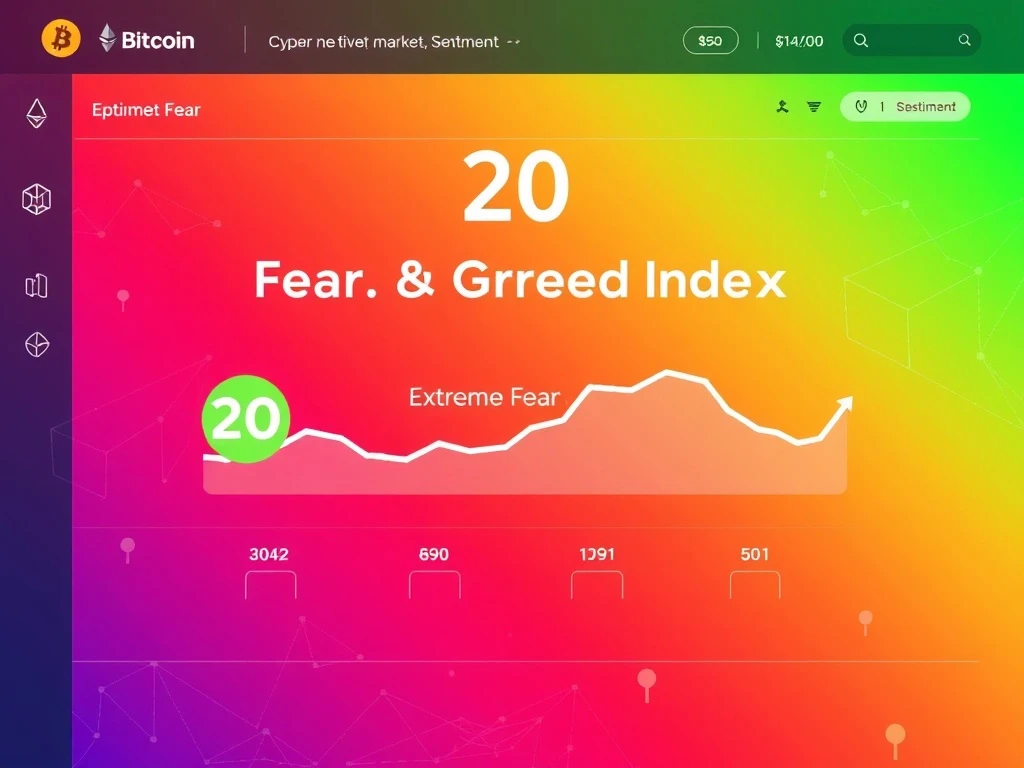
Meanwhile, the widely followed Crypto Fear & Greed Index registered an “Extreme Fear” score of 20 in its Saturday update. This psychological indicator aggregates multiple data sources including volatility, market momentum, social media sentiment, and surveys. Historically, sustained periods in extreme fear territory have frequently preceded substantial market recoveries.
The current sentiment reading follows Friday’s score of 16, which marked the lowest level recorded in 2026 and the first instance of such extreme pessimism since December 19. This prolonged negative sentiment began its descent into “Fear” territory on January 20 before intensifying further last Thursday.
Historical Precedents and Market Psychology
Contrarian investing principles suggest that when the majority anticipates continued decline, buying opportunities often emerge. Santiment’s analysis specifically references this historical pattern, noting that crowded bearish expectations frequently “set the stage for a rebound.” This psychological dynamic creates potential opportunities for informed investors who recognize sentiment extremes.
Several previous market cycles illustrate this phenomenon clearly:
- December 2018: Extreme fear preceded Bitcoin’s recovery from $3,200 to $14,000 within six months
- March 2020: Pandemic-induced panic created sentiment extremes before a multi-year bull market
- June 2022: Extreme fear readings coincided with market bottoms before gradual recovery
These historical examples demonstrate how sentiment indicators can provide valuable context beyond traditional technical analysis. However, analysts consistently emphasize that sentiment represents just one factor in comprehensive market assessment.
Current Market Conditions and Price Action
Recent price movements provide essential context for understanding current sentiment readings. According to CoinMarketCap data, Bitcoin has declined nearly 7% over the past seven days, while Ether has dropped more than 9%. These leading cryptocurrencies currently trade at approximately $83,950 and $2,690 respectively.
Bitcoin’s performance shows a 4.13% decline over the past thirty days. The digital asset has struggled to maintain momentum above the psychologically significant $100,000 threshold since November 13. This prolonged consolidation beneath a key resistance level has prompted renewed discussions about potential market phases.
Market analysts continue debating whether current conditions represent a temporary correction within a broader bull market or the beginning of a more sustained bear phase. The absence of clear directional momentum has undoubtedly contributed to prevailing uncertainty among market participants.
Industry Perspectives on Current Sentiment
Prominent voices within the cryptocurrency industry offer diverse interpretations of current market conditions. Crypto analyst Benjamin Cowen recently questioned widespread expectations regarding asset rotation into digital currencies. In a Thursday video analysis, Cowen suggested that anticipated large-scale movements from traditional assets like gold and silver “may be misplaced.”
He specifically emphasized that significant rotation toward Bitcoin “probably won’t happen” in the immediate future. This cautious perspective contrasts with more optimistic industry forecasts that anticipate continued institutional adoption throughout 2025.
Other industry leaders interpret current sentiment differently. Coinbase Chief Business Officer Shan Aggarwal described recent negativity as potentially temporary in a Friday social media post. Despite acknowledging that sentiment appears “down,” Aggarwal noted that “the signals are there if you’re paying attention.”
Aggarwal specifically highlighted traditional financial institutions expanding their cryptocurrency initiatives. He referenced several major companies including MasterCard, PayPal, American Express, and JPMorgan actively recruiting for crypto-related positions. This institutional engagement suggests continued long-term confidence despite short-term sentiment fluctuations.
“Just a blip, we’re just getting started,” Aggarwal concluded, expressing characteristic industry optimism about blockchain technology’s broader adoption trajectory.
Broader Market Context and Development
Bitwise CEO Huntley Horsley echoed this forward-looking perspective in a separate Friday statement. Horsley declared that “the space is hurtling toward the mainstream,” emphasizing accelerating institutional adoption and regulatory clarity. This perspective suggests that current sentiment may not accurately reflect underlying industry progress.
Several concurrent developments support this optimistic assessment:
- Regulatory advancements: Clearer frameworks emerging in multiple jurisdictions
- Institutional infrastructure: Improved custody solutions and trading platforms
- Technological innovation: Layer-2 scaling solutions and interoperability protocols
- Traditional finance integration: Growing bridge between conventional and digital finance
These fundamental developments continue progressing regardless of short-term price movements or sentiment fluctuations. This divergence between sentiment and fundamentals creates potential opportunities for investors with longer time horizons.
Sentiment Analysis Methodology and Limitations
Understanding sentiment indicators requires acknowledging their methodologies and limitations. Santiment analyzes social media platforms, forums, and news sources using natural language processing algorithms. These systems categorize mentions as bullish, bearish, or neutral based on linguistic patterns and contextual clues.
The Crypto Fear & Greed Index incorporates multiple components:
| Component | Weight | Description |
|---|---|---|
| Volatility | 25% | Current volatility versus historical averages |
| Market Momentum | 25% | Trading volume and price action indicators |
| Social Media | 15% | Sentiment analysis across major platforms |
| Surveys | 15% | Poll data from various cryptocurrency communities |
| Dominance | 10% | Bitcoin dominance versus altcoins |
| Trends | 10% | Search volume and trending topics analysis |
While these indicators provide valuable insights, experienced analysts caution against relying exclusively on sentiment data. Market dynamics involve complex interactions between multiple factors including macroeconomic conditions, regulatory developments, technological innovation, and adoption metrics.
Sentiment extremes can persist longer than anticipated, and historical patterns don’t guarantee future outcomes. Therefore, prudent investors typically combine sentiment analysis with fundamental research and technical indicators when making investment decisions.
Conclusion
Crypto extreme fear currently represents a significant market phenomenon with potential implications for 2025’s trajectory. Santiment’s identification of this sentiment extreme as a bullish signal aligns with historical patterns where excessive pessimism preceded market recoveries. However, investors should consider this perspective alongside broader market fundamentals and technical indicators.
The cryptocurrency market continues evolving amid institutional adoption, regulatory developments, and technological innovation. While sentiment indicators provide valuable psychological insights, comprehensive analysis requires examining multiple data sources. As the market navigates current conditions, understanding sentiment extremes may help informed participants identify potential opportunities within volatility.
FAQs
Q1: What does “crypto extreme fear” mean in market terms?
“Crypto extreme fear” describes a market psychology state where overwhelming pessimism dominates investor sentiment. Quantitative indicators like the Fear & Greed Index measure this through volatility, social media analysis, and survey data, with readings below 25 typically indicating extreme fear conditions.
Q2: Why would extreme fear be considered a bullish signal?
Contrarian investment theory suggests markets often move opposite to crowd expectations. When most participants anticipate further decline, selling pressure may exhaust itself, creating potential reversal opportunities. Historical patterns show sentiment extremes frequently precede market recoveries.
Q3: How reliable are sentiment indicators for predicting market movements?
Sentiment indicators provide psychological context but shouldn’t be used alone for predictions. They work best combined with technical analysis, fundamental research, and macroeconomic assessment. While historically informative, sentiment extremes can persist longer than expected.
Q4: What other factors should investors consider alongside sentiment?
Investors should examine adoption metrics, regulatory developments, technological innovation, institutional activity, macroeconomic conditions, and on-chain data. Comprehensive analysis integrates multiple perspectives rather than relying on single indicators.
Q5: How long do extreme fear conditions typically last before potential reversals?
Historical duration varies significantly. Some extreme fear periods resolve within weeks, while others persist for months. The 2018-2019 bear market featured prolonged pessimism before recovery. Current conditions require monitoring multiple timeframes and confirmation from other indicators.