Proof-of-Reserves Exposed: Why This Critical Transparency Tool Fails to Build Real Trust
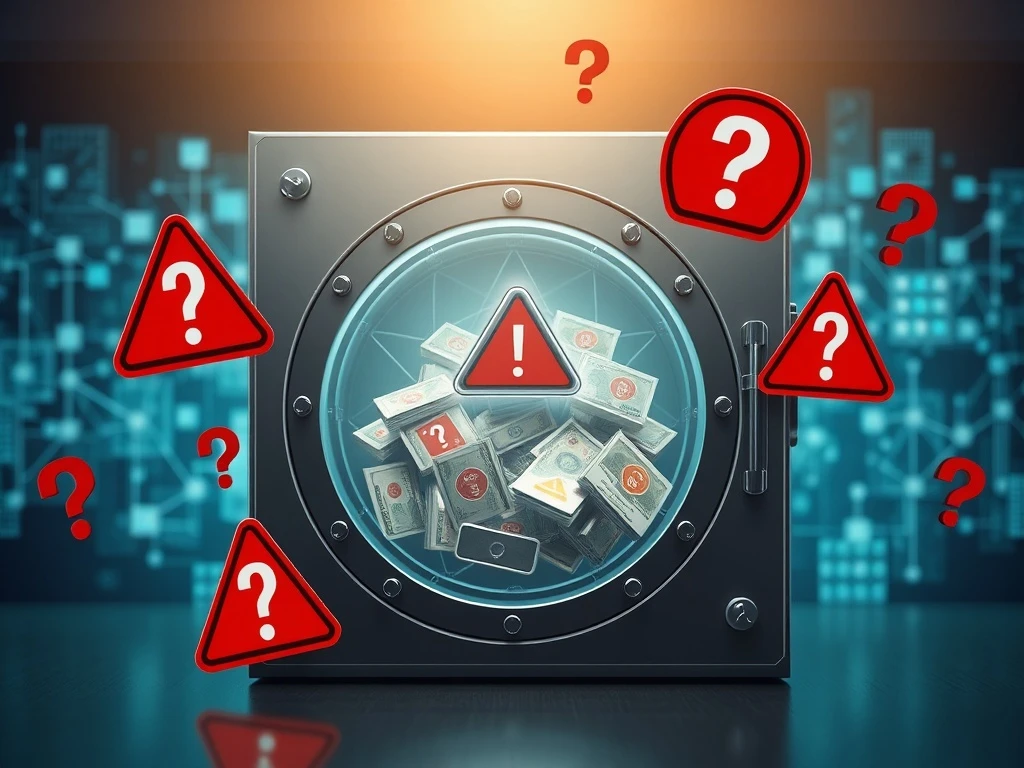
In December 2025, Binance CEO Changpeng Zhao announced the platform’s user assets had reached $162.8 billion, publicly verified through proof-of-reserves. Yet this massive figure, while impressive, highlights a fundamental paradox in cryptocurrency security: proof-of-reserves alone cannot prevent withdrawal freezes during market crises. This transparency tool, widely adopted since the 2022 exchange collapses, provides only a partial picture of exchange health, leaving critical gaps in user protection.
Proof-of-Reserves: The Transparency Illusion
Proof-of-reserves represents a cryptographic method for exchanges to demonstrate they control specific blockchain addresses containing user assets. The process typically involves publishing wallet addresses and signing messages to prove ownership. For liabilities, exchanges create Merkle trees of user balances, allowing individuals to verify their inclusion without exposing others’ data. However, this verification occurs at a single moment in time, creating what experts call a “snapshot vulnerability.”
Financial regulators globally have raised concerns about PoR limitations. The Public Company Accounting Oversight Board specifically warned that PoR reports should not be treated as proof that exchanges maintain sufficient assets to cover liabilities. This regulatory skepticism stems from inconsistent methodologies and presentation practices across the industry. Following the 2022 market turmoil, accounting firm Mazars paused its crypto PoR work, citing concerns about public misinterpretation of these limited reports.
The Technical Reality Behind PoR Verification
Proper proof-of-reserves implementation requires both asset verification and liability confirmation. On the asset side, exchanges demonstrate control through cryptographic signatures from known wallet addresses. For liabilities, they typically use Merkle-sum trees that hash user balances while preserving privacy through inclusion proofs. When executed correctly, this shows whether on-chain assets cover customer balances at verification time. However, the system contains inherent limitations that sophisticated exchanges can exploit.
How Exchanges Can Pass PoR While Remaining Risky
Several critical vulnerabilities exist within current proof-of-reserves frameworks. First, assets can be temporarily borrowed to improve the snapshot, then returned afterward. This practice, while potentially misleading, doesn’t violate technical PoR requirements. Second, PoR typically cannot reveal whether assets serve as collateral for loans or face other encumbrances. These tied-up assets may be unavailable during withdrawal spikes despite appearing on balance sheets.
Liquidity represents another hidden risk factor. Holding assets differs significantly from being able to liquidate them quickly during market stress. Thinly traded tokens or concentrated positions can create liquidity mismatches that PoR cannot detect. Furthermore, many exchanges exclude margin trading balances, yield products, and off-chain obligations from their PoR calculations, creating incomplete liability pictures.
| What PoR Shows | What PoR Misses |
|---|---|
| Asset existence at specific time | Asset availability during stress |
| Wallet control verification | Asset encumbrances or collateralization |
| User balance inclusion | Complete liability accounting |
| Technical transparency | Operational controls and governance |
Proof-of-Reserves Isn’t a Financial Audit
A significant trust problem emerges from public misunderstanding of PoR’s scope. Many users treat these reports as safety certificates, while most constitute agreed-upon procedures engagements under International Standard on Related Services 4400. These AUPs involve specific checks without providing audit-style opinions on overall financial health. Practitioners report what they tested and observed, leaving interpretation to readers.
True financial audits operate within formal assurance frameworks designed to evaluate complete financial statements. They assess internal controls, verify asset ownership and valuation, confirm liability completeness, and test transaction validity across periods. PoR engagements, by contrast, focus narrowly on specific technical verifications at single points in time. This distinction explains why regulators consistently emphasize PoR’s limitations as solvency proof.
The Institutional Due Diligence Standard
Professional investors and institutions typically require more comprehensive verification than PoR provides. System and Organization Controls reporting has emerged as a preferred framework, measuring operational controls over time rather than just balance verification. SOC reports evaluate key management, access permissions, change management, incident response, and custody workflows—elements completely absent from standard PoR implementations.
Building a Practical Trust Stack Beyond PoR
Real exchange trust requires multiple complementary verification layers. First, proof-of-solvency must accompany proof-of-reserves, showing assets exceed a complete liability set. Emerging zero-knowledge approaches aim to close this gap while preserving privacy. Second, liquidity transparency needs enhancement through regular disclosures about asset composition, concentration risks, and conversion capabilities during stress scenarios.
- Operational Controls: Regular SOC-style reporting on security protocols and internal processes
- Governance Frameworks: Clear custody structures, conflict management, and board oversight
- Continuous Verification: Moving beyond single-date snapshots to ongoing monitoring
- Regulatory Compliance: Adherence to evolving financial service standards and reporting requirements
Third, governance and disclosure practices must mature significantly. Credible oversight depends on transparent custody frameworks, independent board members, and consistent risk disclosures—particularly for complex products like yield generation, margin trading, and lending services. These elements collectively form what security experts call a “defense-in-depth” approach to exchange trust.
The Future of Exchange Transparency
Industry evolution points toward more comprehensive verification frameworks. Some forward-looking exchanges now combine PoR with regular attestations, liquidity stress testing, and control environment reporting. Regulatory developments in major jurisdictions may soon mandate standardized disclosure formats that address PoR’s current limitations. Technological innovations, particularly in zero-knowledge proofs and real-time verification, could eventually provide more robust transparency solutions.
However, the fundamental challenge remains: technical transparency cannot replace sound business practices and ethical governance. As the cryptocurrency industry matures, users must develop more sophisticated evaluation frameworks that consider multiple trust dimensions simultaneously. This evolution represents a necessary step toward mainstream financial service standards in digital asset markets.
Conclusion
Proof-of-reserves represents an important but insufficient step toward cryptocurrency exchange transparency. While providing valuable technical verification of asset control, PoR fails to address solvency, liquidity, operational security, or governance quality. Users must recognize these limitations and demand more comprehensive trust frameworks from their service providers. The industry’s future credibility depends on moving beyond snapshot verification toward continuous, multi-dimensional transparency that genuinely protects user assets during market stress. Proof-of-reserves alone cannot build real trust, but combined with proper audits, liquidity disclosures, and operational controls, it can contribute to a more secure digital asset ecosystem.
FAQs
Q1: What exactly does proof-of-reserves verify?
Proof-of-reserves verifies that an exchange controls specific blockchain addresses containing assets at a particular moment. It typically uses cryptographic signatures and Merkle trees to demonstrate asset ownership and user balance inclusion without revealing individual account details.
Q2: Why can exchanges freeze withdrawals even with valid PoR reports?
Exchanges can freeze withdrawals due to liquidity mismatches, operational issues, or encumbered assets that don’t appear in PoR reports. PoR shows asset existence but not availability during stress, nor does it verify the exchange’s ability to process large withdrawal volumes quickly.
Q3: How does proof-of-reserves differ from a financial audit?
Proof-of-reserves constitutes a limited technical verification at a single point in time, while financial audits provide comprehensive assurance about financial statements, internal controls, and ongoing business health. Audits follow formal standards and evaluate complete financial pictures across periods.
Q4: What should users look for beyond proof-of-reserves?
Users should seek regular financial audits, liquidity disclosures, information about asset encumbrances, SOC or similar control reports, transparent governance structures, and regulatory compliance documentation. These elements together provide a more complete trust picture.
Q5: Are there technological solutions to current PoR limitations?
Emerging solutions include continuous verification systems, zero-knowledge proofs for privacy-preserving solvency verification, and real-time transparency protocols. However, technology alone cannot address governance or operational risk factors that contribute to exchange failures.