Kevin Warsh Fed Chair: Trump’s Bold Nomination Signals Major Crypto Policy Shift
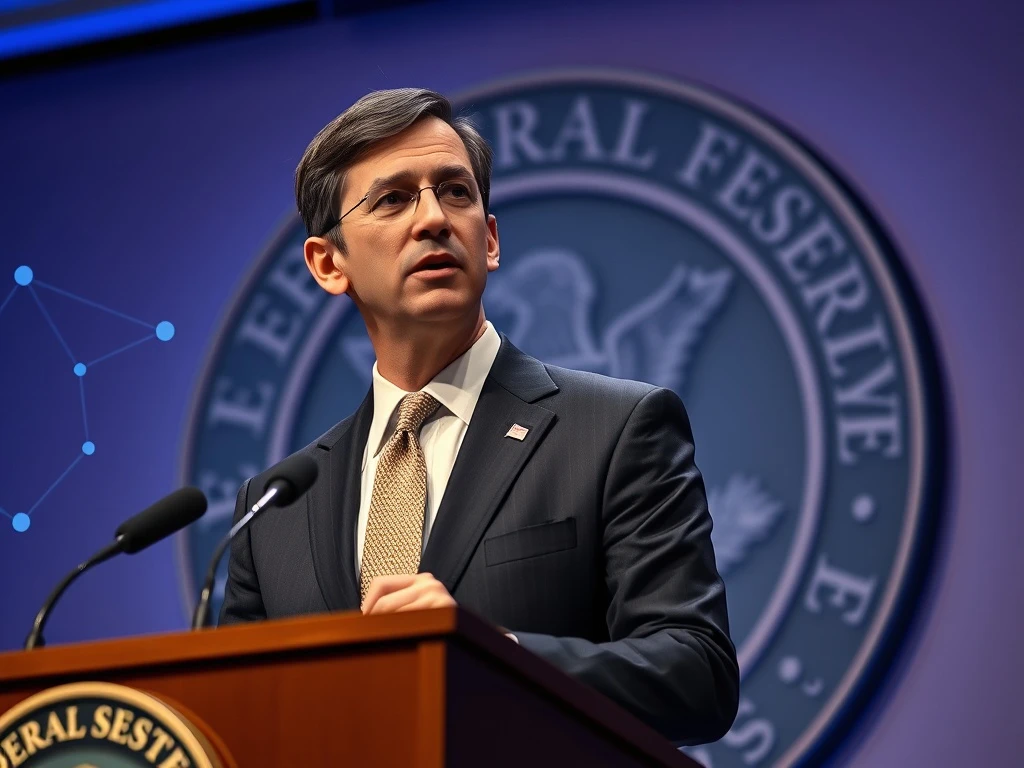
In a move that sent immediate ripples through global financial markets, President Donald Trump announced the nomination of former Federal Reserve Governor Kevin Warsh as the next chair of the United States central bank on Friday, October 27, 2025. This pivotal decision, communicated via the President’s Truth Social platform, sets the stage for a significant philosophical shift at the world’s most influential monetary institution, particularly regarding its stance on digital assets and cryptocurrency regulation. The nomination of Warsh, a known critic of expansive post-crisis policies and a figure with notably warmer views on Bitcoin than his predecessor, Jerome Powell, represents one of the most consequential economic appointments of the Trump administration’s current term.
Kevin Warsh Fed Chair Nomination: A Profile of the Candidate
Kevin Warsh, 55, brings a distinct blend of Wall Street experience and central banking insight to the nomination. He served as a Governor on the Federal Reserve Board from 2006 to 2011, a tenure encompassing the tumultuous 2008 financial crisis. Following his departure, Warsh joined the Hoover Institution as a distinguished visiting fellow and maintained a prominent role at Morgan Stanley. Crucially, his public commentary has consistently advocated for a regime change in monetary policy, criticizing the extended period of ultra-low interest rates and massive balance sheet expansion pursued by the Fed under chairs Ben Bernanke, Janet Yellen, and Jerome Powell.
Market analysts quickly parsed his record for clues about his potential leadership. Unlike Powell, who often minimized cryptocurrency’s systemic importance, Warsh has presented more nuanced views. During a July 2025 discussion at the Hoover Institution, he challenged the notion that Bitcoin inherently weakens the Fed’s economic steering capacity. Instead, Warsh suggested digital assets could serve as a form of market discipline, offering a public, transparent alternative to traditional fiat currencies. This perspective alone marks a substantial departure from the cautious, sometimes dismissive, posture of the Powell Fed toward the crypto ecosystem.
The Road to Confirmation and Political Implications
The announcement triggers a high-stakes confirmation process in the U.S. Senate. Lawmakers are expected to rigorously examine Warsh’s past critiques of Fed crisis interventions and his calls for tighter monetary policy. His confirmation hearings will likely become a forum for broader debates on inflation, financial stability, and the appropriate regulatory approach to emerging technologies like blockchain and digital currencies.
President Trump expressed strong confidence in his nominee, stating on Truth Social that he had known Warsh “for a long time” and had “no doubt” he would become “one of the GREAT Fed chairmen, maybe the best.” This endorsement underscores the political weight behind the nomination. Prediction markets and Wall Street commentators had increasingly tipped Warsh as the frontrunner, with odds rising sharply in the days preceding the official announcement, indicating that financial insiders anticipated this strategic choice.
Immediate Market Reaction and Analyst Insights
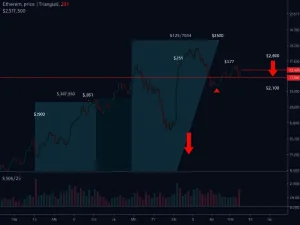
Financial markets exhibited volatile reactions across multiple asset classes. Traders began repricing risk assets, including Bitcoin, around the dual prospects of a potentially more hawkish Fed chair and ongoing concerns about a partial U.S. government shutdown. The nomination introduced a new variable into an already complex macroeconomic landscape.
Notably, gold and silver prices experienced significant downward pressure following the news. However, prominent gold advocate Peter Schiff argued the precious metals “crash” was unrelated to Warsh’s nomination. Schiff contended that President Trump would not select a genuine hawk and that, historically, “even the most hawkish FOMC members are still doves” compared to pre-2008 standards. This analysis highlights the divergent interpretations of what a Warsh chairmanship might entail for interest rate policy and quantitative tightening timelines.
Contrasting Philosophies: Warsh vs. The Powell Legacy
The potential transition from Jerome Powell to Kevin Warsh suggests a fundamental philosophical shift. The table below outlines key differences in their stated positions and backgrounds:
| Policy Area | Jerome Powell (Outgoing Chair) | Kevin Warsh (Nominee) |
|---|---|---|
| Monetary Policy Stance | Data-dependent; embraced flexibility post-COVID | Critical of “ultra-loose” policy; advocates for normalization |
| View on Fed Balance Sheet | Oversaw significant expansion for crisis response | Has questioned the scale and necessity of post-crisis expansion |
| Public Stance on Cryptocurrency | Downplayed systemic importance; focused on consumer risks | Sees potential as market discipline; more open to innovation |
| Regulatory Approach | Emphasized existing regulatory frameworks | Likely more open to reviewing and modernizing frameworks for digital assets |
| Primary Career Background | Investment banking, private equity, public service | Federal Reserve governance, investment banking, academic policy work |
This contrast is not merely academic. A Warsh-led Fed could influence several critical areas:
- Interest Rate Trajectory: Potentially faster normalization if inflation persists.
- Balance Sheet Reduction: A more aggressive quantitative tightening (QT) program.
- Digital Asset Regulation: A more structured, potentially innovation-friendly dialogue with crypto firms.
- Financial Stability Oversight: A renewed focus on market-based signals over model-driven forecasts.
Broader Context: Cryptocurrency at an Institutional Crossroads
The nomination arrives at a decisive moment for the cryptocurrency industry. After a period of heightened regulatory scrutiny and market consolidation, the sector seeks clearer regulatory guardrails. A Fed chair perceived as more understanding of digital asset innovation could accelerate several key developments:
First, it might foster more collaborative discussions between federal regulators and crypto-native firms. Second, it could influence the stance of other agencies, like the Securities and Exchange Commission and the Commodity Futures Trading Commission, by setting a different tone at the top of the financial regulatory hierarchy. Third, it impacts the global perception of U.S. leadership in financial technology, either reclaiming a proactive role or cementing a cautious one.
However, experts caution against expecting immediate, radical changes. The Federal Reserve operates through a committee structure (the Federal Open Market Committee), and any chair must build consensus. Furthermore, the Fed’s primary mandates—maximum employment and price stability—will always take precedence over secondary considerations like crypto policy. Warsh’s views on digital assets will likely manifest in the Fed’s research agenda, its speeches on financial innovation, and its approach to central bank digital currency (CBDC) development, rather than in direct, pro-crypto actions.
Historical Precedent and Future Scenarios
Historically, changes in Fed leadership have led to measurable shifts in policy orientation. The transition from Paul Volcker to Alan Greenspan marked a move toward transparency and rule-based policy. The move from Ben Bernanke to Janet Yellen emphasized labor market dynamics. A shift to Warsh could be remembered for reintroducing a stronger hawkish bias and re-engaging with market-based mechanisms for discipline, including those emerging from the digital asset space.
Looking ahead, the Senate confirmation process will be the next critical milestone. Scrutiny will focus on:
- Warsh’s specific plans for inflation control.
- His vision for the Fed’s role in regulating payment innovations.
- His past criticisms of Fed actions during the 2008 crisis.
- His views on the independence of the central bank from political influence.
The outcome will determine not just the leadership of the Fed, but the direction of U.S. monetary policy for the next four years, with profound implications for global finance, investment strategy, and the evolving digital economy.
Conclusion
President Trump’s nomination of Kevin Warsh as Federal Reserve chair represents a strategic inflection point for American monetary policy and financial regulation. The move signals a potential departure from the post-2008 consensus toward a framework more skeptical of prolonged monetary accommodation and more open to the disruptive potential of technologies like cryptocurrency. While the Senate confirmation battle looms, the mere selection of a crypto-friendly figure like Warsh has already altered market expectations and policy forecasts. His leadership, if confirmed, would likely steer the Fed toward a tighter policy stance while fostering a more nuanced and potentially supportive regulatory environment for digital asset innovation, fundamentally reshaping the intersection of traditional finance and the crypto economy for years to come.
FAQs
Q1: Who is Kevin Warsh and why is his nomination significant?
Kevin Warsh is a former Federal Reserve Governor (2006-2011) and Morgan Stanley banker. His nomination is significant because he represents a potential shift toward more hawkish monetary policy and has expressed more open, analytical views on cryptocurrency compared to outgoing Chair Jerome Powell.
Q2: What are Kevin Warsh’s main views on cryptocurrency and Bitcoin?
Publicly, Warsh has rejected the idea that Bitcoin weakens the Fed’s control, suggesting instead it could act as a form of “market discipline.” He has been noticeably more upbeat on Bitcoin’s role than Jerome Powell, who often downplayed its economic importance.
Q3: What happens next in the process for Kevin Warsh to become Fed Chair?
The nomination must be confirmed by the U.S. Senate. This involves hearings before the Senate Banking Committee, a committee vote, and then a final confirmation vote by the full Senate. The process allows for scrutiny of his record and policy views.
Q4: How did financial markets react to the news of Warsh’s nomination?
Markets showed volatility, with traders repricing risk assets like Bitcoin amid expectations of a more hawkish Fed. Gold and silver prices also sold off, though some analysts attributed this to broader factors beyond the nomination itself.
Q5: Could Kevin Warsh’s nomination lead to faster interest rate hikes?
Based on his past criticism of “ultra-loose” monetary policy, a Warsh-led Fed might be inclined to maintain higher interest rates for longer or reduce the Fed’s balance sheet more aggressively to combat inflation, assuming economic data supports such actions.