Bitcoin ETF Outflows Trigger Alarming $1 Billion Exodus as Crypto Market Crashes 6%

NEW YORK, January 2025 – The cryptocurrency market faced a severe liquidity crisis this week as spot Bitcoin and Ether exchange-traded funds (ETFs) recorded nearly $1 billion in collective outflows, coinciding with a dramatic 6% plunge in total market capitalization. This substantial capital flight represents one of the most significant weekly withdrawals since November 2025, fundamentally shifting January’s investment flow trajectory into negative territory and signaling heightened investor caution across digital asset markets.
Bitcoin ETF Outflows Reach Critical Levels
Data from financial analytics platform SoSoValue reveals a troubling pattern throughout January. Spot Bitcoin ETFs specifically led this sell-off with $817.9 million exiting on Thursday alone. Consequently, this massive single-day withdrawal exceeded the previous week’s $708.7 million outflow. It now stands as the largest daily redemption event since late 2025. Weekly cumulative outflows reached approximately $978 million by Thursday’s close. Therefore, this persistent selling pressure has pushed overall monthly flows firmly into negative territory.
Despite these significant withdrawals, Bitcoin ETFs maintain substantial market presence. They currently manage about $107.65 billion in assets. This figure represents roughly 6.5% of Bitcoin’s total market capitalization, which stands near $1.65 trillion. The table below illustrates the scale of recent outflows compared to total assets under management (AUM).
| Metric | Value |
|---|---|
| Thursday Bitcoin ETF Outflow | $817.9 Million |
| Weekly Cumulative Outflow | $978 Million |
| January Net Outflow (Approx.) | $1.1 Billion |
| Total Bitcoin ETF AUM | $107.65 Billion |
| Percentage of BTC Market Cap | ~6.5% |
Broader Market Context and Contributing Factors
This cryptocurrency decline did not occur in isolation. It coincided with noticeable weakness across traditional financial markets. For instance, gold prices dropped 4% after recently surging above $5,300 per ounce. Several industry analysts immediately connected the synchronized downturn to specific macroeconomic and geopolitical developments. Primarily, fresh tariff threats from U.S. President Donald Trump created uncertainty. Additionally, growing concerns about overvaluation in artificial intelligence (AI) technology stocks contributed to the risk-off sentiment.
Microsoft shares plummeted 10%, creating a ripple effect across tech-heavy portfolios. Many institutional investors managing diversified assets likely rebalanced their holdings. This rebalancing probably triggered correlated selling in cryptocurrency positions. Blockchain analytics firm CryptoQuant provided further technical explanation. Their analysts identified excessive leverage within crypto derivatives markets as a key amplifier. Specifically, decentralized exchange Hyperliquid witnessed $87.1 million in long positions liquidated within hours. This rapid deleveraging exacerbated the spot market’s downward momentum.
Expert Analysis on Market Structure and Sentiment
Market structure reveals important insights during this volatility. The concentration of outflows in spot ETFs, rather than direct blockchain selling, suggests institutional repositioning rather than a fundamental loss of faith in blockchain technology. Historical data indicates that ETF flow volatility often precedes periods of consolidation before potential recovery. The high percentage of Bitcoin’s market cap represented by ETF AUM (6.5%) demonstrates these products’ deep integration into the asset’s liquidity profile. Their outflows now directly impact price discovery mechanisms.
Altcoin Funds Extend Losses Across the Board
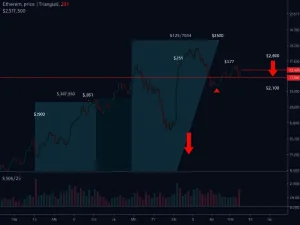
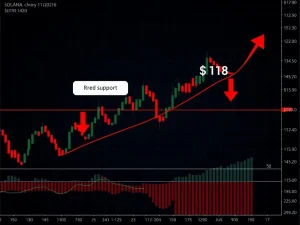
Negative sentiment spread comprehensively beyond Bitcoin. Spot Ether ETFs recorded substantial outflows of $155.6 million. Similarly, XRP-focused investment products shed $92.9 million. Solana ETFs showed relative resilience with only $2.2 million in outflows. This followed modest inflows earlier in the week. Ether ETFs currently hold $16.75 billion in AUM. This sum constitutes approximately 5% of Ether’s total market capitalization, which is around $330 billion.
According to a recent CoinShares report, total assets in all crypto exchange-traded products (ETPs) globally stood at $178 billion by the end of last week. This collective value represents 5.7% of the entire cryptocurrency market’s total valuation. The broad-based nature of the sell-off highlights its systemic character. Key observations from the altcoin segment include:
- Ether ETF Vulnerability: Outflows indicate sensitivity to broader market risk.
- XRP’s Disproportionate Movement: Larger outflows relative to market size suggest asset-specific concerns.
- Solana’s Relative Stability: Smaller outflows may point to differentiated investor conviction.
Total cryptocurrency market capitalization stood at about $2.92 trillion at the time of reporting. Nearly $200 billion in value evaporated since the market peaked above $3 trillion just a day earlier. This rapid decline underscores the market’s current fragility and high correlation with traditional risk assets.
Historical Precedents and Market Psychology
Examining previous outflow events provides crucial context. The November 2025 outflow event, referenced as the previous record, coincided with regulatory announcements from several G20 nations. Markets typically absorb such shocks over a 4-6 week period before establishing a new equilibrium. The velocity of the current outflows—concentrated in a single week—suggests a triggered response to external events rather than organic profit-taking. Investor psychology during these phases often shifts from greed to fear, prompting herd-like selling behavior in liquid ETF products before less liquid direct holdings.
The Role of ETF Products in Price Discovery
The very existence of spot Bitcoin and Ether ETFs has transformed market dynamics. These regulated vehicles provide a transparent, real-time window into institutional demand. Their flows now serve as a leading sentiment indicator. The $1 billion weekly outflow represents a measurable contraction in demand from one of the market’s most significant participant groups. This transparency, while contributing to short-term volatility, ultimately supports market efficiency by providing clear data on capital movements.
Conclusion
The cryptocurrency market experienced a significant contraction driven by nearly $1 billion in Bitcoin and Ether ETF outflows, contributing to a 6% decline in total market capitalization. This event highlights the growing interdependence between traditional finance and digital assets, where macroeconomic triggers and equity market movements directly impact crypto liquidity. While the scale of the Bitcoin ETF outflows appears substantial, these investment products continue to represent a major portion of the asset’s market structure. The market’s response to geopolitical and technological sector stress confirms cryptocurrencies’ ongoing sensitivity to broader risk sentiment, even as the asset class matures.
FAQs
Q1: What caused the $1 billion in Bitcoin and Ether ETF outflows?
The outflows were primarily triggered by a combination of fresh U.S. tariff threats creating macroeconomic uncertainty and a major sell-off in AI-related technology stocks, led by Microsoft’s 10% drop. This created a broad risk-off sentiment across financial markets.
Q2: How significant is a $1 billion outflow relative to total ETF assets?
While $1 billion is a substantial weekly figure, Bitcoin ETFs still manage over $107 billion in assets. The outflow represents less than 1% of total assets under management, indicating a repositioning rather than a mass exodus.
Q3: Did the outflows affect Bitcoin’s market capitalization significantly?
The outflows contributed to a decline, but Bitcoin ETFs represent approximately 6.5% of Bitcoin’s total $1.65 trillion market cap. The broader 6% market drop reflected wider selling pressure beyond just ETF redemptions.
Q4: Were altcoin ETFs affected similarly to Bitcoin ETFs?
Yes, negative sentiment spread across altcoin products. Ether ETFs saw $155.6 million in outflows, and XRP funds lost $92.9 million. Solana ETFs were more resilient with only $2.2 million in outflows.
Q5: What does this mean for the future of cryptocurrency ETFs?
Periodic outflows are normal for established financial products and demonstrate a functioning, liquid market. The events highlight how crypto ETFs have become integrated into global finance, responding to the same macroeconomic forces as traditional ETFs.