Kevin Warsh Fed Chair Appointment: Trump’s Bold Move Reshapes Monetary Policy and Crypto Regulation
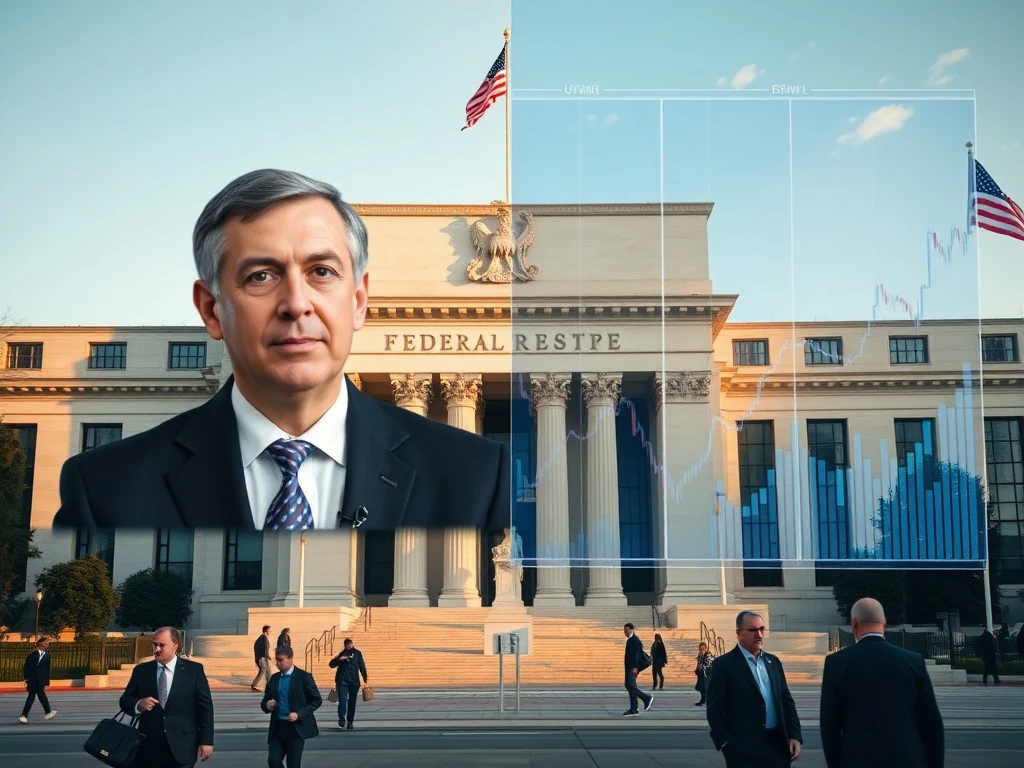
WASHINGTON, D.C. – January 30, 2025: President Donald Trump is preparing to announce Kevin Warsh as the next Federal Reserve Chair, a consequential decision that could reshape American monetary policy and financial regulation for years to come. This potential appointment follows months of public tension between Trump and current Chair Jerome Powell, signaling a significant shift in the central bank’s direction during a period of economic uncertainty and technological transformation in global finance.
Kevin Warsh Fed Chair Appointment: Background and Political Context
The White House confirmed Thursday evening that President Trump met with former Federal Reserve Governor Kevin Warsh, setting the stage for Friday’s anticipated announcement. Warsh, who served on the Fed’s Board of Governors from 2006 to 2011, emerges as the leading candidate following Kevin Hassett’s withdrawal from consideration. Prediction markets on Polymarket and Kalshi now assign over 90% probability to Warsh’s nomination, reflecting near-certainty among financial traders about this outcome.
This development represents the culmination of Trump’s longstanding criticism of Jerome Powell’s monetary stewardship. Throughout 2024, the President repeatedly accused the Fed of maintaining excessively restrictive policies that hindered economic growth. Trump’s Thursday social media post encapsulated this frustration, stating the economy “should have a much lower rate now” and criticizing “totally useless and unjustified interest expenses.” The President has advocated for benchmark rates near 1% to stimulate economic activity ahead of the 2026 midterm elections.
Historical Precedent and Institutional Norms
Federal Reserve leadership transitions typically occur with substantial bipartisan consultation and respect for institutional independence. The potential Warsh appointment breaks from recent tradition in several respects. First, it would represent the first instance since 1978 where a sitting President replaces a Fed Chair who has expressed willingness to continue serving. Second, it occurs amid an ongoing Department of Justice investigation into the Fed’s management of a $2.5 billion real estate project, adding legal complexity to the transition.
Warsh’s Monetary Philosophy and Crypto Curiosity
Kevin Warsh brings a distinctive perspective to the Federal Reserve leadership position, combining traditional monetary conservatism with unconventional views on financial innovation. During his previous Fed tenure, Warsh established himself as a voice for fiscal discipline and regulatory caution. However, his recent public statements reveal evolving thinking about digital assets and their role in the financial system.
In a July interview with Stanford University’s Hoover Institution, Warsh articulated a nuanced position on Bitcoin: “Bitcoin doesn’t bother me. I consider it an important asset that can help policymakers know when they are doing things right or wrong. I think it can often be a very good policeman for policy.” This perspective positions cryptocurrency not as a threat to dollar dominance but as a potential diagnostic tool for evaluating monetary policy effectiveness.
Comparative Policy Approaches
| Policy Area | Jerome Powell | Kevin Warsh |
|---|---|---|
| Interest Rate Philosophy | Data-dependent gradual adjustments | Preemptive moves based on market signals |
| Regulatory Approach | Incremental innovation with strong oversight | Market-led innovation with regulatory adaptation |
| Digital Assets | Cautious study and limited experimentation | Strategic monitoring as policy feedback mechanism |
| Fed Independence | Strong institutional autonomy emphasis | Policy coordination with executive branch |
Warsh’s background provides additional context for his policy views. Before joining the Federal Reserve, he served as Special Assistant to the President for Economic Policy and worked at Morgan Stanley. This combination of public policy and Wall Street experience informs his approach to central banking, which emphasizes market mechanisms while acknowledging political realities.
Market Reactions and Economic Implications
Financial markets responded immediately to Thursday’s developments, with several notable movements occurring in anticipation of Friday’s formal announcement. The U.S. dollar strengthened against major currencies, reflecting expectations of potentially tighter monetary policy under Warsh’s leadership. Long-term Treasury yields rose approximately 15 basis points, while equity futures showed mixed performance across different sectors.
Cryptocurrency markets displayed particular sensitivity to the news. Bitcoin maintained position around $82,554 but showed increased volatility during after-hours trading. Analysts identified several key price levels to monitor:
- Resistance at $83,000: A break above could signal market confidence in Warsh’s crypto views
- Support at $78,000: Critical technical level that has held through recent corrections
- Potential correction to $70,000: Worst-case scenario if Fed adopts unexpectedly hawkish tone
Gold continued its recent surge, reaching $2,450 per ounce as investors sought traditional safe-haven assets amid political uncertainty. This movement reflects broader concerns about potential erosion of Federal Reserve independence and increased political influence over monetary decisions.
Institutional Constraints and Governance Reality
Despite the potential leadership change, structural factors limit any single individual’s ability to transform Federal Reserve policy. Jerome Powell retains his position as a Governor until 2028, ensuring continued institutional memory and potential internal opposition to radical policy shifts. The Federal Open Market Committee’s collective decision-making process further constrains unilateral action, requiring consensus-building among regional bank presidents and board members.
Historical precedent suggests new Fed Chairs typically maintain substantial policy continuity during their initial months, allowing markets to adjust gradually to new leadership styles. The current economic environment—characterized by slowing growth but persistent inflationary pressures—presents particular challenges that may encourage cautious policymaking regardless of leadership changes.
Broader Political and Regulatory Landscape
The potential Warsh appointment occurs within a complex regulatory environment where multiple agencies exercise jurisdiction over financial innovation. The Securities and Exchange Commission, Commodity Futures Trading Commission, and Treasury Department all maintain active cryptocurrency oversight programs. Federal Reserve leadership changes could influence interagency coordination and regulatory consistency across these organizations.
Congressional response remains uncertain, with key committee leaders offering measured initial reactions. Senate Banking Committee Chair Sherrod Brown emphasized the importance of “maintaining Fed independence from political pressure” while acknowledging the President’s nomination authority. Confirmation hearings would likely explore Warsh’s views on several critical issues:
- Digital dollar development and central bank digital currency research
- Bank capital requirements and stress testing methodologies
- Climate risk integration into financial supervision
- International coordination with other major central banks
International observers are monitoring developments closely, particularly at the European Central Bank, Bank of Japan, and People’s Bank of China. Policy divergence among major central banks could create currency volatility and complicate global economic coordination efforts.
Conclusion
The potential Kevin Warsh Fed Chair appointment represents a significant inflection point for American monetary policy and financial regulation. This leadership transition combines traditional concerns about Federal Reserve independence with novel questions about cryptocurrency’s role in the financial system. Markets face immediate uncertainty but will ultimately judge the new Chair based on policy decisions rather than appointment circumstances. The coming months will reveal whether Warsh can balance political expectations with economic realities while maintaining institutional credibility in increasingly polarized times. As Friday’s announcement approaches, investors, policymakers, and analysts worldwide await clarification on one of 2025’s most consequential economic decisions.
FAQs
Q1: When would Kevin Warsh officially become Federal Reserve Chair if appointed?
Formal transition would require Senate confirmation following nomination. This process typically takes 2-3 months, though expedited timelines are possible. Warsh would assume leadership immediately upon confirmation, with Jerome Powell reverting to Governor status while completing his term through 2028.
Q2: How does Warsh’s view on Bitcoin differ from previous Fed leadership?
Warsh uniquely positions cryptocurrency as a potential policy feedback mechanism rather than primarily as a threat or speculative asset. His “policeman for policy” framing suggests using Bitcoin price movements as indicators of monetary policy effectiveness, representing a more analytical approach than previous Fed chairs’ cautious regulatory perspectives.
Q3: What immediate market impacts might follow the appointment announcement?
Expect currency volatility, particularly dollar strength against major pairs, and potential equity sector rotation favoring financial institutions. Cryptocurrency markets may test key technical levels around $83,000 resistance, while Treasury yields could experience further upward pressure amid policy uncertainty.
Q4: Can President Trump remove Jerome Powell as Fed Chair before his term ends?
Federal Reserve Chairs serve four-year terms independent of presidential cycles. While Trump can choose not to renominate Powell when his term expires, he cannot directly remove him before January 2026. Powell retains his separate Governor position regardless of Chair status.
Q5: How might international central banks respond to this leadership change?
Major central banks will likely maintain formal working relationships while privately reassessing policy coordination assumptions. The European Central Bank and Bank of England may emphasize their independence narratives more strongly, while emerging market central banks could accelerate digital currency initiatives amid potential dollar policy shifts.