Bitcoin Plummets: Digital Asset Drops Out of Global Top 10 by Market Capitalization
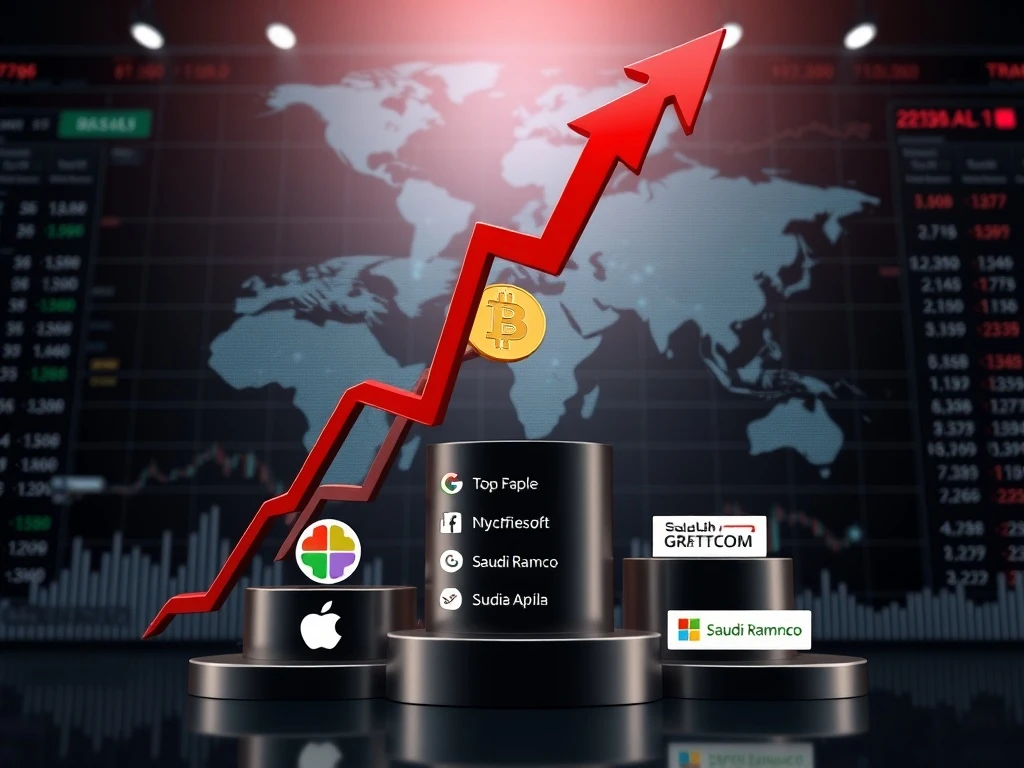
In a significant shift for digital asset markets, Bitcoin has fallen out of the ranking of the world’s top 10 largest assets by market capitalization. According to analysis reported by The Block, the pioneering cryptocurrency now occupies the 11th position globally, having been surpassed by the state-owned oil giant Saudi Aramco. This development, observed in early 2025, marks a notable moment in the evolving relationship between traditional finance and the cryptocurrency sector. The change directly results from Bitcoin’s ongoing price decline, which has reduced its total market valuation below that of several established corporate and commodity titans.
Bitcoin Market Cap Decline and Ranking Shift
The descent from the top 10 represents a concrete metric of Bitcoin’s recent market performance. Market capitalization, calculated by multiplying the current price by the total circulating supply, serves as a standard measure of an asset’s total market value. Consequently, Bitcoin’s price drop has directly eroded this valuation. For context, at its all-time high, Bitcoin’s market cap comfortably placed it within the top 10, even briefly surpassing the valuation of major technology companies. However, the recent bearish trend has reversed those gains. The asset now sits behind Saudi Aramco, a company with a valuation deeply tied to global energy prices and geopolitical factors. This juxtaposition highlights the contrasting nature of the assets now leading the rankings.
- Market Capitalization: The fundamental metric for this ranking, reflecting total perceived market value.
- Price Correlation: Bitcoin’s market cap is highly sensitive to its volatile spot price.
- Traditional Benchmarks: The current top 10 is dominated by technology firms like Apple and Microsoft, alongside commodity-based giants.
Contextualizing the Current Crypto Market Landscape
Bitcoin’s exit from the elite group does not occur in a vacuum. Several interconnected factors within the broader financial ecosystem contribute to this scenario. Firstly, macroeconomic conditions, including persistent inflation and elevated interest rates in major economies, have pressured risk assets globally. Investors often reallocate capital away from volatile assets like cryptocurrencies during such periods. Secondly, the regulatory environment for digital assets remains in flux across key jurisdictions, creating uncertainty that can suppress institutional investment. Furthermore, the maturation of the cryptocurrency sector itself has introduced new dynamics. The growth of decentralized finance (DeFi) and other blockchain applications has diversified investment within the crypto space, potentially diluting some focus from Bitcoin as the sole flagship asset.
Expert Analysis on Valuation and Perception
Financial analysts often compare asset classes using different lenses. For traditional equities like Apple or Saudi Aramco, valuations incorporate metrics like price-to-earnings ratios, revenue growth, and dividend yields. Bitcoin, as a non-yielding digital asset, derives its value from different perceived attributes: its fixed supply, its role as a potential store of value or inflation hedge, and its utility as a decentralized payment network. Therefore, its market cap ranking against traditional companies is a comparison of fundamentally different value propositions. Experts from firms like Fidelity Digital Assets and ARK Invest have previously framed such comparisons as illustrative of Bitcoin’s adoption journey rather than a definitive judgment on its worth. The current shift may reflect short-term market sentiment overpowering these long-term thematic investments.
Historical Performance and Market Cycle Perspective
Historically, Bitcoin has experienced pronounced cycles of boom and bust. A review of its price history shows previous drawdowns exceeding 80% from peak to trough, followed by subsequent rallies to new highs. Its market cap ranking has also fluctuated significantly over time. For instance, during the 2017 bull run, Bitcoin entered the top 20 assets globally before receding. The 2021 bull run saw it climb higher into the top 10. This pattern suggests that volatility and ranking changes are inherent features of its market behavior. Many long-term proponents view these cycles as part of the asset’s maturation process. They argue that each cycle attracts new infrastructure, regulatory clarity, and institutional participation, gradually building a more resilient foundation despite short-term price volatility.
| Rank | Asset/Company | Sector |
|---|---|---|
| 1 | Apple Inc. | Technology |
| 2 | Microsoft Corp. | Technology |
| 3 | Saudi Aramco | Energy |
| … | … | … |
| 10 | Meta Platforms Inc. | Technology |
| 11 | Bitcoin (BTC) | Cryptocurrency |
| 12 | Ethereum (ETH) | Cryptocurrency |
Potential Implications for the Digital Asset Ecosystem
The immediate implication of this ranking change is symbolic, potentially affecting mainstream perception of cryptocurrency’s stability and maturity. For retail and institutional investors, it may reinforce narratives about the asset class’s risk profile. However, within the crypto industry, the impact may be more nuanced. A lower Bitcoin dominance—the ratio of Bitcoin’s market cap to the total crypto market cap—can sometimes correlate with increased capital flows into alternative cryptocurrencies (altcoins). This can spur innovation and development across the broader blockchain ecosystem. Moreover, the event may prompt renewed discussion about the fundamental drivers of cryptocurrency value. It underscores the ongoing debate between Bitcoin as ‘digital gold’ and its utility for transactions and smart contracts, a domain where other blockchains actively compete.
The Role of Traditional Finance and Macro Factors
The ascent of Saudi Aramco past Bitcoin is particularly instructive. Aramco’s valuation is intrinsically linked to global oil demand, geopolitical stability in the Middle East, and the global transition to renewable energy. Its position highlights how traditional commodity and equity markets respond to a different set of drivers than cryptocurrency markets. When central banks tighten monetary policy, both growth stocks and speculative assets like crypto often face headwinds, while energy companies may benefit from certain inflationary conditions. This divergence explains how their market cap rankings can change relative to each other. Analysts monitoring capital flows note that such periods often test the ‘uncorrelated asset’ thesis that some advocates propose for Bitcoin.
Conclusion
Bitcoin’s drop out of the top 10 assets by market capitalization is a significant data point reflecting its recent price decline and the current risk-off sentiment in global markets. This event places the digital currency directly behind Saudi Aramco, underscoring a clash between the old and new economies. While the shift is noteworthy for market observers and may influence short-term perceptions, it is consistent with Bitcoin’s historical volatility. The fundamental narrative around Bitcoin—encompassing its fixed supply, decentralization, and potential long-term role—remains unchanged for its proponents. Ultimately, this market cap ranking serves as one of many indicators in assessing the turbulent and evolving journey of cryptocurrency within the global financial landscape. Future movements will likely depend on broader macroeconomic trends, regulatory developments, and continued technological adoption.
FAQs
Q1: What does it mean for Bitcoin to drop out of the top 10 assets by market cap?
It means the total market value of all Bitcoin in circulation has fallen below that of the tenth-largest asset, currently a traditional company like a tech giant or commodity producer. It is a relative measure of size, not a direct indicator of technological utility or future potential.
Q2: What asset surpassed Bitcoin to push it to 11th place?
According to the report, the state-owned oil company Saudi Aramco now has a higher market capitalization than Bitcoin, placing it in 10th position and moving Bitcoin to 11th.
Q3: Is this the first time Bitcoin has fallen out of the top 10?
No. Bitcoin’s market cap ranking has fluctuated significantly over its history. It has entered and exited the top 10 during previous market cycles, making this a recurring, though notable, event.
Q4: Does this ranking affect how Bitcoin functions as a technology?
No. Bitcoin’s underlying blockchain technology, security, and transaction processing continue independently of its market price or global ranking. The network’s operation is separate from its financial valuation.
Q5: What are the main factors causing Bitcoin’s price and market cap to decline?
Key factors often include broader macroeconomic conditions (like interest rate hikes), reduced risk appetite among investors, regulatory uncertainty, and sector-specific events that influence trader sentiment.