Kevin Warsh Poised for Stunning Fed Chair Nomination with 81% Probability
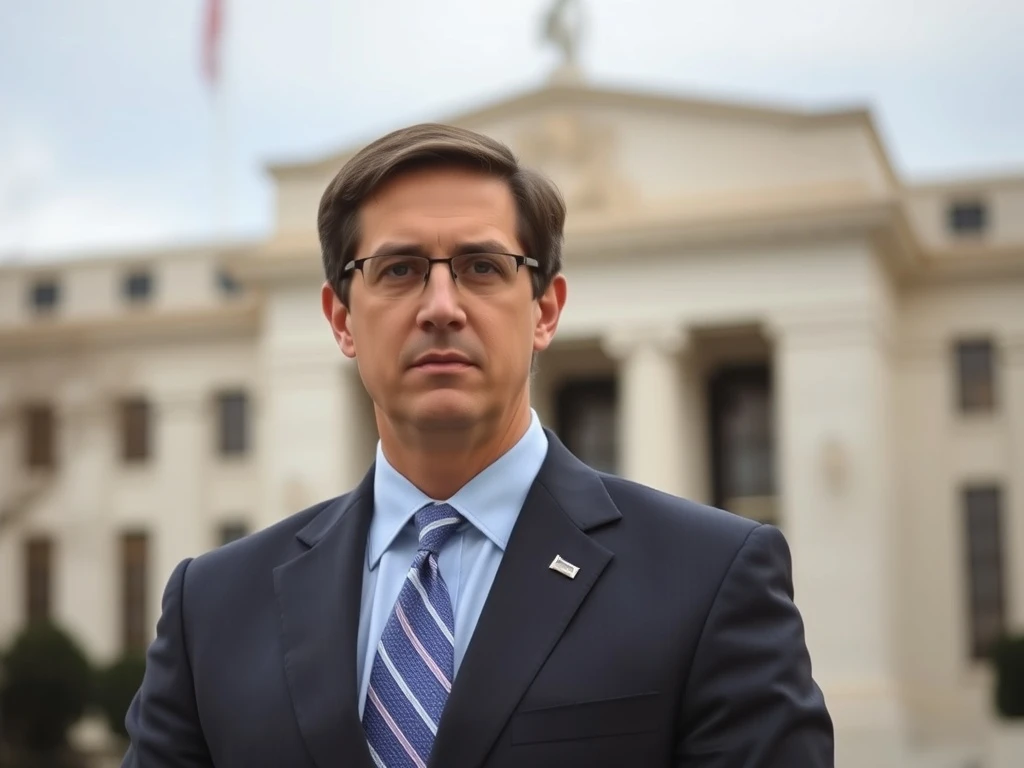
WASHINGTON, D.C. – In a development reshaping expectations for U.S. monetary policy leadership, former Federal Reserve Governor Kevin Warsh now holds a commanding 81% probability of nomination as the next Chair of the Federal Reserve. According to a report from financial analytics outlet Watcher.Guru, President Donald Trump is expected to make his pivotal selection for the role public tomorrow. This potential appointment carries profound implications for interest rate trajectories, financial market stability, and the central bank’s operational framework.
Kevin Warsh and the High-Stakes Fed Chair Selection
The reported likelihood stems from advanced predictive modeling and insider analysis of the nomination process. Consequently, financial markets are closely scrutinizing Warsh’s policy history. As a Fed Governor from 2006 to 2011, he served during the tumultuous 2008 financial crisis. His tenure provided him with direct experience in crisis management and unconventional monetary tools. Moreover, his subsequent critiques of post-crisis Fed policy have defined his public intellectual stance.
Market analysts immediately began assessing the potential shift in Fed governance. A Warsh chairmanship would likely signal a preference for a rules-based, transparent monetary policy approach. This contrasts with the more discretionary, data-dependent framework of recent years. Therefore, investors are re-evaluating long-term forecasts for inflation targeting and balance sheet normalization.
Background and Monetary Policy Philosophy
Understanding Warsh’s probable policy direction requires examining his career trajectory and published views. After his term at the Fed, he joined the Hoover Institution at Stanford University as a distinguished visiting fellow. There, he authored numerous papers on central bank communication and financial system resilience. His academic work frequently emphasizes the risks of prolonged monetary accommodation.
Key pillars of his monetary policy philosophy include:
- Rules-Based Framework: Advocacy for clearer, more predictable policy rules to guide market expectations and reduce uncertainty.
- Balance Sheet Normalization: A historically cautious view on quantitative easing, with support for a systematic reduction of the Fed’s asset holdings.
- Financial Stability Focus: Arguing that monetary policy should more explicitly consider asset bubbles and systemic risk, not just inflation and employment.
- Transparency: Pushing for simpler, more direct communication from the central bank to avoid market misinterpretation.
These positions have sometimes placed him at odds with the consensus-driven approach of recent Fed boards. However, they align with certain critiques of the Fed’s post-2008 expansionary stance.
Expert Analysis on the Potential Transition
Financial historians and policy experts are weighing the significance of this potential leadership change. Dr. Eleanor Vance, a professor of central banking at Georgetown University, notes the historical context. “The appointment of a chair with Warsh’s specific critique of recent Fed orthodoxy would be notable,” she stated in a recent interview. “It suggests a deliberate pivot towards normalizing policy and reassessing the boundaries of the Fed’s mandate, especially regarding financial market interventions.”
Market strategists are modeling various scenarios. The immediate reaction in bond futures indicates a slight steepening of the yield curve, anticipating a potentially more hawkish tilt. Conversely, equity markets showed initial volatility, reflecting concerns about tighter financial conditions. This dichotomy highlights the complex transmission mechanisms of Fed leadership signals.
Comparative Context and Historical Precedent
To gauge the potential impact, it is useful to compare Warsh’s profile to recent Fed Chairs. The table below outlines key differentiating factors.
| Attribute | Kevin Warsh (Potential) | Jerome Powell (Current) | Janet Yellen (Former) |
|---|---|---|---|
| Primary Career Background | Investment Banking, Fed Governance | Private Equity, Public Service | Academic Economics |
| Crisis Experience | 2008 Crisis Governor | Post-Crisis Governor | Pre-Crisis Advisor |
| Stance on Fed Transparency | Advocate for Simplified Rules | Supports Forward Guidance | Emphasized Data Dependency |
| View on Regulatory Reach | Favors Tailored, Efficient Regulation | Supports Robust Post-Crisis Framework | Strong Advocate for Dodd-Frank |
This comparison reveals Warsh’s unique blend of crisis-era governance and a critical perspective on the Fed’s subsequent evolution. His Wall Street experience at Morgan Stanley, followed by his regulatory role, provides a dual-market perspective. This background could influence his approach to market liquidity and banking sector oversight.
Potential Immediate and Long-Term Impacts
The announcement, if confirmed, will trigger a multi-phase response. First, the Senate confirmation process will become a forum for debating monetary policy’s future. Warsh’s past writings and speeches will undergo intense scrutiny. Subsequently, upon confirmation, his initial speeches and FOMC meetings will set the new tone.
Long-term implications may include:
- Interest Rate Path: Potential for a steeper path of rate hikes if inflation persists, guided by a more formal rule.
- Balance Sheet Policy: Accelerated or more predictable quantitative tightening to reduce the Fed’s footprint in bond markets.
- Communication Strategy: A possible overhaul of the Fed’s statement language, press conferences, and dot-plot projections to enhance clarity.
- International Coordination: A possible shift in how the Fed coordinates with other major central banks, potentially emphasizing currency stability.
Global central banks are already monitoring the situation. The European Central Bank and the Bank of Japan may adjust their own policy timelines in response to a less accommodative Fed. Emerging market economies, in particular, are sensitive to shifts in U.S. monetary policy that affect capital flows and dollar strength.
Conclusion
The reported 81% probability of a Kevin Warsh nomination marks a pivotal moment for the Federal Reserve. His distinct policy philosophy, rooted in crisis experience and a critique of post-crisis norms, suggests a potential strategic shift. While the official announcement remains pending, markets and policymakers are preparing for a new chapter in central banking. The ultimate impact will hinge on his ability to build consensus on the Federal Open Market Committee and navigate an uncertain global economic landscape. The selection of the next Fed Chair will undoubtedly shape the financial system for years to come.
FAQs
Q1: What is the source of the 81% probability figure for Kevin Warsh?
The figure originates from analysis by Watcher.Guru, a financial analytics and news outlet. It is reportedly based on predictive modeling, insider sources, and assessment of the political nomination landscape.
Q2: How does Kevin Warsh’s monetary policy view differ from the current Fed stance?
Warsh has historically advocated for a more rules-based, transparent, and potentially less interventionist approach. He has expressed caution about prolonged balance sheet expansion and emphasized financial stability risks more prominently.
Q3: What was Kevin Warsh’s previous role at the Federal Reserve?
He served as a Governor of the Federal Reserve Board from 2006 to 2011. His tenure included the 2008 financial crisis, where he was involved in emergency lending programs and crisis response measures.
Q4: How might financial markets react to a confirmed Warsh nomination?
Initial reactions suggest bond markets may price in a slightly more hawkish path (higher interest rates), while equity markets could face volatility due to uncertainty over future financial conditions. The dollar might strengthen on expectations of tighter policy.
Q5: What is the next step if President Trump nominates Kevin Warsh?
The nomination would proceed to the U.S. Senate for a confirmation hearing before the Senate Banking Committee. Following committee approval, the full Senate would hold a confirmation vote. This process typically takes several weeks.