Altcoin Season Index Stalls at 32: A Critical Juncture for Cryptocurrency Markets
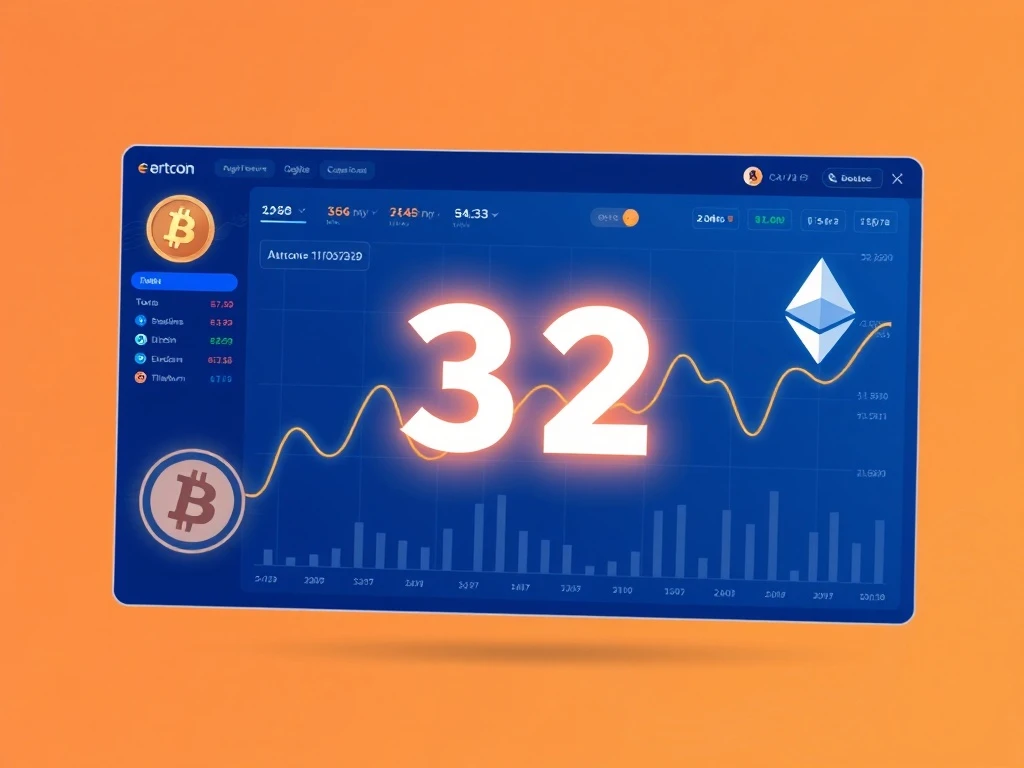
Global cryptocurrency markets are currently at a pivotal crossroads, as evidenced by the latest data from CoinMarketCap. The Altcoin Season Index, a crucial barometer for investor sentiment, has held steady at a value of 32. This figure, unchanged from the previous day, presents a nuanced picture for digital asset portfolios worldwide. Consequently, market participants are analyzing this stagnation for clues about the next major trend. The index serves as a vital diagnostic tool, measuring the relative strength of alternative cryptocurrencies against the market’s foundational asset, Bitcoin.
Understanding the Altcoin Season Index Mechanics
CoinMarketCap’s Altcoin Season Index provides a quantitative framework for assessing market cycles. The platform calculates this metric by comparing the price performance of the top 100 digital assets by market capitalization over a rolling 90-day period. However, the calculation excludes stablecoins and wrapped tokens to ensure a pure measurement of speculative performance. Analysts define a true “altcoin season” as a period where at least 75% of these top assets outperform Bitcoin. Therefore, a score of 32 indicates that only a minority of major altcoins are currently beating Bitcoin’s returns. This methodology offers a clear, data-driven alternative to speculative market narratives.
Market historians often reference previous cycles for context. For instance, the index surged above the critical 75 threshold during the notable altcoin rallies of early 2018 and late 2020. In contrast, prolonged periods below 50, like the current reading, typically correlate with Bitcoin dominance phases. These are times when capital flows preferentially into the flagship cryptocurrency. The steady score of 32 suggests a market in a state of equilibrium, awaiting a catalyst to shift capital flows decisively.
The Current Cryptocurrency Market Context
Several macroeconomic and sector-specific factors contribute to the index’s current position. Firstly, institutional adoption continues to focus heavily on Bitcoin and, to a lesser extent, Ethereum. This trend often sidelines broader altcoin projects. Secondly, regulatory developments in major economies create uncertainty, prompting a “flight to quality” among investors. Furthermore, the development cycles of major Layer 1 and Layer 2 networks are in phases of implementation rather than speculation, reducing short-term trading fervor.
A comparison of recent index readings reveals a pattern:
- 30 Days Ago: Index at 28
- 15 Days Ago: Index at 35
- Current Reading: Index at 32
This data shows minor fluctuation within a narrow band, indicating consolidation. The stability itself is a significant data point. It reflects a market that is neither aggressively fleeing riskier altcoins nor piling into them. Trading volumes and liquidity patterns across major exchanges support this observation of cautious sentiment.
Expert Analysis on Market Sentiment
Financial analysts specializing in digital assets interpret the steady index as a sign of maturation. “A static index value doesn’t signify stagnation in innovation,” notes a report from a leading blockchain analytics firm. “Instead, it often reflects a period of fundamental assessment. Developers continue to build, and network activity grows on many chains, but the market is selectively rewarding proven utility over hype.” This perspective shifts the focus from pure price action to on-chain metrics and user adoption rates, which can be leading indicators for a future index breakout.
The path from a reading of 32 to the altcoin season threshold of 75 is historically non-linear. It requires a confluence of factors: a stabilization or pullback in Bitcoin’s price, a surge of capital into decentralized finance (DeFi) or other crypto subsectors, and positive external catalysts like supportive regulatory clarity or technological breakthroughs. Currently, these conditions are only partially met, explaining the index’s hesitant position.
Historical Precedents and Future Implications
Examining past data provides crucial insight into potential future movements. Previous cycles demonstrate that extended periods of compression, where the index trades in a low range, often precede powerful expansion phases. The duration of the current low-reading phase will be a key watchpoint for quantitative funds and long-term holders. Market technicians also monitor the relative strength of mid-capitalization altcoins, as they frequently lead the initial charge in a broader rotation.
For portfolio managers, a low Altcoin Season Index reading informs specific allocation strategies. It often justifies a higher weighting in Bitcoin while maintaining selective, research-driven positions in altcoins with strong fundamentals. This balanced approach aims to capture upside if a season materializes while protecting against downside risk if Bitcoin dominance strengthens. The current environment emphasizes the importance of diversification across asset types, market caps, and use cases within the digital asset universe.
Conclusion
The Altcoin Season Index holding steady at 32 offers a clear snapshot of a cryptocurrency market in a deliberate pause. This reading, far from the 75 threshold that defines an altcoin season, signals continued caution among investors. The market appears to be prioritizing established assets and tangible progress over broad speculative rallies. For observers and participants, the index provides an essential, neutral gauge of market structure. Monitoring its movement from this juncture will be critical for understanding the next major phase of capital rotation within the dynamic and evolving digital asset landscape.
FAQs
Q1: What exactly does an Altcoin Season Index of 32 mean?
An index value of 32 means that less than half of the top 100 cryptocurrencies (excluding stablecoins) have outperformed Bitcoin over the past 90 days. It indicates that the market is not in an “altcoin season” and that Bitcoin’s relative strength is currently dominant.
Q2: How is the Altcoin Season Index calculated?
CoinMarketCap calculates the index by tracking the 90-day price performance of the top 100 crypto assets by market cap. It compares each asset’s performance to Bitcoin’s over the same period. The index percentage reflects the proportion of those assets that have outperformed Bitcoin.
Q3: What index value signals a true “altcoin season”?
A true altcoin season is officially recognized when the index reaches or exceeds 75. This threshold indicates that at least 75 out of the top 100 altcoins have delivered better returns than Bitcoin over the preceding quarter, suggesting widespread capital rotation into alternative cryptocurrencies.
Q4: Does a low index mean all altcoins are performing poorly?
Not necessarily. A low aggregate index can mask strong performance in specific sectors or individual tokens. It signifies that, on average, altcoins as a group are underperforming Bitcoin, but standout projects in areas like DeFi or gaming may still be achieving significant gains.
Q5: How should investors use this index data?
Investors should use the index as one of several tools for market analysis. A low or steady reading suggests a more cautious, selective approach to altcoin investing, potentially favoring Bitcoin-heavy or diversified portfolios. A rapidly rising index can signal a shifting momentum that may warrant portfolio rebalancing.