Crypto Fear & Greed Index Plunges to 16: The Alarming Signal of Extreme Market Fear
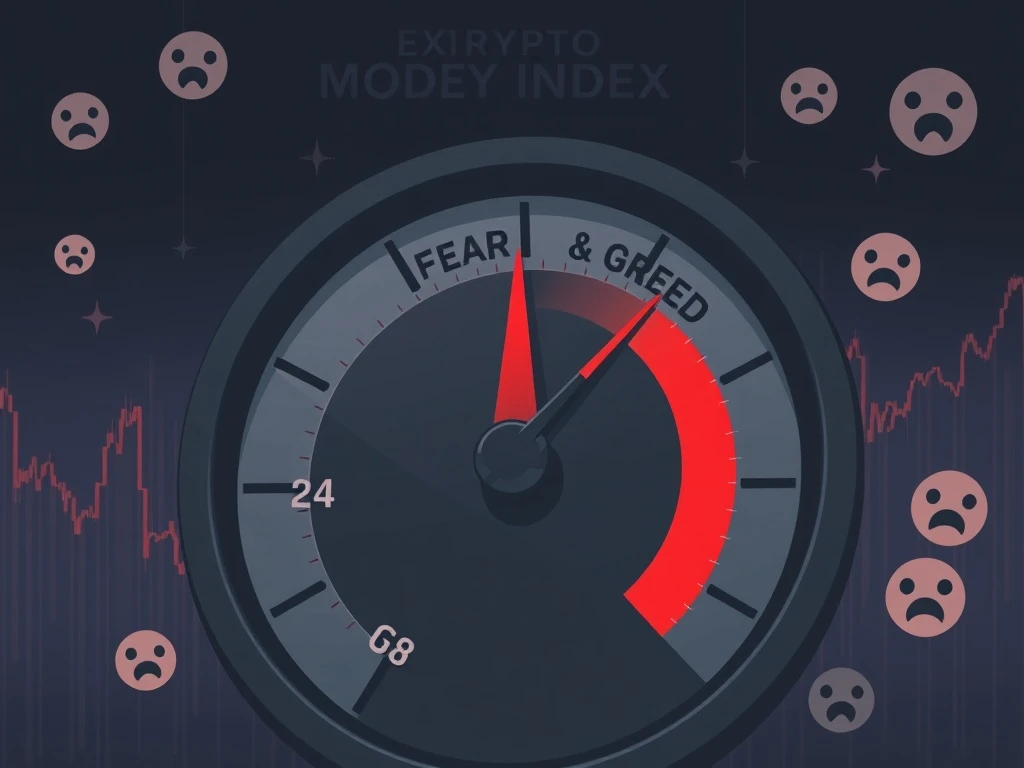
The cryptocurrency market has entered a period of pronounced anxiety as the widely monitored Crypto Fear & Greed Index plummeted to 16 this week, signaling a shift from mere fear to extreme fear among investors globally. This significant 10-point drop represents one of the most substantial sentiment declines in recent months, occurring against a backdrop of heightened volatility and regulatory uncertainty. Market analysts now scrutinize this development closely, recognizing the index as a crucial psychological barometer for digital asset markets.
Crypto Fear & Greed Index Drops to Extreme Fear Territory
Alternative’s Crypto Fear & Greed Index serves as a comprehensive sentiment measurement tool for cryptocurrency markets. The index operates on a scale from 0 to 100, where 0 represents extreme fear and 100 indicates extreme greed. Currently sitting at 16, the index has entered what analysts classify as the “extreme fear” zone, typically defined as readings below 25. This positioning suggests widespread investor apprehension about market direction and potential downside risks.
Several factors contributed to this dramatic sentiment shift. First, increased market volatility has rattled investors who remember previous cryptocurrency downturns. Second, trading volume patterns indicate reduced participation from retail investors. Third, social media sentiment has turned notably negative across major platforms. Furthermore, Bitcoin’s market dominance has fluctuated significantly, creating uncertainty about altcoin performance. Finally, Google search trends show declining interest in cryptocurrency purchases.
Understanding the Index Methodology and Components
The Crypto Fear & Greed Index employs a sophisticated multi-factor approach to gauge market psychology. Each component receives specific weighting based on historical correlation with market movements. Volatility accounts for 25% of the calculation, measuring price swings relative to historical averages. Trading volume contributes another 25%, assessing whether transactions are increasing or decreasing. Social media sentiment analysis comprises 15%, tracking mentions and tone across platforms.
Market surveys provide 15% of the index value, capturing professional investor expectations. Bitcoin dominance represents 10%, measuring Bitcoin’s share of total cryptocurrency market capitalization. Google Trends data completes the final 10%, indicating retail investor interest through search patterns. This comprehensive methodology ensures the index reflects both technical market data and psychological factors influencing investor behavior.
Historical Context and Comparative Analysis
Historical data reveals important patterns about extreme fear readings. During previous market cycles, readings below 20 have often preceded significant buying opportunities, though timing remains unpredictable. For instance, the index reached single digits during March 2020’s market crash, followed by a substantial recovery. Similarly, readings near current levels occurred in June 2022 before markets stabilized temporarily.
Comparative analysis shows the current reading sits well below the 30-day average of 28 and the 90-day average of 34. This divergence suggests a rapid deterioration in sentiment rather than gradual decline. The table below illustrates recent index movements:
| Time Period | Average Reading | Sentiment Classification |
|---|---|---|
| Current | 16 | Extreme Fear |
| 30-Day Average | 28 | Fear |
| 90-Day Average | 34 | Fear |
| 1-Year Average | 45 | Neutral |
Market Implications and Investor Psychology
Extreme fear readings carry significant implications for market behavior. Historically, such levels have correlated with several observable patterns. First, selling pressure often intensifies as emotional investors exit positions. Second, trading volumes typically decline as participants adopt wait-and-see approaches. Third, volatility frequently increases due to reduced liquidity and amplified price reactions to news.
Investor psychology plays a crucial role during extreme fear periods. Behavioral finance research indicates that investors tend to:
- Overweight recent negative information while discounting positive fundamentals
- Exhibit herd behavior, following others’ selling rather than independent analysis
- Experience loss aversion, feeling losses more acutely than equivalent gains
- Make decisions based on emotion rather than rational assessment of probabilities
These psychological factors often create self-reinforcing cycles where fear breeds more fear, potentially leading to oversold conditions. However, experienced investors recognize that extreme sentiment readings sometimes signal contrarian opportunities, though timing remains challenging.
Expert Perspectives on Current Market Conditions
Financial analysts offer varied interpretations of the current extreme fear reading. Some emphasize caution, noting that sentiment indicators can remain depressed for extended periods during bear markets. Others highlight potential opportunities, recalling Warren Buffett’s famous advice to “be fearful when others are greedy and greedy when others are fearful.”
Market strategists point to several factors potentially driving the sentiment shift. Regulatory developments in major economies have created uncertainty about cryptocurrency oversight. Macroeconomic conditions, including interest rate policies and inflation concerns, have affected risk assets broadly. Technical analysis shows Bitcoin testing key support levels, increasing anxiety among chart-focused traders.
Practical Considerations for Market Participants
Investors navigating extreme fear conditions should consider several practical approaches. First, maintaining perspective about market cycles helps avoid panic-driven decisions. Second, reviewing portfolio allocations ensures alignment with risk tolerance and investment horizons. Third, implementing dollar-cost averaging can reduce timing risks during volatile periods.
Risk management becomes particularly important when sentiment reaches extremes. Setting clear entry and exit criteria based on fundamentals rather than emotion provides discipline. Diversifying across asset classes reduces concentration risk. Maintaining liquidity reserves allows investors to capitalize on opportunities without forced selling. Monitoring multiple indicators beyond sentiment alone provides more complete market assessment.
Conclusion
The Crypto Fear & Greed Index reading of 16 clearly signals extreme fear in cryptocurrency markets. This psychological indicator reflects current investor anxiety driven by volatility, regulatory uncertainty, and macroeconomic concerns. While extreme readings historically sometimes precede market turning points, they can also persist during extended downturns. Investors should therefore interpret this data point as one component of comprehensive market analysis rather than a standalone timing signal. The index serves as a valuable sentiment thermometer, but successful navigation of cryptocurrency markets requires combining psychological indicators with fundamental analysis, technical assessment, and disciplined risk management.
FAQs
Q1: What does a Crypto Fear & Greed Index reading of 16 mean?
The reading of 16 indicates extreme fear in cryptocurrency markets. This places the index in its lowest quartile, suggesting widespread investor anxiety and potential market stress.
Q2: How often does the index reach extreme fear levels?
Extreme fear readings occur periodically during market downturns, typically several times per market cycle. Historical data shows these periods can last from days to several months depending on market conditions.
Q3: Is the Crypto Fear & Greed Index a reliable timing indicator for investments?
While the index provides valuable sentiment data, it should not serve as a standalone timing tool. Extreme readings sometimes precede market reversals but can also persist during extended bear markets.
Q4: What factors caused the recent drop to 16?
Multiple factors contributed including increased volatility, declining trading volumes, negative social media sentiment, survey results showing investor pessimism, Bitcoin dominance fluctuations, and reduced Google search interest.
Q5: How should investors respond to extreme fear readings?
Investors should maintain perspective, review risk tolerance, consider dollar-cost averaging, ensure proper diversification, and combine sentiment data with fundamental and technical analysis before making decisions.