Futures Liquidated: $101 Million Hourly Carnage Highlights Extreme Crypto Market Volatility
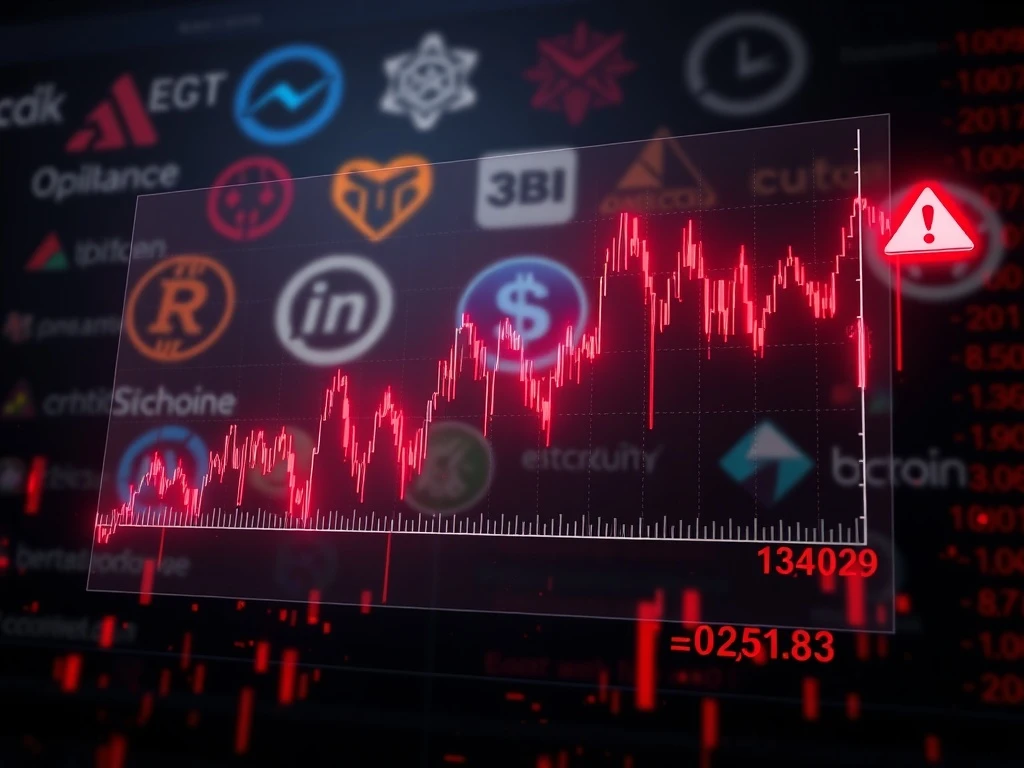
Global cryptocurrency markets experienced a severe stress test in the past hour, with major exchanges reporting a staggering $101 million in futures contracts liquidated, according to aggregated data from leading analytics platforms. This intense, short-term event forms part of a broader 24-hour liquidation total exceeding $1.04 billion, underscoring a period of exceptional volatility and heightened risk for leveraged traders worldwide. The scale of these liquidations immediately prompts analysis of market structure, leverage ratios, and the underlying price movements triggering these automated risk management events.
Understanding the $101 Million Futures Liquidated Event
Futures liquidations represent a critical, automated function within cryptocurrency exchanges. When traders use leverage to amplify their positions, they must maintain a minimum margin level. Consequently, a rapid price move against their position can trigger an automatic closure, or liquidation, by the exchange to prevent negative balances. The $101 million figure, therefore, signifies the total value of these forcibly closed leveraged positions across platforms like Binance, Bybit, OKX, and others within a single 60-minute window.
This mechanism, while protecting exchange solvency, often accelerates market moves. A cascade of sell orders from long position liquidations can drive prices lower, potentially triggering further liquidations in a volatile feedback loop. Conversely, short squeezes occur when rising prices force the closure of leveraged short bets. Analysts closely monitor liquidation heatmaps to identify potential support and resistance levels where large clusters of leveraged positions exist.
| Timeframe | Total Liquidations | Primary Direction |
|---|---|---|
| Past Hour | $101 Million | Majority Longs |
| Past 24 Hours | $1.041 Billion | Mixed (Longs & Shorts) |
Data from the past 24 hours reveals a more complex picture. The $1.041 billion total indicates sustained volatility, not just an isolated spike. Typically, such periods involve significant news catalysts, macroeconomic data releases, or large, singular market orders that disrupt equilibrium. Furthermore, the distribution between long and short liquidations offers clues about prevailing trader sentiment and the direction of the most painful squeeze.
Anatomy of a Cryptocurrency Liquidation Cascade
The path to $101 million in liquidated futures begins with specific market conditions. First, a market already holding a high level of aggregate leverage becomes susceptible to a trigger. This trigger could be:
- Macroeconomic News: Unexpected inflation data or central bank policy statements.
- Asset-Specific Events: Regulatory actions, network issues, or large token unlocks.
- Technical Breakouts/Breakdowns: Price moving beyond key technical levels where stop-losses cluster.
Once price moves, exchanges calculate the mark price—an average from major spot markets—to determine liquidation thresholds fairly. Positions falling below the maintenance margin are then queued for closure. Exchanges use insurance funds and auto-deleveraging mechanisms to manage the process, but the sheer volume can overwhelm order book liquidity. This situation temporarily exacerbates slippage, meaning positions are closed at worse prices than anticipated, amplifying losses.
Expert Insight on Market Structure and Risk
Market analysts emphasize that liquidation events are a feature, not a bug, of leveraged futures markets. “These data points are vital health metrics,” explains a veteran derivatives trader from a Singapore-based fund. “A $100M hourly liquidation in 2025 reflects a market with sophisticated but risk-prone participants. It shows both the depth of capital and the persistent appetite for high leverage, despite well-known dangers.” The concentration of liquidations also provides intelligence. If the majority occurred on a single exchange, it may point to platform-specific leverage offerings or user base behavior. A broad-based event across all major venues suggests a universal, macro-driven shock.
Historical context is crucial. Compared to previous market cycles, the absolute dollar value of liquidations has grown alongside total market capitalization. However, the percentage of open interest liquidated can be a more telling metric. A $101 million event in a $50 billion total open interest market is less significant than the same value in a $10 billion market. Current data must therefore be normalized against the expanding size of the crypto derivatives ecosystem to assess true systemic stress.
The Ripple Effects Beyond Trading Desks
The impact of futures liquidated on this scale extends beyond leveraged traders. First, spot market volatility often increases as liquidation-driven orders hit the market. This volatility can deter institutional adoption in the short term, as custody and treasury solutions prefer stability. Second, funding rates in perpetual swap markets—the fees paid between long and short positions—can swing wildly. Negative funding rates after a long squeeze incentivize traders to open short positions, potentially stabilizing or further pressuring prices.
For the broader blockchain industry, these events highlight the need for robust risk education. Retail traders, in particular, may not fully comprehend the mechanics of cross-margin, isolated margin, and liquidation engines. Regulatory bodies in jurisdictions like the EU, under MiCA, and the US are increasingly scrutinizing leverage limits and consumer protections on crypto derivative products. Consequently, today’s $101 million event will likely be cited in future policy discussions about permissible leverage ratios.
Finally, on-chain data often shows correlated effects. Sharp price drops leading to liquidations can precipitate forced selling of collateralized assets in decentralized finance (DeFi) lending protocols, creating a cross-market contagion risk. Monitoring entities like Glassnode and CryptoQuant track exchange inflows, suggesting whether liquidated traders are depositing more funds or withdrawing in defeat.
Conclusion
The liquidation of $101 million in cryptocurrency futures within one hour serves as a potent reminder of the market’s inherent volatility and the risks of leveraged trading. While representing a routine market function, the magnitude of this event, coupled with the $1.04 billion 24-hour total, provides critical data on trader positioning, market sentiment, and systemic leverage. For participants, understanding the mechanics behind these futures liquidated events is essential for risk management. For observers, they offer a transparent, real-time gauge of market stress and the evolving maturity of the digital asset derivatives landscape. As the market grows, the lessons learned from analyzing these cascades will shape more resilient trading strategies and informed regulatory frameworks.
FAQs
Q1: What does ‘$101 million futures liquidated’ actually mean?
It means that across various cryptocurrency exchanges, leveraged futures trading positions worth a total of $101 million were automatically closed by the platforms because the traders’ collateral fell below the required minimum, typically due to adverse price moves.
Q2: Who loses the money when futures are liquidated?
The traders who held the liquidated positions lose the margin (collateral) they posted to open those leveraged trades. The exchange closes the position to ensure the trader’s losses do not exceed their collateral and create a debt for the platform.
Q3: Do large liquidations cause the price to drop further?
Often, yes. Liquidations of long positions generate market sell orders, which can add downward pressure on price. This can trigger a cascade if falling prices cause more long positions to be liquidated, creating a volatile feedback loop.
Q4: What’s the difference between the 1-hour and 24-hour liquidation numbers?
The 1-hour figure ($101M) captures an intense, short-term spike in volatility and forced closures. The 24-hour figure ($1.041B) provides a broader view of sustained market stress and the cumulative impact of volatility over a full trading day.
Q5: How can traders avoid being liquidated?
Traders can use risk management tools like stop-loss orders, employ lower leverage multiples, maintain higher margin balances above the minimum requirement, and closely monitor market conditions and their position’s liquidation price.