Crypto Futures Liquidated: A Staggering $139 Million Hour Sparks Market Tremors
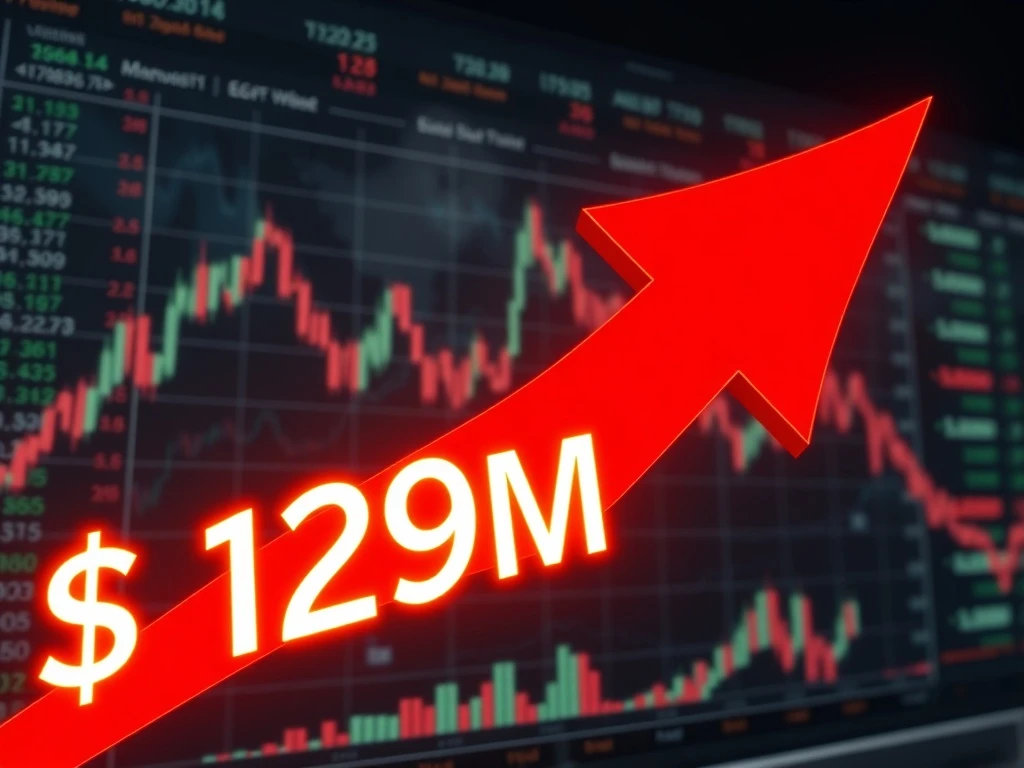
A sudden and severe wave of forced closures rocked cryptocurrency derivatives markets globally on March 21, 2025, as major exchanges reported a staggering $139 million worth of futures positions liquidated within a single hour. This intense activity, furthermore, contributed to a massive 24-hour liquidation total nearing $950 million, signaling a period of extreme volatility and heightened risk for leveraged traders. Consequently, this event has drawn intense scrutiny from analysts examining the underlying market structure and trader behavior.
Crypto Futures Liquidated: Dissecting the $139 Million Hour
Liquidation events represent a critical, yet often painful, mechanism in leveraged trading. Essentially, exchanges automatically close a trader’s position when their initial margin is depleted, preventing negative balances. The recent $139 million liquidation spike, therefore, indicates a rapid and substantial price move that breached critical collateral thresholds for thousands of traders simultaneously. Data from aggregated tracking platforms shows Bitcoin (BTC) and Ethereum (ETH) futures dominated the liquidated volume, though altcoin pairs also contributed significantly.
This hourly figure gains greater context when compared to typical market activity. For instance, average hourly liquidation volumes in calmer periods often measure in the tens of millions. A spike to $139 million, however, immediately suggests an exogenous shock or a cascade of correlated trades. Market analysts point to several potential catalysts for such a move, including:
- Large Whale Activity: A single oversized position hitting its stop-loss can trigger a domino effect.
- Funding Rate Extremes: Exceptionally high funding rates on perpetual swaps can precipitate long squeezes.
- Macro-Economic Data Releases: Surprising inflation or employment figures can spark cross-asset volatility.
- Liquidity Fragmentation: Thin order book depth on certain exchanges can amplify price swings.
Understanding the Mechanics of Futures Market Volatility
The cryptocurrency derivatives market has matured considerably but remains prone to these sharp deleveraging events. The $949 million cleared over 24 hours underscores the scale of the repositioning. Importantly, liquidations are not inherently bearish or bullish; they simply reflect excessive leverage in the direction of the losing trade. A cascade of long liquidations, for example, can exacerbate a price drop as forced selling adds downward pressure. Conversely, short squeezes occur when rising prices force bearish positions to close.
Historical parallels provide valuable insight. The May 2021 market downturn, for instance, saw over $10 billion in liquidations in 24 hours. While the recent event is smaller in scale, its concentrated nature in one hour reveals how automated risk management systems can create flash volatility. Modern trading bots and algorithmic strategies can sometimes accelerate these moves, creating feedback loops that human traders struggle to navigate.
Expert Analysis on Risk Management and Market Health
Seasoned market strategists emphasize that liquidation events, while dramatic, serve as a stress test for exchange infrastructure and trader discipline. “These volatility spikes are a stark reminder of the risks inherent with leverage,” notes a veteran derivatives trader from a major quantitative fund. “They highlight the importance of robust risk parameters, including appropriate position sizing and the use of stop-loss orders that account for slippage.”
Furthermore, the distribution of liquidations across exchanges offers clues about market robustness. Exchanges with deeper liquidity and more sophisticated risk engines typically experience less severe price dislocations during these events. The data from this $139 million hour, therefore, will be closely studied to identify any platforms where price deviations from the global average were excessive, potentially indicating structural weaknesses.
The Ripple Effects Across the Crypto Ecosystem
Significant liquidation events inevitably send ripples beyond the derivatives desks. Spot market prices often experience heightened volatility as the forced buying or selling from liquidations interacts with regular order flow. Additionally, the fear and uncertainty generated can lead to reduced overall trading volumes as participants retreat to the sidelines, temporarily lowering market liquidity and potentially setting the stage for the next large move.
For long-term investors, these events can present both danger and opportunity. The rapid deleveraging can wash out overextended speculation, potentially creating healthier price foundations. However, the heightened volatility also increases the risk of being stopped out of sound long-term positions if stop-losses are placed too tightly. Consequently, many institutional players view such periods as times for heightened vigilance rather than panic.
Conclusion
The episode of $139 million in crypto futures liquidated within one hour serves as a powerful case study in market dynamics and risk. It underscores the amplified consequences of leverage in a still-evolving digital asset landscape. While the immediate impact was sharp, the event primarily affected over-leveraged speculators, providing a necessary reset. Ultimately, understanding the mechanics behind such futures liquidation cascades is crucial for any participant seeking to navigate the high-stakes world of cryptocurrency trading with informed caution and resilience.
FAQs
Q1: What does ‘futures liquidated’ mean?
A1: It means an exchange forcibly closed a leveraged futures position because the trader’s collateral fell below the required maintenance margin. This is an automatic process to prevent the trader’s account from going into negative balance.
Q2: Why did $139 million get liquidated in one hour?
A2: A rapid price movement in a short period likely triggered a cascade of stop-loss orders and margin calls. This can happen due to unexpected news, large “whale” trades, or extreme sentiment shifts, breaching the liquidation price for many highly leveraged positions at once.
Q3: Are liquidation events bad for the overall crypto market?
A3: Not necessarily. While they cause short-term pain for affected traders and increase volatility, they can also flush out excessive speculation and leverage, potentially leading to a more stable price foundation. They are a natural part of markets where leverage is widely used.
Q4: How can traders avoid being liquidated?
A4: Traders can manage this risk by using lower leverage multiples, maintaining ample collateral (over-collateralizing), employing sensible stop-loss orders, and continuously monitoring their margin ratio, especially during periods of high volatility.
Q5: What is the difference between long and short liquidations?
A5: Long liquidations occur when prices fall rapidly, forcing out traders who bet on price increases. Short liquidations happen when prices rise quickly, forcing out traders who bet on price declines. Both add buying or selling pressure that can intensify the prevailing price move.