Trump Demands Dramatic Fed Rate Cuts: Analyzing the High-Stakes Pressure on Central Bank Independence
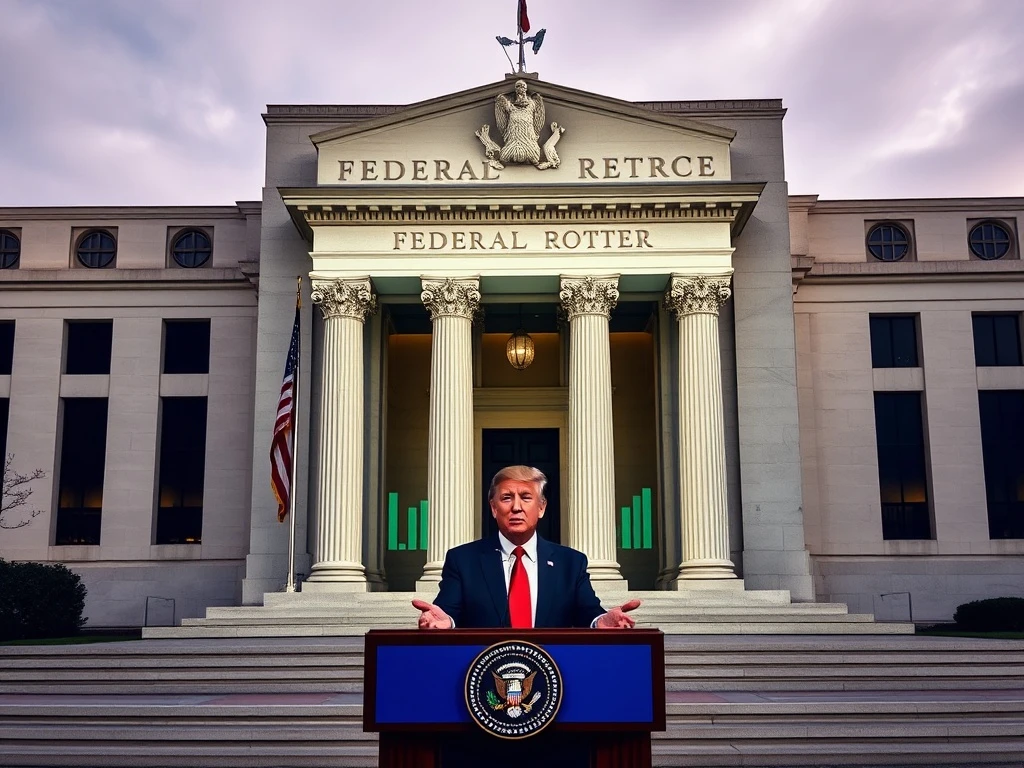
WASHINGTON, D.C. – March 2025: Former President Donald Trump has intensified pressure on the Federal Reserve to implement what he describes as “significant and immediate” interest rate reductions, reigniting a longstanding debate about central bank independence and monetary policy direction. This latest intervention comes amid evolving global economic conditions and raises fundamental questions about the appropriate path for U.S. monetary policy in the current fiscal environment.
Trump’s Call for Federal Reserve Action
According to reporting by Walter Bloomberg, Trump believes the Federal Reserve should execute substantial rate cuts without delay. The former president specifically argued that other nations benefit from lower interest rates because of United States policies. This statement represents Trump’s most recent public commentary on monetary matters since leaving office. Historically, Trump frequently criticized Fed Chair Jerome Powell during his presidency, particularly during the 2018-2019 rate hike cycle and again during the pandemic response period.
Monetary policy experts immediately noted the continuity in Trump’s approach to central banking. “This rhetoric follows a consistent pattern,” observed Dr. Sarah Chen, monetary historian at Georgetown University. “We saw similar pressure campaigns during his administration, though the economic context has shifted substantially since 2020.” The current economic landscape features different inflation dynamics, employment figures, and global financial conditions than those prevailing during Trump’s presidency.
Historical Context of Presidential Fed Pressure
Presidential attempts to influence Federal Reserve decisions have occurred throughout U.S. history, though they typically remain behind closed doors. President Lyndon Johnson famously confronted Fed Chair William McChesney Martin in 1965. Similarly, President Richard Nixon pressured Arthur Burns during the early 1970s. More recently, President George H.W. Bush expressed frustration with Alan Greenspan’s policies during the 1992 election season.
The modern norm of central bank independence developed precisely to shield monetary decisions from short-term political considerations. Congress established this independence through the Federal Reserve Act of 1913 and subsequent amendments. The Fed’s dual mandate—maximum employment and price stability—requires balancing sometimes competing objectives over economic cycles rather than election cycles.
Comparative Global Central Bank Structures
Different nations approach central bank independence with varying frameworks:
- European Central Bank: Treaty-based independence with price stability as primary objective
- Bank of England: Operational independence since 1997 with inflation targeting
- Bank of Japan: Formal independence but historically close government coordination
- Federal Reserve: Statutory independence with dual congressional mandate
Trump’s statement about other nations benefiting from U.S. policy references real interest rate differentials. However, economists note these differences stem from varying inflation rates, growth trajectories, and policy frameworks rather than simple policy choices. For instance, Japan maintained near-zero rates for decades due to deflationary pressures, not because of U.S. policy decisions.
Current Economic Indicators and Fed Policy
As of early 2025, several key economic metrics inform the Federal Reserve’s policy considerations:
| Indicator | Current Level | Trend | Policy Implication |
|---|---|---|---|
| Core Inflation | 2.8% | Moderating | Reduces urgency for hikes |
| Unemployment Rate | 4.1% | Stable | Near maximum employment |
| GDP Growth | 2.3% | Moderate | Supports gradual normalization |
| Federal Funds Rate | 3.75-4.00% | Restrictive | Above neutral estimate |
These figures suggest the Federal Reserve currently maintains a moderately restrictive stance. Most analysts project gradual rate reductions throughout 2025 as inflation continues returning toward the 2% target. However, the timing and magnitude of cuts remain subjects of vigorous debate among Federal Open Market Committee members.
Potential Impacts of Accelerated Rate Cuts
Significant and immediate rate reductions, as Trump advocates, would produce several economic consequences. First, lower borrowing costs would stimulate business investment and consumer spending. Second, reduced interest rates typically weaken currency values, potentially boosting exports. Third, financial conditions would ease across credit markets.
However, premature or excessive easing carries substantial risks. “The danger lies in reigniting inflationary pressures we’ve worked so hard to contain,” warned Michael Rodriguez, chief economist at Global Financial Insights. “Additionally, rapid cuts could signal economic weakness, potentially undermining consumer and business confidence rather than strengthening it.”
Market reactions to Trump’s comments have been measured thus far. Treasury yields showed minimal movement, while equity markets displayed limited response. This relative calm suggests investors view the statement as political commentary rather than imminent policy guidance. The Federal Reserve has made no official response, maintaining its standard protocol of not commenting on political statements.
The Institutional Response Framework
The Federal Reserve System possesses multiple institutional safeguards against political pressure. Regional bank presidents serve staggered terms, while Board of Governors members enjoy 14-year appointments. Furthermore, the FOMC’s consensus-driven decision process incorporates diverse regional economic perspectives. These structural elements help insulate policy from transient political influences.
Current Fed Chair Jerome Powell has consistently emphasized data dependence in policy decisions. In recent congressional testimony, Powell stated, “We will make decisions meeting by meeting based on the totality of incoming data.” This approach suggests the Fed will continue evaluating economic indicators rather than responding to political suggestions.
Global Monetary Policy Landscape
International central banks face similar policy trade-offs in 2025. The European Central Bank recently began its own easing cycle, while the Bank of England maintains a cautious stance. Meanwhile, the Bank of Japan continues its yield curve control framework. These divergent approaches reflect differing economic conditions rather than coordinated policy actions.
Trump’s assertion that other nations benefit from U.S. policy contains partial truth but oversimplifies complex global dynamics. While dollar strength affects emerging markets, and U.S. rates influence global capital flows, each nation’s central bank ultimately responds to domestic conditions. International policy spillovers represent important considerations but don’t dictate other nations’ decisions.
Conclusion
Donald Trump’s call for immediate Federal Reserve interest rate cuts highlights enduring tensions between political objectives and central bank independence. While the former president advocates aggressive stimulus, the Federal Reserve must balance multiple economic indicators within its statutory mandate. Current economic conditions suggest gradual normalization rather than dramatic action, though evolving data will ultimately determine policy. This episode reinforces the importance of institutional safeguards protecting monetary decisions from short-term political pressures while ensuring accountability through transparent communication and congressional oversight.
FAQs
Q1: How often do presidents comment on Federal Reserve policy?
Presidents historically comment infrequently on specific Fed decisions, though many express general views on economic policy. Direct pressure campaigns remain unusual and typically generate criticism from economists and institutionalists.
Q2: What legal authority does the president have over the Federal Reserve?
The president nominates Federal Reserve Board members, including the chair, subject to Senate confirmation. However, once confirmed, governors serve 14-year terms and make decisions independently. The president cannot directly order interest rate changes.
Q3: How do Trump’s current comments compare to his presidential statements?
The rhetoric remains consistent with his presidential approach, though the economic context differs substantially. During his presidency, Trump criticized rate hikes amid low inflation; now he advocates cuts amid moderating but above-target inflation.
Q4: What factors actually determine Federal Reserve interest rate decisions?
The FOMC considers numerous indicators including inflation rates, employment figures, GDP growth, financial conditions, wage growth, consumer spending, business investment, housing data, and global economic developments.
Q5: How might accelerated rate cuts affect ordinary Americans?
Lower rates typically reduce borrowing costs for mortgages, auto loans, and credit cards while decreasing savings account yields. They can stimulate job creation but risk higher inflation if implemented prematurely.