South Korea’s Crucial Crypto Crackdown: Regulators Gain Sweeping New Powers Over Exchange Licensing
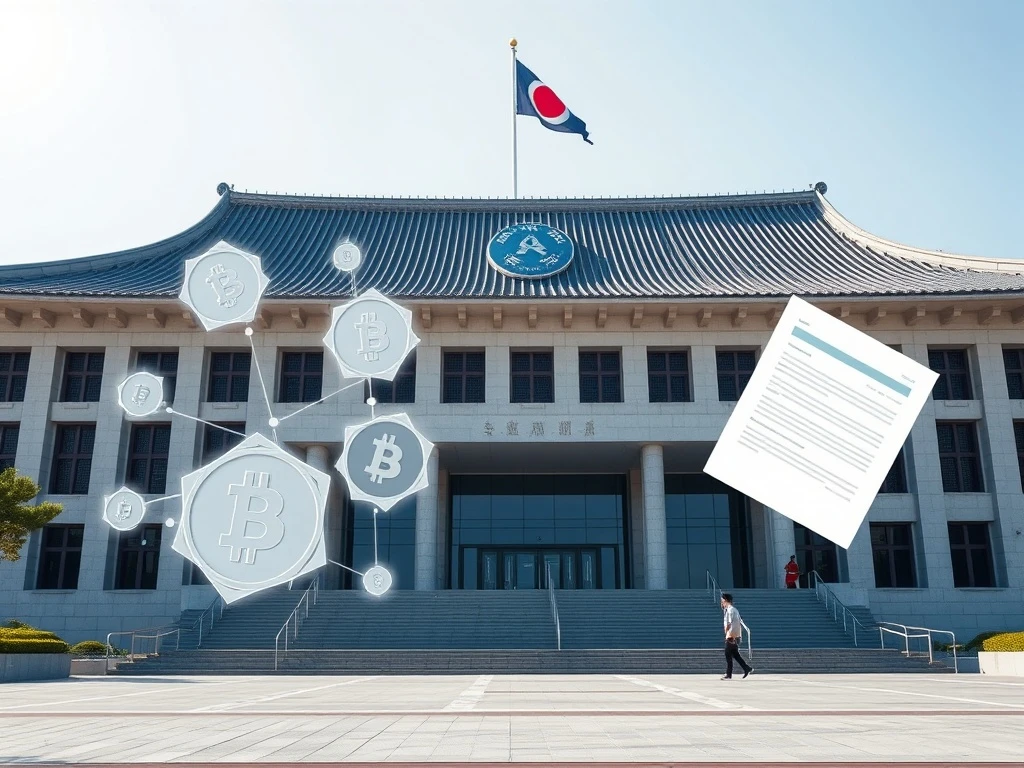
SEOUL, South Korea – In a decisive move that will reshape its digital asset landscape, South Korea’s National Assembly has passed sweeping amendments to its cryptocurrency licensing framework, granting regulators unprecedented authority to vet exchange operators and their controlling shareholders. The legislative overhaul, approved on Thursday, marks the most significant regulatory tightening since the country implemented its initial Anti-Money Laundering (AML) rules for virtual assets, fundamentally altering market access for Virtual Asset Service Providers (VASPs). This development comes as global jurisdictions intensify scrutiny of the crypto sector, positioning South Korea at the forefront of a structured regulatory approach.
South Korea’s Expanded Crypto Licensing Framework
The amendment to the Act on Reporting and Using Specified Financial Transaction Information significantly widens the scope of regulatory background checks. Previously, scrutiny primarily focused on company executives. However, the new rules now extend vetting to major and controlling shareholders of crypto firms seeking operational licenses. This expansion closes a critical oversight gap, ensuring that individuals with substantial influence over company operations also meet stringent integrity standards.
Furthermore, the list of disqualifying offenses has been substantially enlarged. Regulators will now examine applicants for a broader range of red flags including:
- Drug trafficking and associated crimes
- Tax evasion and serious financial fraud
- Violations of fair-trade regulations
- Breaches of South Korea’s specific crypto user protection law
- Other serious economic crimes
The Financial Intelligence Unit (FIU) consequently gains enhanced discretionary power. The agency can conduct a holistic review of a firm’s operational capabilities, assessing its financial health, internal control systems, legal compliance history, and overall market credibility before granting approval.
Regulatory Mechanisms and Conditional Licensing
A pivotal innovation within the amended act is the introduction of conditional licensing. This mechanism allows the FIU to grant operational approval while imposing specific requirements tailored to mitigate identified risks. For instance, an exchange with robust technology but weaker AML procedures might receive a license contingent on implementing enhanced monitoring systems within a set timeframe.
This graduated approach provides regulatory flexibility, enabling authorities to foster innovation while maintaining stringent safeguards. It contrasts with binary approval-or-rejection models, offering a pathway for compliant firms to address deficiencies. The law mandates a six-month preparation period before enactment, allowing the FIU to develop detailed implementation guidelines under the oversight of the Financial Services Commission (FSC).
The Push for Stricter Governance and Ownership Caps
Concurrently, South Korea’s financial watchdog is advocating for stricter governance rules mirroring those in traditional securities markets. Financial Services Commission Chair Lee Eog-weon recently stated that crypto exchanges should be treated as critical market infrastructure rather than ordinary private enterprises. This philosophical shift underpins a controversial proposal to cap major shareholders’ stakes in exchanges at approximately 15% to 20%.
This initiative, part of the broader Digital Asset Basic Act under deliberation, aims to prevent excessive control and potential market manipulation. While facing pushback from exchange operators and some political quarters, Chair Lee’s remarks signal strong regulatory intent. The convergence of the licensing amendment and proposed ownership rules illustrates a comprehensive strategy to institutionalize the crypto sector.
Closing Enforcement Loopholes and Enhancing Accountability
The legislative amendment also addresses a long-criticized enforcement weakness related to former financial industry employees. Under the new regime, the FIU must formally notify a firm’s chief executive if a former employee is sanctioned for violating AML rules. The company is then legally obligated to relay this notice to the individual and maintain related records.
This provision strengthens accountability chains and prevents sanctioned individuals from evading professional consequences by moving between firms. It ensures that compliance histories follow individuals, creating a more transparent and responsible employment ecosystem within the financial and crypto sectors. The table below summarizes the key changes introduced by the amendment:
| Regulatory Aspect | Previous Rule | New Rule (Amendment) |
|---|---|---|
| Vetting Scope | Company Executives | Executives + Controlling Shareholders |
| Disqualifying Offenses | Primarily Financial Crimes | Expanded to include drug crimes, tax evasion, fair-trade violations |
| Licensing Flexibility | Granted or Denied | Conditional Licensing Allowed |
| Former Employee Sanctions | Limited Notification Requirements | Mandatory Notice to CEO & Record-Keeping |
| FIU Discretion | Narrower Review | Holistic Review of Finances, Controls, Credibility |
Industry Impact and Global Context
The regulatory tightening occurs amid significant activity within South Korea’s crypto industry. Major exchange Coinone is reportedly considering a stake sale, with speculation involving global players like Coinbase. Simultaneously, the country’s central bank has highlighted foreign exchange risks associated with crypto, and lawmakers are actively debating frameworks for stablecoin issuance. These parallel developments indicate a maturing market moving from a wild-west phase into a structured financial ecosystem.
Globally, South Korea’s approach aligns with trends in the European Union’s Markets in Crypto-Assets (MiCA) regulation and evolving frameworks in Singapore and Japan. The focus on shareholder vetting and conditional licensing represents a sophisticated, risk-based model that other jurisdictions may emulate. For domestic and international VASPs, the new rules create a higher but clearer barrier to entry, potentially consolidating the market around established, well-capitalized, and compliant players.
Conclusion
South Korea’s comprehensive amendment of its crypto licensing rules establishes a more rigorous, transparent, and accountable regulatory regime for virtual asset service providers. By expanding vetting to shareholders, introducing conditional licenses, and closing enforcement loopholes, authorities are building a resilient framework designed to protect investors and ensure market integrity. As the rules take effect after a six-month implementation period, the global crypto industry will closely watch their impact on one of the world’s most active and technologically advanced digital asset markets. This legislative step solidifies South Korea’s commitment to leading the development of a safe and innovative cryptocurrency ecosystem.
FAQs
Q1: What is the core change in South Korea’s new crypto licensing rules?
The core change is the expansion of regulatory background checks from company executives to include major and controlling shareholders of cryptocurrency exchanges applying for licenses.
Q2: Which regulatory body is primarily responsible for enforcing these new rules?
The Financial Intelligence Unit (FIU) under the oversight of the Financial Services Commission (FSC) holds primary responsibility for vetting applications and enforcing the amended licensing regime.
Q3: What is “conditional licensing” as introduced by the amendment?
Conditional licensing allows the FIU to grant an operational license to a crypto firm while imposing specific requirements to address identified risks, such as improving AML systems, rather than issuing a simple approval or denial.
Q4: When will these new crypto licensing rules take effect?
The rules are expected to take effect six months after the law is formally enacted, providing a preparation period for regulators to finalize guidance and for the industry to adapt.
Q5: How do these changes relate to the proposed Digital Asset Basic Act?
These licensing amendments are part of a broader regulatory push that includes the proposed Digital Asset Basic Act, which considers measures like ownership caps for exchanges, together forming a comprehensive framework for South Korea’s crypto market.