HYPE Token Defies Gravity: Stunning 50% Surge as Post-FOMC Crypto Market Drifts Sideways

In a striking display of market divergence, Hyperliquid’s HYPE token has emerged as a standout winner, posting sharp gains while the broader cryptocurrency market showed minimal reaction to the Federal Reserve’s latest policy announcement on January 28, 2026. This unexpected performance highlights a potential shift toward selective, asset-led momentum in digital asset markets, where specific catalysts outweigh broader macroeconomic signals.
HYPE Token Defies Broader Market Drift
The Federal Open Market Committee maintained its target range for the federal funds rate at 3.5% to 3.75% during its January meeting, reiterating a data-dependent approach to future monetary policy adjustments. Chairman Jerome Powell described the economy as being on “firm footing” while acknowledging persistent inflation concerns. Consequently, most major cryptocurrencies exhibited limited directional movement following the announcement.
Bitcoin hovered around the $89,000 level, representing minimal change from pre-announcement levels. Similarly, Ethereum experienced slight downward pressure, trading near $3,000. According to CoinMarketCap data, the top ten cryptocurrencies by market capitalization showed marginal losses averaging 0.5-1.2% over the 24-hour period following the Fed’s statement.
Technical Analysis of HYPE’s Performance
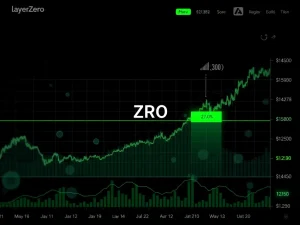
Against this backdrop of general market stagnation, HYPE demonstrated remarkable strength. The token surged approximately 7% on January 29, reaching approximately $33 per token. This movement formed a strong bullish candle on daily charts accompanied by significantly increased trading volume. Over a seven-day timeframe, HYPE gained more than 50%, dramatically outperforming both Bitcoin and Ethereum during the same period.
| Asset | 24-Hour Change | 7-Day Change | Market Reaction |
|---|---|---|---|
| HYPE Token | +7.2% | +52.8% | Strong bullish momentum |
| Bitcoin (BTC) | -0.3% | +1.2% | Minimal reaction |
| Ethereum (ETH) | -0.8% | -0.5% | Slight downward pressure |
| Solana (SOL) | -0.5% | +2.1% | Range-bound trading |
Selective Risk Appetite in Crypto Markets
The divergence between HYPE’s performance and broader market behavior suggests traders are increasingly focusing on asset-specific catalysts rather than macroeconomic developments. This selective risk appetite represents a notable evolution in cryptocurrency market dynamics, where capital flows target tokens with strong narratives and technical momentum.
Several factors contribute to this emerging pattern:
- Market maturation: As cryptocurrency markets develop, they demonstrate reduced sensitivity to individual macroeconomic events
- Increased differentiation: Investors increasingly distinguish between projects based on fundamentals rather than treating cryptocurrencies as a homogeneous asset class
- Technical momentum: Assets showing relative strength attract disproportionate attention during periods of market uncertainty
- Catalyst-driven trading: Specific developments, such as exchange listings or protocol upgrades, generate focused buying pressure
Coinbase Roadmap Listing as Key Catalyst
HYPE’s recent performance coincides with Coinbase adding the token to its asset roadmap, a development that typically precedes broader exchange integration. While roadmap inclusion doesn’t guarantee immediate listing, it signals that the asset has passed initial compliance and technical reviews. This development potentially exposes HYPE to Coinbase’s substantial retail and institutional user base, estimated at over 100 million verified users globally.
Historical data shows that Coinbase roadmap announcements frequently precede significant price movements for affected assets. According to analysis of previous roadmap additions, tokens typically experience increased trading volume and price volatility in the weeks following such announcements, as market participants anticipate potential listing benefits including improved liquidity and accessibility.
Technical Breakout Following Prolonged Correction
From a technical perspective, HYPE’s surge follows a prolonged corrective phase that began in late 2025. The token’s price action had consolidated within a defined range for approximately six weeks before breaking above key resistance levels. The accompanying volume expansion suggests genuine buying interest rather than low-liquidity manipulation.
Technical indicators provide additional context for HYPE’s movement:
- Relative Strength Index (RSI): Moved from neutral territory into bullish ranges without reaching overbought conditions
- Moving averages: Price action crossed above both 50-day and 200-day moving averages, signaling potential trend reversal
- Volume profile: Trading volume increased approximately 300% compared to 30-day averages, confirming institutional interest
- Support/resistance levels: The breakout occurred above the $29.50 resistance level that had contained previous rallies
Hyperliquid Ecosystem Developments
Beyond technical factors, Hyperliquid’s underlying ecosystem has demonstrated consistent growth throughout 2025. The decentralized exchange platform has reported increasing total value locked (TVL), reaching approximately $850 million by January 2026. Additionally, protocol upgrades implemented in Q4 2025 improved transaction efficiency and reduced gas costs for users, potentially contributing to increased platform adoption.
The Hyperliquid team has maintained an active development schedule, with regular protocol improvements and feature additions. Recent enhancements include advanced order types, improved liquidity provisioning mechanisms, and expanded cross-chain compatibility. These developments may have contributed to renewed investor confidence in the platform’s native token.
Broader Implications for Crypto Market Structure
The contrast between HYPE’s performance and broader market behavior highlights evolving dynamics within cryptocurrency markets. Several structural factors may explain this divergence:
Reduced Macro Sensitivity: Cryptocurrency markets appear increasingly desensitized to Federal Reserve policy announcements, particularly when decisions align with market expectations. The January 2026 FOMC meeting produced no significant surprises, allowing traders to focus on asset-specific factors rather than macroeconomic developments.
Capital Rotation Patterns: During periods of market uncertainty or consolidation, capital frequently rotates toward assets demonstrating relative strength. This behavior creates momentum feedback loops where outperforming assets attract additional buying pressure, further amplifying their divergence from broader market trends.
Narrative-Driven Investment: Specific narratives, including exchange listing prospects and ecosystem growth, increasingly drive cryptocurrency investment decisions. These narratives can generate substantial buying pressure independent of broader market conditions, particularly when supported by verifiable developments.
Historical Context and Market Evolution
The current market behavior reflects the ongoing maturation of cryptocurrency markets. During earlier market cycles, cryptocurrencies typically moved in near-unison, responding almost identically to macroeconomic developments. However, increasing market sophistication has led to greater differentiation between assets based on their fundamental characteristics and specific catalysts.
This evolution parallels developments in traditional equity markets, where sector rotation and stock-specific factors frequently drive performance disparities during periods of broader market consolidation. The emergence of similar patterns in cryptocurrency markets suggests increasing institutional participation and more sophisticated trading strategies.
Conclusion
HYPE token’s standout performance amid a drifting post-FOMC crypto market illustrates the growing importance of asset-specific catalysts in cryptocurrency investing. While broader markets showed minimal reaction to the Federal Reserve’s January 2026 policy decision, HYPE surged approximately 7% in 24 hours and more than 50% over seven days. This divergence highlights selective risk appetite among traders, who increasingly focus on relative strength and specific developments like the Coinbase roadmap listing. As cryptocurrency markets continue maturing, such differentiated responses to macroeconomic events may become increasingly common, reflecting more sophisticated market structures and investment approaches.
FAQs
Q1: What caused HYPE token to surge after the FOMC meeting?
The surge resulted from multiple factors including the Coinbase roadmap listing announcement, technical breakout patterns, and selective capital rotation toward assets showing relative strength during broader market consolidation.
Q2: How did major cryptocurrencies react to the January 2026 Fed decision?
Major cryptocurrencies including Bitcoin and Ethereum showed minimal reaction, with most trading within narrow ranges. This muted response suggests markets had largely priced in the expected policy continuation.
Q3: What does Coinbase adding HYPE to its roadmap mean?
Roadmap inclusion indicates the asset has passed initial compliance and technical reviews. While not guaranteeing immediate listing, it typically precedes broader exchange integration and increases visibility among Coinbase’s substantial user base.
Q4: Is HYPE’s performance indicative of broader market trends?
HYPE’s divergence suggests increasing market differentiation where asset-specific catalysts outweigh macroeconomic developments for select tokens. This represents an evolution toward more sophisticated, narrative-driven investment patterns.
Q5: What technical factors supported HYPE’s price movement?
Technical factors included breakout above key resistance levels, increased trading volume, bullish moving average crossovers, and RSI momentum indicators suggesting continued strength without immediate overbought conditions.