Federal Reserve Independence: Powell’s Stark Warning About Credibility and Political Pressure
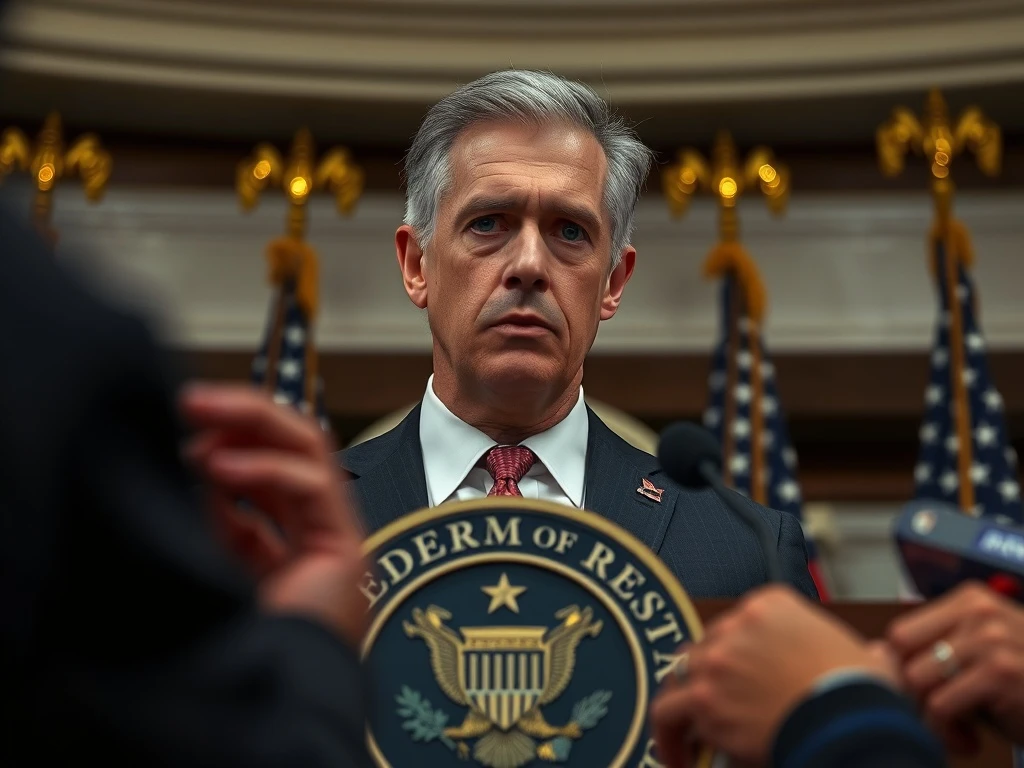
WASHINGTON, D.C. — Federal Reserve Chair Jerome Powell delivered a stark warning this week about the bedrock principle of central banking: independence. Specifically, Powell stated the Federal Reserve would lose its hard-earned credibility if it were to lose its political autonomy. This declaration comes amid heightened scrutiny following revelations about a federal investigation involving the chair himself. The timing of these remarks raises significant questions about the future of U.S. monetary policy and its insulation from political winds.
Federal Reserve Independence Faces Unprecedented Scrutiny
Jerome Powell’s comments represent a rare public defense of an institutional norm typically taken for granted. During a moderated discussion at the Economic Club of Washington, Powell articulated the fundamental link between operational freedom and public trust. “Our ability to execute our dual mandate—price stability and maximum employment—rests on credibility,” Powell explained. “That credibility, in turn, depends decisively on our independence from short-term political pressures.” Historical context underscores his point. For decades, both Democratic and Republican administrations have largely respected the Fed’s operational separation, a tradition dating to the Treasury-Fed Accord of 1951.
However, recent events have tested this norm. Last month, reports surfaced that federal prosecutors had launched an inquiry into trading activity by senior Fed officials during the pandemic. While not directly implicating Powell in wrongdoing, the investigation has fueled political attacks on the central bank’s integrity. Several congressional committees have since announced hearings. Consequently, Powell’s speech appears strategically aimed at reinforcing institutional boundaries before these political pressures intensify further.
The Historical Foundation of Central Bank Autonomy
Modern central banking theory universally champions independence. Academic research consistently shows that politically autonomous central banks achieve lower and more stable inflation. For instance, a 2023 study from the Brookings Institution analyzed 50 years of global data. It found that countries with independent central banks experienced 30% less inflation volatility on average. The Federal Reserve’s structure—with governors serving 14-year terms and the Chair appointed for a 4-year term—is specifically designed to buffer decision-making from electoral cycles. This design allows policymakers to make potentially unpopular but necessary decisions, like raising interest rates to combat inflation, without fear of immediate political reprisal.
Analyzing the Credibility Mechanism in Monetary Policy
Why does credibility matter so much? Monetary policy operates largely through expectations. When businesses, investors, and consumers believe the Fed will maintain price stability, they act accordingly. They set prices and wages with moderate inflation expectations. They make long-term investments with confidence. This belief system reduces the actual economic cost of controlling inflation. Powell emphasized this mechanism, noting, “Our most powerful tool is not the federal funds rate itself, but the public’s belief in our commitment to use it appropriately.” If political interference erodes that belief, the Fed would need to enact much more drastic rate hikes to achieve the same inflation-fighting effect, potentially triggering a severe recession.
Consider the following comparison of policy outcomes based on institutional credibility:
| Policy Context | High Credibility / Independence | Low Credibility / Political Influence |
|---|---|---|
| Inflation Expectation Anchor | Well-anchored near 2% target | Unanchored, volatile expectations |
| Policy Response Efficiency | Moderate rate changes suffice | Aggressive, volatile changes needed |
| Market Volatility | Lower | Significantly higher |
| Long-term Investment | Stable environment encourages investment | Uncertainty discourages capital expenditure |
Recent market movements reflect this sensitivity. Bond yields exhibited unusual volatility following the news of the federal investigation. Furthermore, longer-term inflation expectations in the University of Michigan survey edged upward. These are early warning signs that the market’s faith in the Fed’s operational shield may be wavering.
The Tangible Impact on Economic Stability and Growth
The practical consequences of diminished Fed independence would extend far beyond Wall Street. Main Street businesses rely on stable financing costs for expansion and hiring. Households need predictable mortgage and auto loan rates to make major life decisions. A politicized central bank could lead to a phenomenon economists call “stop-go” policy. In this scenario, rates might be kept artificially low before elections to stimulate growth, then jacked up afterward to combat the resulting inflation. This pattern creates damaging boom-bust cycles that hurt workers and savers most. Powell alluded to this risk, stating that policy must be made “for the medium and long term, not the next headline or the political calendar.”
International perspectives offer cautionary tales. Analysts often cite the historical experience of the Bank of England before its 1997 independence. Political control contributed to Britain’s “Winter of Discontent” and the high inflation of the 1970s. Conversely, the European Central Bank’s steadfast independence, despite intense political pressure during the Eurozone debt crisis, is credited with preserving the euro. The Fed’s global role as steward of the world’s primary reserve currency magnifies these stakes. A loss of Fed credibility could trigger capital flight from dollar assets and undermine global financial stability.
Expert Analysis on the Current Threat Level
Financial policy experts are carefully weighing Powell’s statements. Dr. Sarah Bloom Raskin, former Fed Governor and Deputy Treasury Secretary, noted in a recent analysis, “Chair Powell is drawing a line in the sand not for himself, but for the institution. The investigation is a specific incident, but his response addresses the systemic principle.” Most analysts agree the immediate threat of Congress legislatively reducing Fed independence remains low. However, the danger lies in death by a thousand cuts—gradual erosion through public criticism, legislative threats, and pressure on appointments. This environment could make future Fed leaders more cautious and less effective, even without formal legal changes.
Market participants are watching several key indicators:
- Congressional Testimony Tone: The aggressiveness of questioning in upcoming hearings.
- Appointment Politics: Whether future Fed vacancies become politically contentious.
- Legislative Proposals: Any bills seeking to audit or influence monetary policy decisions.
- Long-term Bond Yields: Sustained increases could signal eroding inflation expectations.
Conclusion: Preserving the Pillar of Economic Stability
Jerome Powell’s defense of Federal Reserve independence serves as a crucial reminder of a foundational economic principle. The central bank’s credibility, painstakingly built over decades, remains its most vital asset. While Powell expressed confidence that outright political takeover will not occur, his explicit warning highlights genuine concern. The ongoing federal investigation has opened a door for political actors to challenge the Fed’s autonomy. The coming months will test whether the traditional wall between monetary policy and politics remains intact. For the health of the U.S. and global economy, maintaining that separation is not just an institutional preference—it is an economic necessity. The Federal Reserve’s ability to ensure price stability and maximum employment for all Americans depends on it.
FAQs
Q1: What exactly did Jerome Powell say about Federal Reserve independence?
Federal Reserve Chair Jerome Powell stated that the central bank would lose its credibility if it lost its political independence. He emphasized this credibility is essential for effective monetary policy but added he does not believe such a loss of independence will actually occur.
Q2: Why is central bank independence considered so important for the economy?
Independence allows central banks to make politically difficult but economically necessary decisions, like raising interest rates to fight inflation, without short-term electoral pressure. This leads to more stable prices, lower long-term interest rates, and greater economic growth over time.
Q3: What recent event prompted Powell’s remarks about Fed credibility?
Powell’s comments follow reports that federal prosecutors have launched an investigation into trading activity by senior Fed officials during the pandemic. This has led to increased political scrutiny and congressional hearings concerning the central bank’s operations and governance.
Q4: Has the Federal Reserve’s independence been threatened before?
Yes, tensions between the White House and the Fed have occurred periodically, notably during the Nixon and Trump administrations. However, the institutional framework has remained largely intact since the 1951 Treasury-Fed Accord formally established the Fed’s operational independence.
Q5: How would diminished Fed independence affect ordinary Americans?
It could lead to more volatile interest rates on mortgages, auto loans, and credit cards. It might also cause higher and more unpredictable inflation, eroding purchasing power. Ultimately, it could result in less stable economic growth and potentially more severe recessions.