Crypto Super PAC Fairshake’s Stunning $193M War Chest Reshapes 2025 Midterm Election Landscape
WASHINGTON, D.C., January 2025 – The political influence of the cryptocurrency industry has entered a formidable new phase, as the crypto-focused Super PAC Fairshake reports a staggering $193 million fundraising haul by year’s end 2024. This unprecedented war chest, fueled by multi-million dollar contributions from blockchain giants like Ripple and venture capital powerhouse Andreessen Horowitz, signals a seismic shift in how digital asset policy will be contested during the pivotal 2025 midterm elections. Consequently, this financial mobilization arrives simultaneously with critical legislative action, as the U.S. Senate Agriculture Committee prepares its first vote on a landmark digital asset regulation bill this week.
Crypto Super PAC Fairshake’s Fundraising Breaks Records
Fairshake’s fundraising total of $193 million represents a historic benchmark for a single-issue political action committee focused on technology policy. To provide context, this sum surpasses the total combined spending of all federal cryptocurrency lobbying efforts in the preceding electoral cycle. The PAC’s strategy involves supporting candidates from both major parties who advocate for clear and innovation-friendly digital asset regulations. Furthermore, this financial scale allows Fairshake to compete directly with established political spenders in key Senate and House races, fundamentally altering the campaign finance dynamics for tech-related policy.
The second half of 2024 alone saw monumental commitments. Specifically, Ripple contributed $25 million, while Andreessen Horowitz (a16z) donated $24 million. These are not isolated acts but part of a coordinated, industry-wide effort. Other significant donors include Coinbase and several decentralized autonomous organizations (DAOs) that have pooled resources. This collective action demonstrates a maturation of the crypto sector’s political engagement, moving from scattered advocacy to a unified, well-funded strategic operation.
The Donor Landscape and Strategic Intent
An analysis of donor patterns reveals clear strategic goals. Major contributors are typically companies with significant exposure to regulatory outcomes. For instance, Ripple has an ongoing legal case with the Securities and Exchange Commission (SEC), making favorable legislation crucial. Similarly, a16z has billions invested across hundreds of crypto and web3 startups, whose viability depends on regulatory clarity. Therefore, their contributions are defensive and offensive investments aimed at shaping the legal environment for the next decade. The PAC has explicitly stated it will “actively support pro-crypto politicians,” which political strategists interpret as funding advertisements, grassroots mobilization, and direct candidate support in competitive districts.
Digital Asset Regulation Reaches Critical Juncture
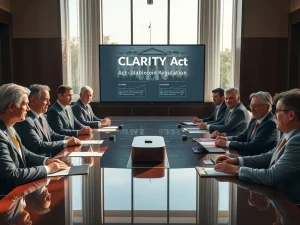
Parallel to this political fundraising surge, substantive legislative progress is finally occurring. The U.S. Senate Agriculture Committee, which shares jurisdiction over the Commodity Futures Trading Commission (CFTC), is scheduled this week to hold its first vote on components of a comprehensive digital asset market structure bill. This legislation aims to clarify which agencies—the SEC or the CFTC—have primary authority over various digital assets, a long-standing source of uncertainty that industry leaders cite as a major barrier to growth and institutional adoption in the United States.
Key provisions expected in the committee’s markup include:
- Definition of a Digital Asset: Creating a statutory test to distinguish between securities and commodities.
- CFTC Spot Market Authority: Granting the CFTC explicit authority to oversee spot markets for digital commodities.
- Consumer Protections: Establishing new rules for custody, disclosures, and conflict-of-interest management at trading platforms.
This regulatory momentum is not coincidental. Many observers connect the heightened legislative activity directly to the industry’s amplified political voice, exemplified by Fairshake’s treasury. When lawmakers see a well-organized constituency with significant resources, the priority of related legislation often increases on the congressional calendar.
The Impact on the 2025 Midterm Elections
The $193 million fund positions Fairshake as a potential kingmaker in dozens of federal races. Political analysts project the PAC’s spending will focus on several key battlegrounds. First, it will likely target members of the House Financial Services and Senate Banking Committees, which draft and amend financial laws. Second, competitive open-seat races where a pro-innovation stance could sway voters are prime targets. Finally, the PAC may engage in primary challenges against legislators perceived as hostile to the digital asset ecosystem.
This approach mirrors tactics used by other industry PACs but at a significantly larger scale. The midterms will serve as a real-world test of the crypto vote’s influence. Fairshake’s messaging, according to preliminary strategy documents, will center on American technological leadership, financial inclusion, and job creation, rather than technical details of blockchain. This broader framing is designed to appeal to a general electorate beyond the existing crypto community.
Historical Context and Precedent
To understand the scale, consider historical comparisons. In the 2020 election cycle, the entire “Miscellaneous Finance” sector spent approximately $180 million on federal lobbying and contributions. Fairshake’s single PAC has already exceeded that. This places it in the league of spending by long-established sectors like pharmaceuticals or energy during a presidential election year, not a midterm. The rapid ascent from a niche issue to a top-tier political spending force is virtually unprecedented in modern American politics.
Expert Analysis on Market and Regulatory Reactions
Financial market experts note that regulatory clarity is the single largest factor holding back institutional capital allocation to digital assets. The movement of the Senate bill, coupled with the political pressure from Fairshake, is being watched closely by asset managers. “The convergence of legislative action and political spending creates a tangible probability of a signed law within 18-24 months,” stated a policy analyst from a major investment bank. “That expectation is already being priced into the valuations of publicly traded crypto-related companies.”
Conversely, consumer advocacy groups have raised concerns about the influence of large sums on a complex technical issue. They argue that the speed of legislation must not compromise robust investor protections. The coming debate will therefore balance innovation against safeguards, with Fairshake’s resources ensuring the innovation argument receives massive amplification.
Conclusion
The crypto Super PAC Fairshake’s record-shattering $193 million fundraising marks a definitive turning point for the industry’s role in American governance. As the 2025 midterm elections approach, this financial firepower will directly shape campaigns and, by extension, the future composition of Congress. Simultaneously, the advance of digital asset regulation in the Senate demonstrates that this political investment is already influencing the legislative agenda. The outcome of this dual-track effort—at the ballot box and in the committee room—will determine the regulatory landscape for cryptocurrencies and blockchain technology for years to come, with profound implications for markets, innovation, and consumers.
FAQs
Q1: What is a Super PAC, and how is Fairshake different?
A Super PAC (Political Action Committee) can raise and spend unlimited sums to advocate for or against political candidates but cannot coordinate directly with campaigns. Fairshake is different because it is a single-issue Super PAC focused exclusively on promoting a pro-innovation digital asset policy and supporting candidates who align with that goal.
Q2: Why are the midterm elections in 2025 so important for crypto?
The 2025 midterms will determine control of the U.S. House and Senate. Since Congress drafts and passes laws, the election outcome will directly influence which digital asset regulation bills move forward, how they are shaped, and whether they can be signed into law.
Q3: What is the digital asset bill the Senate Agriculture Committee is voting on?
The committee is voting on key parts of a broader bill that aims to clarify whether the SEC or CFTC regulates different types of digital assets (like cryptocurrencies). Its main goals are to establish clear rules for the market and provide consumer protections, which the industry argues is necessary for growth.
Q4: How might Fairshake spend its $193 million?
The funds will likely be spent on television and digital advertising, direct mail campaigns, voter outreach, and supporting get-out-the-vote efforts for endorsed candidates. The focus will be on competitive races where the issue could sway the outcome.
Q5: Does this level of spending guarantee favorable crypto laws?
Not necessarily. While massive spending increases influence and access, it does not guarantee specific legislative outcomes. The final form of any law will still involve debate, compromise, and must navigate a complex legislative process involving multiple committees and chambers.