Stock Tokenization: Robinhood CEO’s Revolutionary Plan to Prevent Another GameStop Crisis
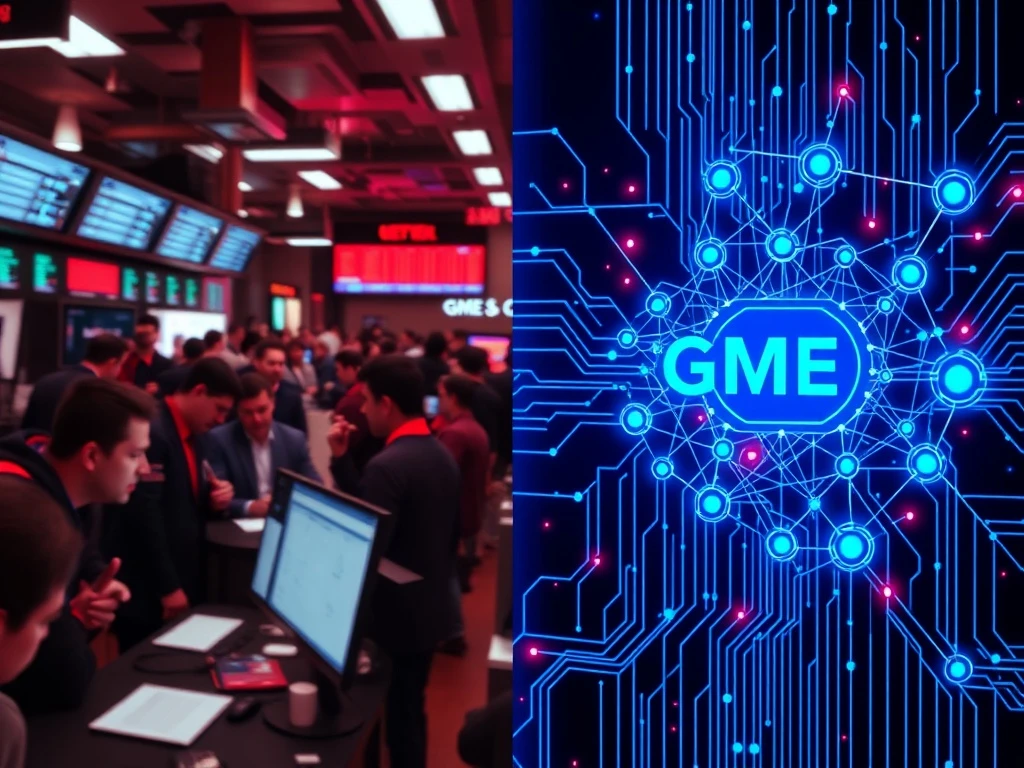
In a significant statement that could reshape the future of equity markets, Robinhood CEO Vlad Tenev has positioned blockchain-based stock tokenization as the definitive solution to prevent a repeat of the 2021 GameStop trading frenzy and subsequent platform halts. Speaking from Menlo Park, California, in early 2025, Tenev reframed the historic event not as a story of malicious actors but as a critical failure of outdated financial infrastructure buckling under unprecedented strain.
Stock Tokenization as a Systemic Safeguard
Vlad Tenev’s analysis, reported by CoinDesk, shifts the blame from market participants to the underlying mechanics of the traditional financial system. He identifies the core issue as a slow and outdated settlement architecture. Consequently, when retail trading volume and volatility in meme stocks like GameStop (GME) and AMC Entertainment (AMC) exploded, the system’s inherent delays created a dangerous liquidity crunch for clearinghouses and brokerages.
While the settlement cycle for U.S. equities has improved from T+2 to T+1, Tenev argues this incremental change remains insufficient for today’s digital, high-velocity trading environment. The proposed solution is radical yet logical: migrating stock trading to a blockchain ledger. This move would theoretically enable instantaneous settlement, or T+0, thereby eliminating the multi-day window where counterparty risk and capital requirements escalate during periods of extreme volatility.
Deconstructing the GameStop Infrastructure Crisis
The January 2021 saga was a perfect storm of social media coordination, pent-up retail investor sentiment, and legacy system fragility. However, the pivotal moment for platforms like Robinhood was the mandatory deposit of billions of dollars with the National Securities Clearing Corporation (NSCC) to cover the immense risk of unsettled trades. This requirement stemmed directly from the T+2 settlement rule.
- Clearinghouse Collateral Calls: The NSCC demanded over $3 billion from Robinhood alone to guarantee trades.
- Capital Strain: Brokerages faced a severe liquidity shortfall, forcing them to restrict buying in volatile securities.
- Systemic Risk Exposure: The event highlighted how settlement delays concentrate risk in a few central nodes (clearinghouses).
Therefore, Tenev contends that tokenized stocks, with trades settling on-chain in minutes or seconds, would dissolve this risk. Brokerages would no longer need to post colossal collateral for unsettled trades, and capital could be freed for customer use.
The Technical Promise of Blockchain Settlement
Financial technology experts often highlight blockchain’s potential for streamlining post-trade processes. A tokenized stock represents a digital ownership certificate on a distributed ledger. When a trade executes, the asset and payment can transfer simultaneously in a “delivery versus payment” (DvP) model. This process contrasts sharply with the current system, where ownership and money move separately over days, requiring trusted intermediaries to manage the gap.
Furthermore, proponents argue this transparency and efficiency could reduce costs, increase market accessibility, and allow for 24/7 trading. Robinhood’s reported plans to launch tokenized trading and DeFi features in the coming months signal a concrete step toward testing this thesis in a regulated environment.
Regulatory Hurdles and Market Evolution
Despite the compelling technical argument, the path to widespread blockchain-based stock trading is fraught with regulatory complexity. The Securities and Exchange Commission (SEC) maintains a cautious stance on digital asset securities, emphasizing investor protection and market integrity. Key challenges include:
| Challenge | Description |
|---|---|
| Legal Ownership | Ensuring on-chain tokens are legally recognized as equivalent to traditional shares. |
| Regulatory Compliance | Building know-your-customer (KYC) and anti-money laundering (AML) into decentralized protocols. |
| Market Manipulation | Preventing pump-and-dump schemes and fraud in a potentially more opaque on-chain environment. |
| Interoperability | Connecting blockchain networks with existing market infrastructure like the DTCC. |
Nevertheless, the market is evolving. Several jurisdictions, including Switzerland and Singapore, have piloted digital security platforms. Meanwhile, large financial institutions are actively exploring tokenization for bonds and private assets, creating a foundation that public equities may eventually build upon.
Conclusion
Vlad Tenev’s advocacy for stock tokenization reframes the GameStop episode from a cultural phenomenon into a stark case study in financial infrastructure obsolescence. His argument underscores a growing consensus that the capital markets’ backend requires a digital-age upgrade. While significant regulatory and technological hurdles remain, the pursuit of instantaneous settlement via blockchain represents a direct response to the systemic vulnerabilities exposed in 2021. The success of Robinhood’s upcoming initiatives could provide a crucial real-world test for whether tokenized stocks can indeed prevent future trading crises and democratize market access further.
FAQs
Q1: What is stock tokenization?
A1: Stock tokenization is the process of creating a digital token on a blockchain that represents ownership of a traditional company share. This token can be traded peer-to-peer, potentially enabling faster settlement and new functionalities.
Q2: How would tokenization have changed the GameStop situation?
A2: Proponents argue that with instantaneous (T+0) settlement on a blockchain, the massive collateral requirements that forced brokerages to halt buying would not have materialized, as the risk of trade failure would be near zero.
Q3: Are tokenized stocks legal?
A3: The legal status is evolving and varies by jurisdiction. They are generally considered securities and fall under the regulatory purview of bodies like the SEC. Full equivalence with traditional shares requires explicit legal and regulatory frameworks.
Q4: What is the difference between a tokenized stock and a cryptocurrency?
A4: A tokenized stock is a digital representation of an existing, regulated financial asset (a share). A cryptocurrency like Bitcoin is typically a native digital asset without an underlying traditional financial instrument, often created and governed by a decentralized protocol.
Q5: Is Robinhood the only company working on this?
A5: No. Numerous traditional financial institutions, fintech companies, and blockchain-native projects are exploring asset tokenization. Examples include experiments by large banks, the development of regulated DeFi platforms, and projects by traditional exchanges.