Crypto Exchange Licensing: South Korea’s Bold Regulatory Shift to Protect Investors
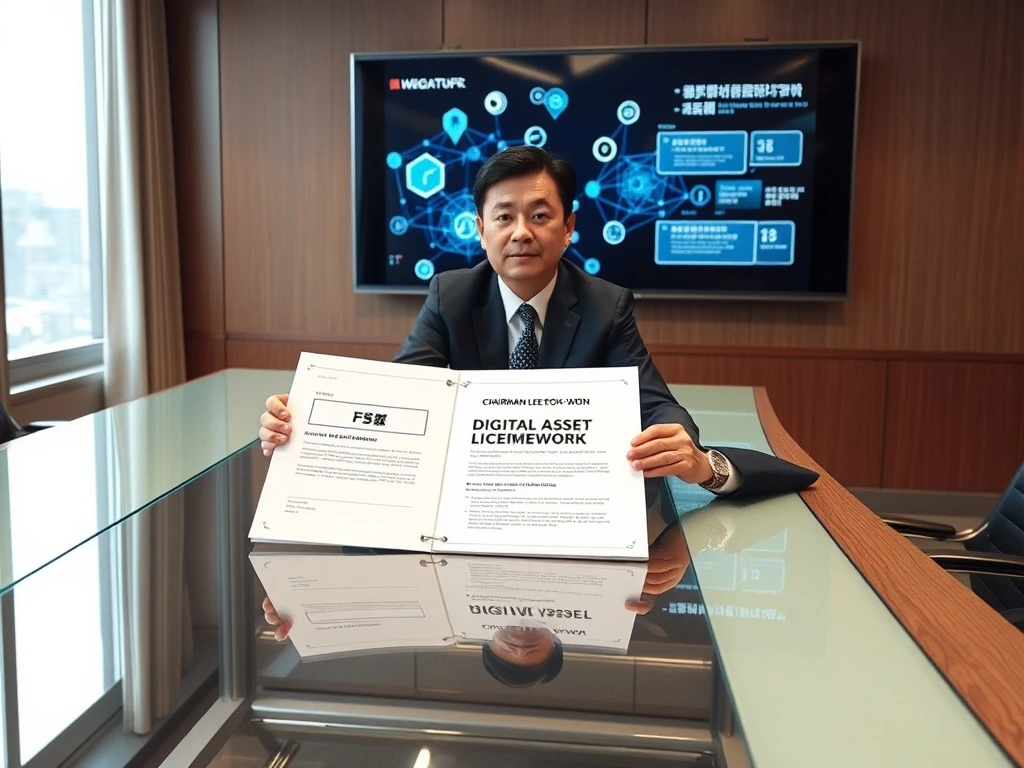
SEOUL, South Korea – January 28, 2025 – South Korea’s financial regulator has proposed a fundamental transformation in how the nation oversees cryptocurrency trading platforms. Financial Services Commission Chairman Lee Eok-won officially announced plans to shift crypto exchanges from a registration-based system to a formal licensing framework. This regulatory evolution represents South Korea’s latest move to establish comprehensive digital asset governance while enhancing capital market competitiveness.
Crypto Exchange Licensing: Understanding South Korea’s Regulatory Evolution
Chairman Lee Eok-won presented this proposal during a regular press briefing at the FSC headquarters in Seoul. The Financial Services Commission chairman specifically suggested incorporating this change into the second phase of the Digital Asset Basic Act. Currently, cryptocurrency exchanges in South Korea operate under a registration system requiring renewal every three years. The proposed licensing framework would fundamentally alter this approach by establishing permanent operating permissions contingent on continuous compliance.
South Korea maintains one of the world’s most active cryptocurrency markets with millions of retail investors. Consequently, regulatory authorities have progressively strengthened oversight since implementing real-name trading accounts in 2018. The licensing proposal emerges as global financial hubs increasingly establish formal digital asset frameworks. Singapore, Japan, and the European Union have already implemented licensing regimes for crypto service providers.
The Digital Asset Basic Act: South Korea’s Regulatory Roadmap
The Digital Asset Basic Act represents South Korea’s comprehensive legislative approach to cryptocurrency regulation. Parliament passed the initial phase in 2024, establishing fundamental definitions and consumer protection measures. The second phase, scheduled for 2025 deliberation, will address exchange operations, stablecoin issuance, and institutional participation. Chairman Lee’s licensing proposal specifically targets this upcoming legislative package.
Financial News reported that the FSC chairman emphasized enhancing capital market attractiveness through regulatory clarity. “The proposed licensing system aims to strengthen the status, role, and responsibilities of cryptocurrency trading platforms,” Lee stated during the briefing. This regulatory shift aligns with South Korea’s broader financial sector modernization efforts, including digital won development and fintech innovation initiatives.
Comparative Analysis: Registration vs. Licensing Systems
The current registration system requires exchanges to submit documentation and meet basic operational standards. However, this approach primarily focuses on initial compliance verification rather than ongoing supervision. Under the proposed licensing framework, exchanges would face more rigorous evaluation processes including:
- Enhanced capital requirements to ensure operational stability
- Comprehensive governance standards for management transparency
- Advanced security protocols for asset protection
- Continuous compliance monitoring by regulatory authorities
- Strict consumer protection measures including dispute resolution mechanisms
This transition mirrors approaches taken by traditional financial institutions, potentially enabling greater institutional participation in cryptocurrency markets. Furthermore, licensed exchanges might gain access to banking partnerships and insurance products currently limited under the registration system.
Market Impact and Industry Response
South Korea’s major cryptocurrency exchanges have cautiously welcomed the regulatory proposal. Upbit, Bithumb, Korbit, and Coinone collectively dominate approximately 95% of domestic trading volume. These platforms have already implemented stringent compliance measures following previous regulatory requirements. Industry analysts suggest that established exchanges would likely benefit from licensing barriers that reduce competition from smaller, less-compliant operators.
Market data indicates South Korean cryptocurrency trading volume exceeded $40 billion in the fourth quarter of 2024. The proposed licensing system could potentially increase institutional investment by providing regulatory certainty. International cryptocurrency firms have expressed growing interest in the South Korean market, particularly following the implementation of the Travel Rule for virtual asset service providers in 2023.
Global Regulatory Context and Implications
South Korea’s regulatory development occurs alongside global standardization efforts through organizations like the Financial Action Task Force (FATF). The International Monetary Fund has consistently emphasized the importance of comprehensive cryptocurrency frameworks for financial stability. Asian financial centers increasingly compete to establish balanced regulatory environments that encourage innovation while mitigating risks.
Japan implemented cryptocurrency exchange licensing in 2017 following the Coincheck hack, resulting in improved security standards across the industry. Singapore’s Payment Services Act established a dual licensing framework in 2020, distinguishing between different types of digital payment token services. The European Union’s Markets in Crypto-Assets (MiCA) regulation, fully implemented in 2024, provides another regional model for comprehensive digital asset governance.
Investor Protection and Market Stability Considerations
The FSC’s licensing proposal specifically addresses several persistent concerns in South Korea’s cryptocurrency ecosystem. Consumer protection remains paramount following multiple exchange failures and security breaches in previous years. The licensing framework would establish clearer accountability mechanisms and potentially create compensation funds similar to traditional financial sector protections.
Market stability represents another key consideration, particularly regarding price volatility and liquidity management. Licensed exchanges would likely face requirements for transparent order book management and adequate reserve holdings. These measures could reduce market manipulation risks that have occasionally affected less-regulated cryptocurrency markets globally.
Financial authorities also emphasize anti-money laundering (AML) and counter-terrorism financing (CTF) compliance. South Korea has strengthened virtual asset AML requirements progressively since 2021, with licensing providing another enforcement mechanism. The proposed system would enable more effective monitoring of suspicious transactions and international fund flows.
Implementation Timeline and Legislative Process
The Digital Asset Basic Act’s second phase requires parliamentary approval, typically involving committee reviews and stakeholder consultations. Industry associations, consumer advocacy groups, and financial institutions will likely provide formal feedback during this process. The FSC has indicated potential implementation within 12-18 months following legislative passage, allowing exchanges adequate transition periods.
Existing registered exchanges would need to submit licensing applications demonstrating compliance with enhanced requirements. New market entrants would face the same licensing process before commencing operations. Regulatory authorities would establish examination procedures similar to those used for traditional financial institution licensing.
Technical Requirements and Operational Standards
The licensing framework will probably specify detailed technical standards for exchange operations. These may include:
| Requirement Category | Potential Specifications |
|---|---|
| Cybersecurity | Multi-signature wallets, cold storage protocols, penetration testing |
| Financial Resilience | Minimum capital ratios, reserve requirements, insurance coverage |
| Governance | Board composition, audit committees, conflict policies |
| Consumer Protection | Disclosure standards, complaint procedures, asset segregation |
These specifications would build upon existing requirements while introducing more rigorous standards comparable to traditional financial markets. The FSC has indicated collaboration with the Korea Internet & Security Agency (KISA) for technical standard development.
Conclusion
South Korea’s proposed crypto exchange licensing system represents a significant evolution in digital asset regulation. Financial Services Commission Chairman Lee Eok-won’s initiative aims to strengthen market integrity while enhancing investor protection. This regulatory shift from registration to licensing aligns with global trends toward formalized cryptocurrency oversight. The Digital Asset Basic Act’s second phase will determine specific implementation details and timing. Ultimately, South Korea’s approach balances innovation facilitation with risk management, potentially establishing a model for other jurisdictions developing comprehensive digital asset frameworks.
FAQs
Q1: What is the difference between registration and licensing for crypto exchanges?
A1: Registration typically involves basic documentation submission and periodic renewal, while licensing requires meeting ongoing operational standards, continuous compliance monitoring, and more rigorous evaluation processes before receiving permanent operating permission.
Q2: When might South Korea implement the crypto exchange licensing system?
A2: Implementation depends on parliamentary approval of the Digital Asset Basic Act’s second phase, potentially occurring within 12-18 months after legislation passes, with exchanges receiving transition periods to meet new requirements.
Q3: How will the licensing system affect existing cryptocurrency exchanges in South Korea?
A3: Established exchanges like Upbit and Bithumb would need to apply for licenses and demonstrate compliance with enhanced standards, potentially benefiting from reduced competition while facing stricter ongoing oversight.
Q4: What are the main goals of South Korea’s proposed licensing framework?
A4: Primary objectives include strengthening exchange accountability, enhancing investor protection, improving market stability, preventing financial crimes, and increasing South Korea’s capital market competitiveness through regulatory clarity.
Q5: How does South Korea’s approach compare to other countries’ crypto regulations?
A5: South Korea follows similar paths to Japan, Singapore, and the EU, which have implemented licensing regimes, though specific requirements vary by jurisdiction regarding capital, governance, and consumer protection standards.