Kalshi Expands Political Footprint with Strategic DC Office and Key Democratic Hire Amid Regulatory Scrutiny
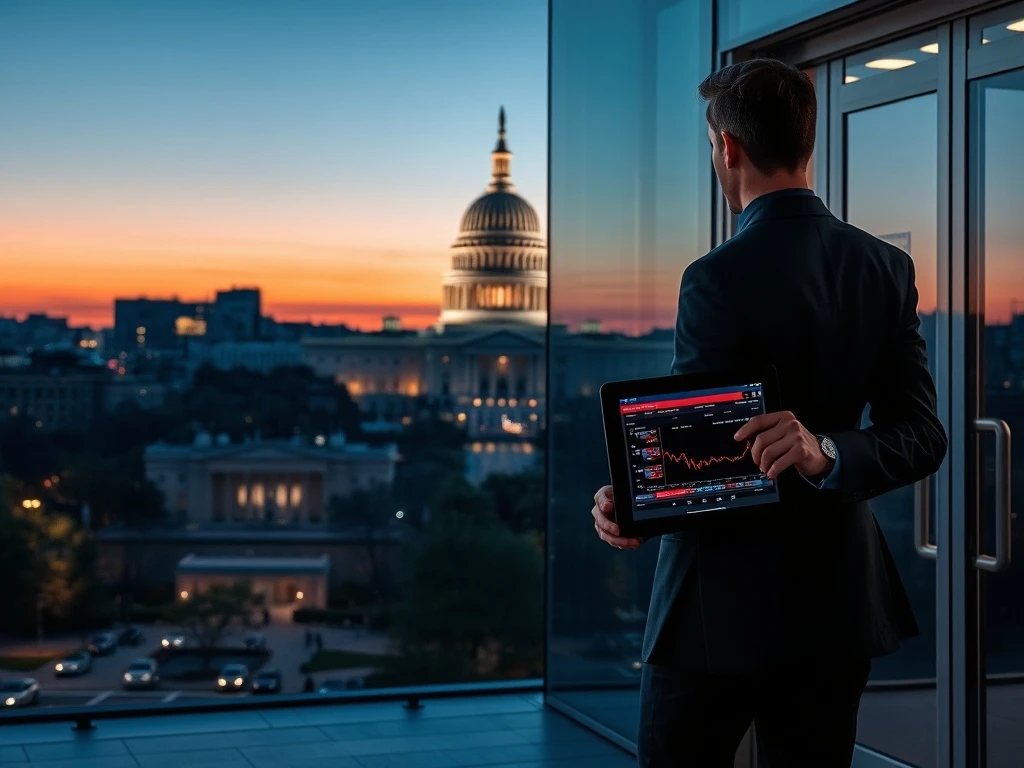
In a strategic move signaling deeper political engagement, prediction market platform Kalshi announced on Monday the opening of a Washington, D.C. office alongside the hiring of former Biden administration official John Bivona, marking a significant expansion of its political footprint as regulatory scrutiny intensifies. This development comes precisely as prediction markets gain unprecedented attention for forecasting political events, including potential government shutdowns and the upcoming 2026 elections. Consequently, Kalshi’s establishment of a physical presence in the nation’s capital represents a calculated effort to navigate the complex regulatory landscape while positioning itself at the center of political discourse.
Kalshi’s Strategic Expansion into Washington D.C.
Kalshi confirmed its plans to establish a formal office in Washington, D.C., a decision directly tied to its ambition to expand its U.S. operations. The company explicitly stated its intention to hire “talent from both sides of the aisle,” underscoring a commitment to bipartisan engagement. This physical expansion follows a pivotal 2024 court ruling that permitted Kalshi to offer event contracts related to U.S. elections, a ruling that dramatically increased user activity on the platform. However, the move also coincides with increased scrutiny from federal lawmakers and state officials who are examining the legal boundaries of prediction markets, especially concerning election wagering.
Industry analysts view this expansion as a necessary step for legitimization. “Establishing a D.C. office is a classic move for any fintech or tech-adjacent company facing regulatory headwinds,” explains Dr. Alisha Chen, a financial regulation professor at Georgetown University. “It facilitates direct dialogue with policymakers and regulatory bodies, which is crucial for an industry operating in a legal gray area.” Data from Dune Analytics, current as of January 12, supports Kalshi’s dominant position, showing it accounts for approximately two-thirds of the total trading volume across prediction markets, solidifying its status as a market leader ahead of competitors like Polymarket and PredictIt.
Key Hires and Bipartisan Government Relations Strategy
The cornerstone of Kalshi’s new political strategy involves two high-profile hires designed to bolster its government relations capabilities. Firstly, the company appointed John Bivona, a former official within the Biden administration, as its Head of Federal Government Relations. This role will focus on navigating relationships with Congress and federal agencies. Secondly, Kalshi brought on Blake Bee, formerly a Senior Manager of State and Local Public Policy at Amazon, to manage state-level policy efforts. These hires demonstrate a dual-track approach: engaging with federal lawmakers on broad regulatory frameworks while simultaneously addressing legal challenges at the state level, where Kalshi currently faces lawsuits in at least four states for offering unlicensed wagers on sporting events.
A Kalshi spokesperson emphasized the platform’s neutral stance in a statement, noting the company “acts as a neutral platform” and is actively “in dialogue with stakeholders” regarding future political engagement. This dialogue is particularly relevant as the company eyes involvement in the 2026 election cycle. The table below outlines the core responsibilities of the new executive hires:
| Executive | Former Role | Primary Kalshi Focus |
|---|---|---|
| John Bivona | Biden Administration Official | Federal Government Relations & Congressional Engagement |
| Blake Bee | Amazon Sr. Manager, State & Local Policy | State Policy Strategy & Navigating Local Legal Challenges |
Navigating the Regulatory Minefield
The expansion occurs against a backdrop of significant regulatory uncertainty. Prediction markets exist in a complex intersection of financial regulation, gambling law, and free speech protections. The Commodity Futures Trading Commission (CFTC) has historically asserted jurisdiction over certain event contracts, while states maintain their own gambling statutes. Kalshi’s legal challenges in states like Illinois and New Jersey highlight the fragmented nature of U.S. regulation. Furthermore, lawmakers on Capitol Hill have expressed bipartisan concerns about the potential for market manipulation and the moral implications of betting on political outcomes, setting the stage for potential federal legislation.
Experts point to the 2024 court ruling as a critical precedent but not a blanket protection. “The ruling opened a door, but it didn’t tear down the wall,” notes Michael Torres, a fintech legal analyst. “Kalshi’s D.C. office is essentially a dedicated team to ensure that door stays open and to carefully shape any new rules that Congress or agencies might develop. Their hiring of experienced policy professionals from both the public and private sectors is a textbook play for influence and legitimacy.”
Prediction Markets in the Current Political Climate
The timing of Kalshi’s expansion is acutely relevant given current events. As of late January, U.S. lawmakers face a deadline to pass a funding bill to avoid a government shutdown. Prediction markets have become a widely cited barometer for these high-stakes political negotiations. At the time of the original report, Kalshi’s platform reflected a 78% probability of a shutdown, closely aligning with Polymarket’s 79% prediction. This real-time aggregation of crowd-sourced sentiment offers a unique, data-driven perspective on political risk, distinguishing it from traditional polling or pundit analysis.
The utility of these markets extends beyond immediate crises. Academics and hedge funds increasingly use prediction market data as a leading indicator for policy outcomes and economic impacts. For instance, the previous 43-day government shutdown in October had measurable effects on economic growth and public sector productivity. Platforms like Kalshi provide a continuous, traded assessment of such risks, which can inform decision-making for businesses, investors, and even policymakers themselves. However, this very influence raises questions about circularity and self-fulfilling prophecies, a topic of ongoing debate among economists.
Implications for the 2026 Election Cycle and Beyond
Kalshi’s statement regarding potential involvement in the 2026 elections marks a bold forward-looking stance. The 2024 ruling created the legal pathway, but operationalizing election contracts at scale requires careful navigation of ethics and optics. The company’s new D.C.-based team will likely be tasked with developing frameworks that satisfy regulatory concerns while providing a market for political sentiment. This could involve strict contract design, identity verification protocols, and trading limits to mitigate risks of manipulation or undue influence.
The broader implication is the potential normalization of political prediction markets. If Kalshi successfully legitimizes its operations through direct engagement and transparent practices, it could pioneer a new category of political risk analysis. Key considerations for the future include:
- Transparency: How much data on trading volumes and participant demographics will be disclosed?
- Integrity: What mechanisms will prevent insider trading or coordinated manipulation of political odds?
- Access: Will these markets remain niche tools for informed traders or become mainstream indicators?
Ultimately, Kalshi’s physical and personnel expansion in Washington is more than a real estate decision; it is a declaration of its intent to be a permanent, regulated fixture within the U.S. financial and political ecosystem, rather than an offshore or fringe platform.
Conclusion
Kalshi’s expansion of its political footprint with a Washington, D.C. office and key Democratic hire represents a pivotal moment for the prediction market industry. This strategic move addresses immediate regulatory challenges while laying the groundwork for significant involvement in future political events, including the 2026 elections. By establishing a physical presence in the capital and employing seasoned government relations experts, Kalshi is proactively shaping its operating environment. As prediction markets like Kalshi continue to provide real-time insights on events from government shutdowns to electoral odds, their evolution from speculative platforms to recognized tools for political and economic forecasting will depend heavily on the success of such engagement and navigation of the complex U.S. regulatory landscape.
FAQs
Q1: What is Kalshi and what does it do?
Kalshi is a regulated prediction market platform where users can trade event contracts on outcomes in politics, economics, current events, and more. It allows people to essentially “bet” on the probability of a future event occurring, with prices reflecting the crowd’s collective judgment.
Q2: Why is Kalshi opening a Washington D.C. office now?
The office opening is a direct response to growing regulatory scrutiny from both federal and state authorities. It aims to facilitate better communication with lawmakers, advocate for favorable regulations, and manage legal challenges, especially as the platform plans to offer contracts related to the 2026 U.S. elections.
Q3: Who did Kalshi hire as part of this expansion?
Kalshi hired John Bivona, a former Biden administration official, as Head of Federal Government Relations, and Blake Bee, a former Amazon senior manager of state and local public policy. These hires are designed to strengthen the company’s lobbying and policy efforts on both the federal and state levels.
Q4: Are prediction markets like Kalshi legal?
The legality is complex and varies by jurisdiction. Kalshi operates under CFTC regulations for certain event contracts. However, it faces legal challenges in several U.S. states where officials argue some of its contracts constitute illegal gambling. A 2024 court ruling specifically allowed it to offer election-related contracts.
Q5: How accurate are prediction markets compared to polls?
Academic studies often show prediction markets can be highly accurate, sometimes outperforming polls, because they aggregate information from financially motivated traders who continuously update their positions based on new data. They are considered a useful complementary tool for forecasting, though not infallible.