Bitcoin Reserve Currency Debate Explodes: Tucker Carlson’s Fiery Clash with Peter Schiff Over Dollar’s Future
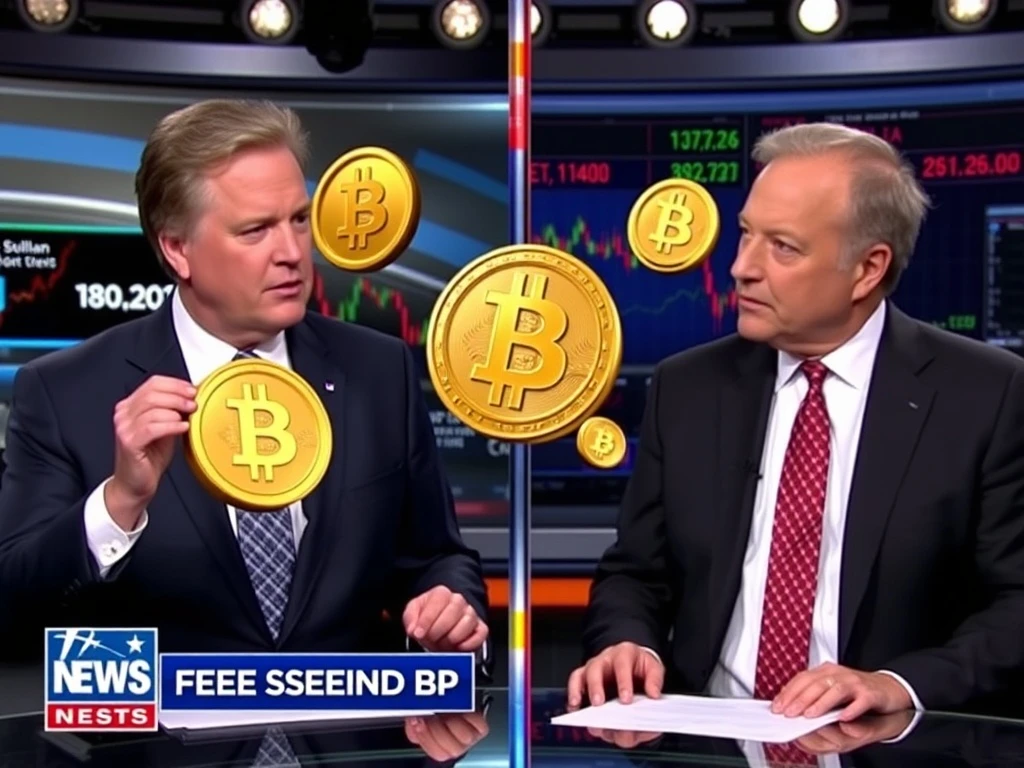
In a revealing March 2025 interview that has ignited financial circles, media personality Tucker Carlson directly challenged economist Peter Schiff on whether Bitcoin could realistically replace the declining US dollar as the world’s primary reserve currency. This confrontation occurred against a backdrop of gold reaching unprecedented highs above $5,000 per ounce while Bitcoin experienced significant volatility, highlighting the intensifying debate about monetary alternatives.
Bitcoin Reserve Currency Proposal Faces Scrutiny
During their extensive conversation, Carlson pressed Schiff on the fundamental question driving global financial discussions: Could Bitcoin fix the deteriorating US dollar system? Schiff, a longtime gold advocate and cryptocurrency skeptic, dismissed the possibility completely. He argued that Bitcoin lacks essential characteristics required for reserve status, particularly emphasizing its speculative nature and absence of non-monetary utility.
Schiff presented several key arguments against Bitcoin’s reserve currency potential. First, he characterized proposals for a US strategic Bitcoin reserve as essentially “taxpayer-funded bailouts” for early adopters. Second, he claimed that unlike gold, Bitcoin generates no income and serves no industrial purpose. Third, he suggested that political influence rather than economic merit drives institutional Bitcoin adoption.
The Gold Versus Bitcoin Monetary Debate
Schiff dedicated substantial portions of the interview to contrasting Bitcoin with gold, his preferred monetary alternative. He emphasized gold’s tangible utility across multiple industries including jewelry, aerospace, electronics, and medicine. This industrial demand, he argued, provides intrinsic value that Bitcoin cannot replicate. Furthermore, Schiff highlighted how tokenized, fully-backed gold on blockchain networks could enable digital payments without creating inflation.
Carlson repeatedly challenged this distinction, asking why betting on Bitcoin’s price appreciation differed fundamentally from buying gold or stocks. Schiff responded that while all assets might appreciate, gold possesses inherent value beyond speculation. He noted that central banks cannot realistically adopt Bitcoin because it lacks non-monetary demand and would collapse under large-scale liquidation attempts.
Inflation Data and Fiscal Policy Controversies
The discussion extended beyond cryptocurrency to broader monetary concerns. Schiff accused government agencies of manipulating inflation metrics, particularly the Consumer Price Index. He claimed officials changed measurement methodologies to shift blame for rising living costs from monetary policy to private sector pricing. This allegation touches ongoing debates about inflation calculation transparency.
Schiff specifically criticized recent fiscal legislation, including what he called “the worst thing we’ve done under Trump” – referring to signature spending bills that he argued preserved deficit spending from previous administrations while increasing expenditures and cutting taxes simultaneously. These comments reflect wider concerns about unsustainable fiscal trajectories.
Market Context: Diverging Asset Performances
The interview occurred during notable market movements that underscore the debate’s relevance. Gold prices surged approximately 17% in January 2025 alone, reaching record highs above $5,000 per ounce. Concurrently, Bitcoin experienced volatility, briefly dipping below $86,000 after previous gains. This divergence highlights how different asset classes respond to global tensions and monetary uncertainty.
| Asset | Price Movement | Key Driver |
|---|---|---|
| Gold | +17% in January | Geopolitical tensions, dollar concerns |
| Bitcoin | Volatile, below $86K | Regulatory developments, adoption pace |
| US Dollar Index | Declining trend | Fiscal policy, reserve diversification |
Several factors contribute to these market movements:
- Geopolitical tensions increasing safe-haven demand
- Central bank diversification away from dollar holdings
- Institutional adoption of both gold and digital assets
- Monetary policy uncertainty across major economies
Broader Implications for Monetary Systems
The Carlson-Schiff debate reflects deeper questions about global monetary architecture. As confidence in fiat currencies fluctuates, discussions about alternative reserve assets gain prominence. Bitcoin proponents argue its decentralized nature, limited supply, and borderless transaction capabilities address dollar system weaknesses. Critics counter that volatility, regulatory uncertainty, and energy concerns prevent serious reserve consideration.
Historical context illuminates current discussions. The Bretton Woods system established the dollar’s reserve status following World War II. Subsequent transitions, including the Nixon Shock of 1971, demonstrate that reserve currency arrangements can change. Current debates center on whether digital assets represent the next evolutionary step or a speculative distraction from tangible alternatives like gold.
Expert Perspectives on Reserve Currency Criteria
Economists generally identify several characteristics essential for reserve currency status:
- Stability of value over extended periods
- Deep liquidity in global markets
- Broad acceptance for international transactions
- Institutional infrastructure for settlement and storage
- Political stability in issuing jurisdiction
Bitcoin currently meets some criteria while struggling with others. Its decentralized nature provides political neutrality but complicates institutional adoption. Limited supply ensures scarcity but contributes to volatility. Network effects drive acceptance while regulatory fragmentation creates uncertainty.
Conclusion
The Tucker Carlson-Peter Schiff debate highlights intensifying discussions about Bitcoin’s potential as a global reserve currency alternative to the US dollar. While Schiff dismisses Bitcoin as purely speculative, the conversation reflects genuine concerns about dollar sustainability and legitimate exploration of monetary alternatives. As gold prices reach record highs and Bitcoin adoption continues, these debates will likely intensify throughout 2025. The fundamental question remains whether digital assets can overcome skepticism to achieve reserve status or whether traditional alternatives like gold will maintain preference during monetary transitions.
FAQs
Q1: What is a global reserve currency?
A global reserve currency serves as the primary asset held by central banks for international transactions, debt settlement, and exchange rate stability. The US dollar currently dominates this role.
Q2: Why does Peter Schiff oppose Bitcoin as reserve currency?
Schiff argues Bitcoin lacks intrinsic value, serves no non-monetary purpose, and functions primarily as a speculative instrument rather than a stable store of value suitable for central bank reserves.
Q3: What advantages does gold have over Bitcoin according to Schiff?
Schiff emphasizes gold’s industrial applications, historical monetary role, physical tangibility, and consistent demand across jewelry, technology, and investment sectors.
Q4: How did Bitcoin perform compared to gold recently?
In early 2025, gold prices surged approximately 17% to record highs above $5,000 per ounce while Bitcoin experienced volatility, briefly trading below $86,000 after previous gains.
Q5: What are the main arguments for Bitcoin as reserve currency?
Proponents cite Bitcoin’s decentralized nature, limited supply, borderless transaction capability, censorship resistance, and potential to reduce reliance on any single nation’s monetary policy.