Won-Pegged Stablecoin Sparks Urgent Warning: BOK Governor Fears Capital Flight Crisis
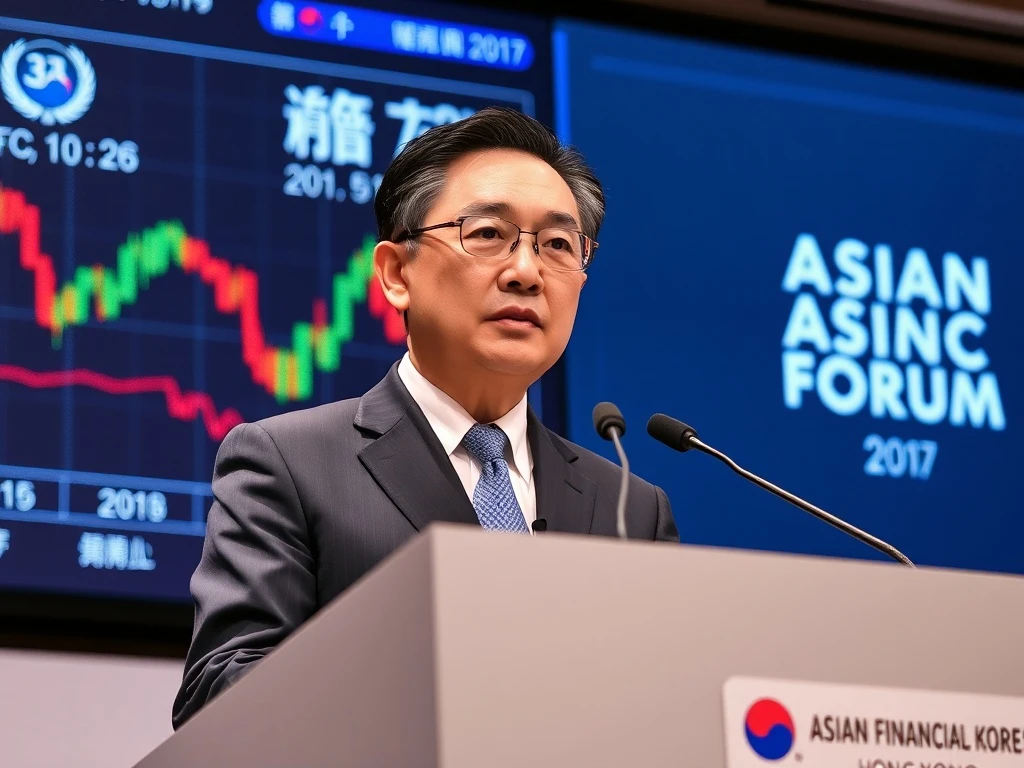
HONG KONG, January 2025 – Bank of Korea Governor Lee Chang-yong has issued a stark warning about the potential dangers of won-pegged stablecoins, stating they could trigger significant capital flight and undermine South Korea’s financial stability. Speaking at the Asian Financial Forum, Governor Lee highlighted how these digital assets might combine with dollar stablecoins to circumvent existing capital controls, presenting regulators with unprecedented challenges in the rapidly evolving cryptocurrency landscape.
Won-Pegged Stablecoin Presents Unique Regulatory Challenges
Governor Lee’s concerns center on the specific risks associated with domestic currency-pegged stablecoins. Unlike their dollar-based counterparts, won-pegged stablecoins could directly interact with South Korea’s monetary policy and capital flow management systems. The Bank of Korea governor explained that these digital assets might enable sophisticated financial engineering that bypasses traditional banking channels. Consequently, regulators face mounting difficulties as non-bank institutions increasingly enter the stablecoin issuance space.
Financial experts note that stablecoins have evolved significantly since their inception. Initially designed as simple payment instruments, they now serve complex financial functions. Governor Lee emphasized this transformation during his Hong Kong address. He specifically warned about potential regulatory arbitrage opportunities that won-pegged stablecoins might create. Furthermore, the global nature of cryptocurrency markets complicates jurisdictional oversight for national regulators.
Capital Flight Mechanisms Through Stablecoin Combinations
Governor Lee detailed how won-pegged stablecoins could facilitate capital outflows when combined with dollar stablecoins. This combination creates a two-step process that potentially evades traditional monitoring systems. First, users convert won to won-pegged stablecoins through domestic platforms. Then, they exchange these for dollar stablecoins on international cryptocurrency exchanges. Finally, these dollar stablecoins convert to traditional currency in offshore markets.
The table below illustrates this potential capital flight mechanism:
| Step | Process | Regulatory Challenge |
|---|---|---|
| 1 | Won conversion to won-pegged stablecoin | Domestic cryptocurrency regulation gaps |
| 2 | Won-stablecoin to dollar-stablecoin swap | Cross-border transaction monitoring |
| 3 | Dollar-stablecoin to offshore currency | International regulatory coordination |
This process leverages several key advantages of stablecoins:
- Lower transaction costs compared to traditional banking channels
- 24/7 availability without banking hour restrictions
- Global accessibility through decentralized exchanges
- Pseudonymous transactions that complicate tracking
Expert Analysis of Stablecoin Market Dynamics
Financial technology analysts observe that stablecoin usage patterns have shifted dramatically since 2023. Initially concentrated in cryptocurrency trading, stablecoins now facilitate cross-border payments, remittances, and corporate treasury operations. Governor Lee noted that dollar-pegged stablecoins already serve diverse functions across multiple regions. Their adoption stems from practical advantages over direct dollar usage, particularly in jurisdictions with limited dollar access.
Market data reveals significant growth in stablecoin transaction volumes throughout 2024. Asian markets particularly show increased stablecoin adoption for both retail and institutional purposes. This expansion occurs alongside growing regulatory scrutiny worldwide. Major economies have implemented varying approaches to stablecoin oversight, creating a complex international regulatory landscape. South Korea’s position reflects broader concerns among emerging economies with managed capital accounts.
Exchange Rate Volatility and Speculative Risks
Governor Lee highlighted how exchange rate fluctuations could amplify stablecoin-related risks. During periods of won volatility, market participants might seek dollar stablecoins as temporary safe havens. This behavior could accelerate during financial stress episodes. The governor warned that such movements might trigger large-scale capital shifts that traditional monitoring systems could miss. These concerns echo broader financial stability discussions at international forums like the Financial Stability Board and IMF.
Historical examples demonstrate how digital assets can respond to currency movements. During previous emerging market currency crises, cryptocurrency volumes frequently increased. Analysts suggest this pattern might intensify with dedicated won-pegged instruments. The potential scale of such movements worries regulators managing finite foreign exchange reserves. Additionally, the speed of cryptocurrency transactions exceeds traditional banking systems, potentially magnifying market impacts.
Regulatory Evolution in the Stablecoin Sector
The stablecoin regulatory landscape has developed significantly since 2023. Major jurisdictions have implemented frameworks with varying strictness levels. The European Union’s MiCA regulations establish comprehensive rules for stablecoin issuers. Similarly, Japan has implemented rigorous licensing requirements. However, regulatory approaches differ substantially across Asia, creating potential arbitrage opportunities.
Governor Lee emphasized the particular challenge of non-bank stablecoin issuers. Traditional banking regulations don’t always apply to these entities effectively. Furthermore, technological innovation constantly creates new regulatory gaps. The Bank of Korea has consequently increased its digital currency research and monitoring capabilities. International coordination through organizations like the Bank for International Settlements has also intensified.
Global Context and Comparative Analysis
South Korea’s concerns mirror those in other economies with managed capital accounts. Several countries have restricted or banned domestic currency-pegged stablecoins. Others have implemented strict licensing regimes. The table below compares regulatory approaches:
| Country/Region | Stablecoin Approach | Key Regulations |
|---|---|---|
| European Union | Comprehensive licensing | MiCA framework implementation |
| Japan | Bank-led issuance preferred | Payment Services Act amendments |
| Singapore | Stable-specific framework | Payment Services Act licensing |
| China | Complete prohibition | Cryptocurrency transaction ban |
This comparative perspective highlights South Korea’s middle-ground position. The country hasn’t banned cryptocurrencies outright but maintains cautious oversight. Governor Lee’s comments suggest potential regulatory tightening, especially for won-pegged instruments. Financial institutions globally monitor these developments closely, as they might influence other jurisdictions’ approaches.
Conclusion
Bank of Korea Governor Lee Chang-yong’s warning about won-pegged stablecoins underscores significant financial stability concerns in the digital asset era. The potential for these instruments to facilitate capital flight through combination with dollar stablecoins presents novel regulatory challenges. As non-bank entities increasingly issue stablecoins, traditional oversight mechanisms require substantial adaptation. The global regulatory landscape continues evolving, with South Korea’s position reflecting broader emerging economy concerns about monetary sovereignty and capital flow management in cryptocurrency markets.
FAQs
Q1: What specific risks do won-pegged stablecoins create according to BOK Governor Lee?
Governor Lee warns that won-pegged stablecoins could combine with dollar stablecoins to circumvent capital outflow regulations, potentially triggering significant capital flight from South Korea and complicating monetary policy implementation.
Q2: How do stablecoins achieve lower transaction costs than traditional dollars?
Stablecoins operate on blockchain networks that enable peer-to-peer transfers without multiple banking intermediaries, reducing processing fees, currency conversion costs, and settlement delays associated with traditional cross-border dollar transactions.
Q3: Why are non-bank stablecoin issuers particularly challenging to regulate?
Non-bank issuers often fall outside traditional financial regulatory frameworks designed for banks, may operate across multiple jurisdictions, and can innovate faster than regulations develop, creating persistent oversight gaps.
Q4: How might exchange rate volatility increase stablecoin-related risks?
During won depreciation periods, investors might rapidly convert to dollar stablecoins as safe havens, potentially accelerating capital outflows and creating liquidity pressures that traditional monitoring systems might not detect quickly enough.
Q5: What regulatory approaches are other countries taking toward domestic currency-pegged stablecoins?
Approaches vary from comprehensive licensing (EU, Singapore) and bank-focused frameworks (Japan) to complete prohibitions (China), with many emerging economies expressing concerns similar to South Korea’s about monetary sovereignty.