SEC CFTC Crypto Event Postponement Sparks Intense Market Anticipation for Regulatory Clarity
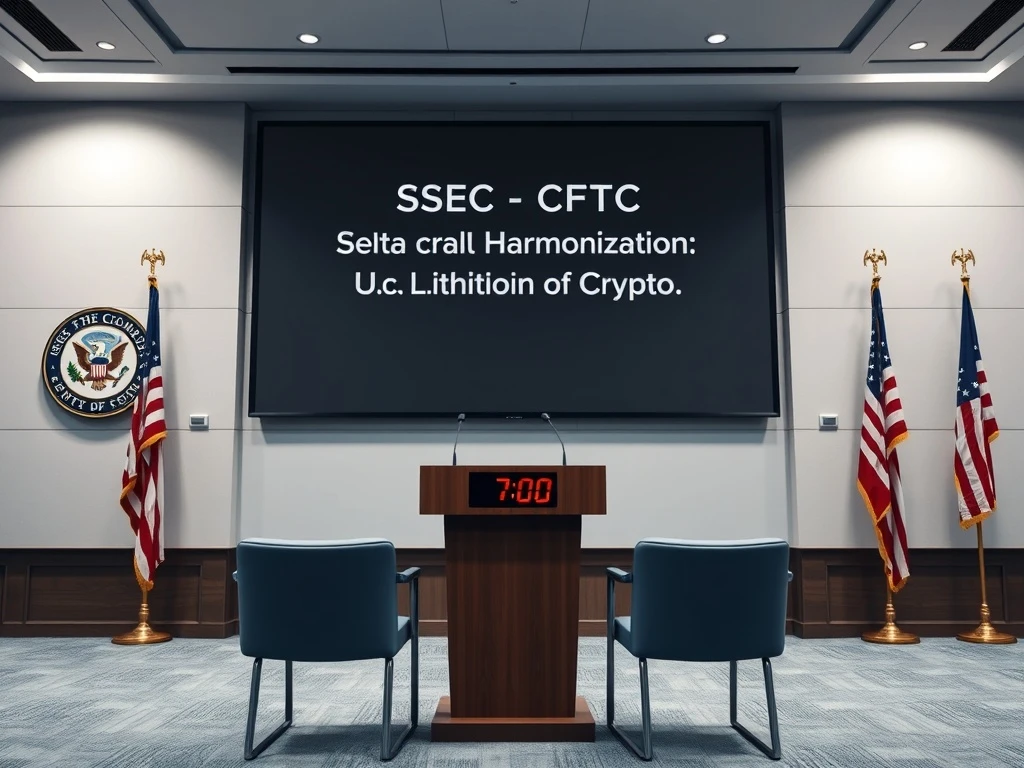
WASHINGTON, D.C. – January 25, 2025 – In a move closely watched by global financial markets, the U.S. Securities and Exchange Commission (SEC) and Commodity Futures Trading Commission (CFTC) have officially postponed their pivotal joint cryptocurrency event. Originally slated for January 27, the high-stakes discussion, “SEC-CFTC Harmonization: U.S. Financial Leadership in the Age of Crypto,” will now occur on January 29 from 7:00 p.m. to 8:00 p.m. UTC. This two-day delay, while brief, arrives at a critical juncture for digital asset regulation and has immediately intensified scrutiny on the evolving framework for crypto oversight in the United States.
SEC CFTC Crypto Event Details and Immediate Context
The agencies announced the schedule change through official channels, confirming the event will proceed at the CFTC headquarters with a live stream available on the SEC website. Significantly, the postponement does not alter the featured participants: SEC Chairman Paul S. Atkins and CFTC Chairman Michael Selig will still lead the conversation. The core topic remains the harmonization of regulatory approaches between the two primary U.S. financial watchdogs. Consequently, market analysts and legal experts view this event as a potential landmark moment for establishing clearer rules in the often-murky crypto landscape.
Furthermore, the timing of this event is not accidental. It follows a year of heightened legislative activity and several high-profile enforcement actions within the crypto sector. Regulatory bodies globally are racing to establish coherent frameworks. Therefore, this joint discussion represents a concerted effort by U.S. authorities to present a unified front. The stated goal of asserting “U.S. Financial Leadership” directly addresses concerns that the nation may lag behind other jurisdictions that have moved more swiftly to provide regulatory certainty for digital assets and blockchain innovation.
The Complex History of U.S. Cryptocurrency Regulation
To understand the profound significance of this harmonization effort, one must examine the historical division of authority between the SEC and CFTC. Traditionally, the SEC oversees securities—investments representing an ownership stake or debt in a common enterprise with an expectation of profits derived from the efforts of others. Conversely, the CFTC regulates commodities futures, options, and swaps, which are largely defined as goods or assets traded in markets.
This jurisdictional split created a persistent gray area for cryptocurrencies. For instance, the SEC has consistently argued that many digital tokens qualify as securities under the Howey Test, bringing them under its purview. Meanwhile, the CFTC has classified Bitcoin and Ethereum as commodities, asserting its authority over futures contracts and derivatives based on them. This overlapping and sometimes conflicting oversight has led to confusion for businesses, investors, and developers alike.
- Key Regulatory Actions (2023-2024): A series of lawsuits and settlements clarified, yet also complicated, the regulatory stance.
- The Legislative Gap: Congress has yet to pass comprehensive crypto legislation, forcing agencies to operate under existing, often outdated statutes.
- Global Pressure: The EU’s MiCA framework and other international regulations have increased pressure for a coherent U.S. response.
Expert Analysis on the Harmonization Imperative
Financial regulation scholars point to the event’s title as its most telling feature. “The term ‘harmonization’ is a deliberate and technical word in regulatory parlance,” notes Dr. Eleanor Vance, a professor of financial law at Georgetown University. “It doesn’t mean one agency will absorb the other’s role. Instead, it signals an intent to align definitions, share information seamlessly, and create complementary enforcement protocols to eliminate arbitrage and confusion.”
Industry stakeholders have expressed cautious optimism. “A unified voice from the SEC and CFTC is the single most important signal the market needs right now,” stated Marcus Chen, CEO of a digital asset infrastructure firm. “The two-day delay is inconsequential if the outcome is a clear, coordinated statement of principles. Operational clarity reduces compliance costs and fosters responsible innovation.” However, some consumer advocacy groups warn that harmonization must not lead to a dilution of investor protection standards that the SEC is mandated to uphold.
Potential Impacts on Markets and Innovation
The immediate market reaction to the postponement was muted, suggesting traders anticipated potential adjustments for a high-level government meeting. The longer-term impact, however, hinges entirely on the substance of the chairs’ remarks. A strong display of coordination could bolster market confidence, potentially stabilizing asset prices and encouraging institutional capital that has remained on the sidelines due to regulatory uncertainty.
Conversely, any perceived discord or vague statements could prolong the current period of ambiguity. The table below outlines potential outcomes based on the tone and content of the January 29th discussion:
| Event Outcome Scenario | Likely Market Reaction | Impact on Crypto Businesses |
|---|---|---|
| Clear Harmonization Framework Proposed | Positive; reduced volatility | Easier compliance planning, increased investment |
| Agreement to Jointly Support Pending Legislation | Cautiously optimistic | Long-term clarity but short-term waiting period |
| Vague Statements with No Concrete Steps | Negative; sell-off possible | Continued uncertainty, compliance challenges persist |
| Public Disagreement on Core Definitions | Sharply negative | Worst-case scenario, exacerbating current conflicts |
For blockchain developers and crypto startups, harmonization could streamline the process of determining which regulatory path to follow. It may also influence the design of new tokens and protocols, embedding compliance considerations from their inception rather than as an afterthought.
The Path Forward After January 29
The livestreamed event is likely just the beginning of a more public phase in inter-agency collaboration. Observers will monitor for specific action items, such as the formation of a permanent joint task force, memoranda of understanding (MOUs), or published guidance documents. The agencies may also use the platform to comment on major pending legislation, such as the proposed Digital Asset Market Structure Bill, which seeks to explicitly divide authority between the SEC and CFTC.
International regulators will undoubtedly analyze the proceedings. A successful demonstration of U.S. leadership could shape global standard-setting at bodies like the Financial Stability Board (FSB) and the International Organization of Securities Commissions (IOSCO). Ultimately, the goal is to protect investors, ensure market integrity, and prevent systemic risk without stifling the technological and economic potential of digital assets. The world will be watching on January 29 to see if the SEC and CFTC can translate the promise of harmonization into a tangible plan.
Conclusion
The two-day postponement of the SEC CFTC crypto event has amplified its importance within the financial and technology sectors. This joint discussion on January 29 represents a critical opportunity for the United States to articulate a coherent, harmonized regulatory strategy for cryptocurrencies. By moving past historical jurisdictional conflicts, Chairmen Atkins and Selig can provide the clarity necessary for sustainable growth, robust investor protection, and continued U.S. leadership in the evolving digital economy. The outcome will resonate far beyond the CFTC headquarters, influencing capital flows, entrepreneurial activity, and the global competitive landscape for years to come.
FAQs
Q1: Why did the SEC and CFTC postpone their joint crypto event?
The agencies have not provided a specific public reason for the two-day delay from January 27 to January 29. Such adjustments are not uncommon for high-level government meetings and may relate to scheduling logistics, final preparatory work, or aligning with other policy announcements.
Q2: What does “regulatory harmonization” mean for cryptocurrency?
Harmonization refers to the SEC and CFTC aligning their definitions, oversight approaches, and communication regarding digital assets. The goal is to eliminate contradictions between the two agencies, providing clearer rules for businesses and investors regarding what constitutes a security versus a commodity in the crypto space.
Q3: How can I watch the SEC-CFTC crypto event?
The event will be livestreamed on the official website of the U.S. Securities and Exchange Commission (SEC.gov). The CFTC may also host the stream on its platforms. The broadcast begins at 7:00 p.m. UTC on January 29, 2025.
Q4: What is the difference between the SEC’s and CFTC’s authority over crypto?
The SEC regulates investments classified as securities, arguing many crypto tokens fall under this category. The CFTC oversees commodity markets and derivatives, asserting authority over Bitcoin and Ethereum as commodities and their related futures contracts. The line between a security and a commodity for digital assets remains legally contested.
Q5: Will this event immediately change cryptocurrency regulations?
No. The event is a discussion, not a rule-making proceeding. Its primary impact will be to signal the agencies’ future direction and priorities. Any concrete regulatory changes would follow standard, lengthy processes including proposed rule publications, public comment periods, and final approvals.