Dash Cryptocurrency Plunges 29% After India’s Privacy Coin Warning – Why XMR and Zcash Defy the Panic
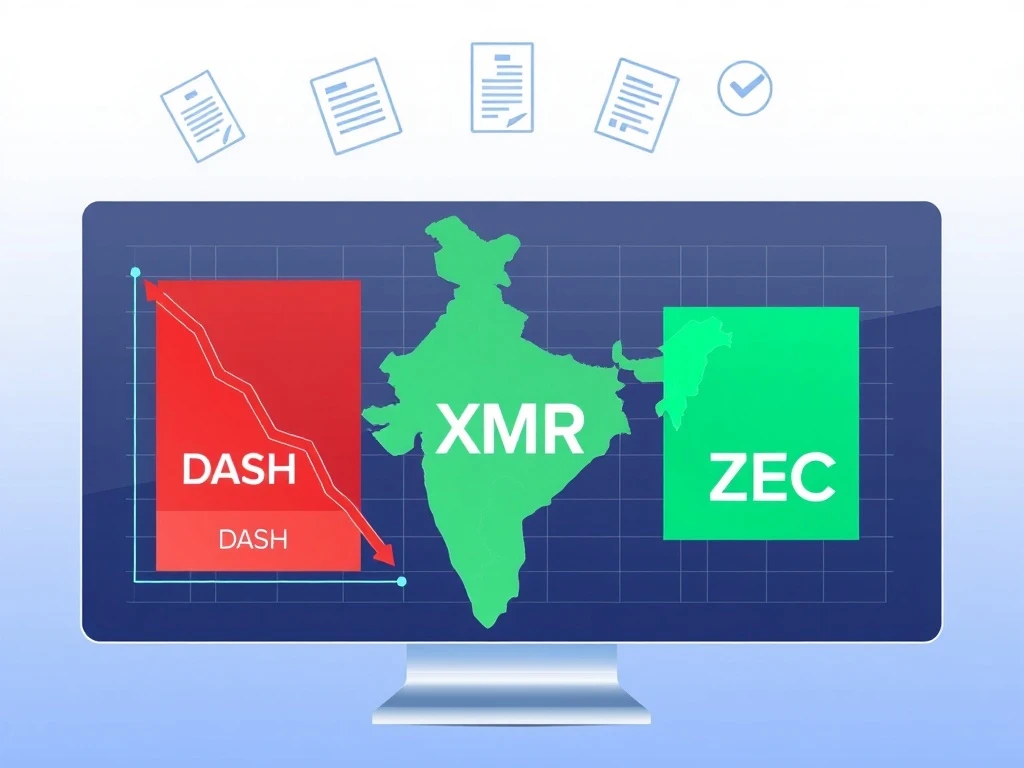
NEW DELHI, January 26, 2026 – The cryptocurrency market witnessed a dramatic divergence this week as Dash (DASH) plunged nearly 30% following India’s regulatory scrutiny of privacy-focused digital assets, while competing privacy coins Monero (XMR) and Zcash (ZEC) demonstrated remarkable resilience. This stark contrast reveals complex market dynamics beyond simple regulatory reactions, highlighting how technical positioning, investor psychology, and fundamental differences between privacy implementations create varied outcomes under regulatory pressure.
Dash Cryptocurrency Faces Sharp Correction After Regulatory Pressure
India’s Financial Intelligence Unit (FIU) recently flagged several privacy-enhanced cryptocurrencies over anti-money laundering concerns, creating immediate market turbulence. Dash experienced the most severe reaction, dropping from a weekly peak of $96 to current consolidation around $59.60. This represents a 29% decline that unfolded in distinct phases. Initially, strong selling pressure emerged as short-term traders locked in gains from Dash’s recent rally to near $97. Subsequently, the breakdown accelerated when price breached the critical $72-73 support zone, which now functions as a supply ceiling.
Technical indicators provide crucial context for this movement. The Relative Strength Index (RSI) rolled over from near-overbought levels into the mid-40s, confirming fading bullish momentum without signaling extreme exhaustion. Trading volume patterns added further nuance: sell-offs occurred with expanded volume while subsequent rebounds showed weaker participation, indicating cautious buyer behavior. Market analysts note that Dash entered a clear post-rally exhaustion phase after its surge to $96.70, a move that encouraged speculative positioning rather than sustained accumulation.
Privacy Coin Regulation: India’s Evolving Stance
India’s regulatory approach to privacy coins represents part of a broader global trend toward increased cryptocurrency oversight. The FIU specifically cited optional privacy features that can obscure transaction trails as potential anti-money laundering concerns. However, regulators have emphasized risk potential rather than presenting evidence of widespread misuse. This distinction matters significantly for market interpretation. Initially, markets largely shrugged off the announcement, with Dash even rallying 11.6% on the news day. The delayed reaction suggests that reduced market access prospects and global delisting risks gradually weighed on demand as enforcement timelines became clearer.
Comparative regulatory history provides essential context. Japan and South Korea previously implemented similar restrictions on privacy coins, resulting in exchange delistings that created lasting price impacts. India’s position as a major emerging cryptocurrency market amplifies the significance of its regulatory decisions. The timeline for exchange compliance remains uncertain, but market participants increasingly price in the probability of restricted access to Indian markets. This regulatory pressure intersects with market reality, creating complex valuation dynamics that extend beyond simple supply-demand equations.
Technical Analysis: Understanding the Price Breakdown
The mechanics of Dash’s decline reveal important market structure insights. The breakdown unfolded through several technical levels:
- Initial resistance: Price stalled at the $90-100 supply zone where aggressive buying met profit-taking
- Key breakdown: Breach of $72-73 support turned this level into resistance
- Current consolidation: Price now tests the $60-61 demand zone
- Volume confirmation: Higher volume on declines confirms legitimate selling pressure
This technical progression suggests the decline resulted from profit-taking meeting regulatory concerns rather than fundamental demand collapse. The crowded long positioning from Dash’s preceding rally created vulnerability to any negative catalyst. Early buyers began locking in gains while late entrants rushed to exit, creating downward momentum that regulatory news amplified. The $60 level now represents a critical battleground where buyer defense meets continued selling pressure.
Monero and Zcash: Divergent Performance Under Pressure
While Dash experienced severe declines, Monero (XMR) and Zcash (ZEC) posted notably smaller drawdowns despite facing identical regulatory scrutiny. This divergence highlights crucial differences in market positioning, technological implementation, and investor perception. Monero employs mandatory privacy through ring signatures and stealth addresses, creating fundamentally different transparency characteristics than Dash’s optional PrivateSend feature. Zcash offers users choice between transparent and shielded transactions through zk-SNARKs technology.
Market structure differences further explain the performance gap. Dash carried heavier speculative positioning from its recent rally, making it more vulnerable to momentum unwinds. The table below illustrates key comparative metrics:
| Metric | Dash (DASH) | Monero (XMR) | Zcash (ZEC) |
|---|---|---|---|
| Weekly Decline | 27-29% | 8-12% | 10-14% |
| Privacy Implementation | Optional (PrivateSend) | Mandatory | Optional (zk-SNARKs) |
| Pre-news Positioning | Overbought after rally | Neutral range | Moderate accumulation |
These differences created varied vulnerability to regulatory pressure. Dash’s optional privacy features presented clearer compliance pathways for exchanges, paradoxically making delisting decisions more straightforward. Monero’s fundamental privacy design creates different regulatory considerations, while Zcash’s compliance-friendly viewing keys offer potential regulatory accommodations. Market participants apparently assessed these technical distinctions when pricing regulatory risk.
Market Psychology and Regulatory Interpretation
Investor psychology played a crucial role in the divergent reactions. Dash’s recent outperformance attracted momentum traders who typically exhibit lower conviction during volatility. Conversely, Monero and Zcash maintain dedicated communities with stronger ideological commitment to privacy preservation. This fundamental difference in holder composition created varied selling pressure under identical regulatory news. Additionally, market participants interpreted India’s actions within broader global regulatory trends rather than as isolated events.
The regulatory landscape for privacy coins continues evolving globally. The Financial Action Task Force (FATF) has increasingly emphasized travel rule compliance for virtual asset service providers, creating implementation challenges for privacy-preserving technologies. India’s position reflects this broader trend rather than representing entirely novel regulatory territory. Market sophistication in interpreting regulatory signals has increased substantially since earlier cryptocurrency cycles, leading to more nuanced price reactions that account for implementation timelines and compliance possibilities.
Future Implications and Market Outlook
The coming weeks will determine whether this represents a temporary correction or more sustained repricing. Several factors will influence Dash’s trajectory:
- Exchange compliance decisions: Major global exchanges may reassess privacy coin listings
- Technical levels: Failure below $60-61 risks continuation toward $50 support
- Volume patterns: Sustained buying volume needed for meaningful recovery
- Regulatory clarity: Further details on India’s enforcement timeline
For the broader privacy coin sector, this episode highlights increasing regulatory scrutiny balanced against growing technological sophistication. Projects offering compliance tools alongside privacy features may navigate regulatory challenges more effectively. The market appears increasingly capable of distinguishing between different privacy implementations when assessing regulatory risk. This represents maturation from earlier cycles where regulatory news created undifferentiated selling across entire cryptocurrency categories.
Conclusion
Dash cryptocurrency experienced a severe 29% decline following India’s regulatory warning about privacy coins, while Monero and Zcash demonstrated notable resilience. This divergence resulted from multiple factors including Dash’s overbought technical positioning, differences in privacy implementation methodologies, and varied investor base characteristics. The episode illustrates increasing market sophistication in interpreting regulatory developments, with participants distinguishing between different privacy technologies and their compliance implications. As global cryptocurrency regulation evolves, such nuanced reactions will likely become more common, reflecting maturing market structures and more informed participant behavior. The Dash price action specifically highlights how technical positioning can amplify fundamental catalysts, creating disproportionate reactions in crowded market segments.
FAQs
Q1: Why did Dash drop more than Monero and Zcash after India’s privacy coin warning?
The decline resulted from multiple factors including Dash’s overbought technical position after a recent rally, its optional privacy features that present clearer compliance questions for exchanges, and a holder base with more speculative positioning compared to Monero and Zcash’s more ideologically committed communities.
Q2: What specific concerns did India’s Financial Intelligence Unit raise about privacy coins?
The FIU cited anti-money laundering concerns related to optional privacy features that can obscure transaction trails. Regulators emphasized risk potential rather than presenting evidence of widespread current misuse, focusing on the theoretical challenges these technologies present for financial monitoring and compliance.
Q3: How do the privacy implementations differ between Dash, Monero, and Zcash?
Dash offers optional privacy through its PrivateSend feature, Monero employs mandatory privacy via ring signatures and stealth addresses, while Zcash provides optional shielded transactions using zk-SNARKs technology with compliance-friendly viewing key options.
Q4: What are the key technical levels to watch for Dash’s price recovery?
The $60-61 zone represents immediate resistance, with sustained break above potentially testing $68-72. Failure to hold current levels risks continuation toward $50 support. Volume patterns during recovery attempts will provide crucial confirmation of genuine buying interest versus temporary rebounds.
Q5: Could other countries follow India’s approach to privacy coin regulation?
Many jurisdictions are evaluating similar measures as part of broader cryptocurrency regulatory frameworks. The Financial Action Task Force’s travel rule recommendations create compliance challenges for privacy-preserving technologies, suggesting continued global regulatory scrutiny. However, implementation approaches may vary based on individual national priorities and existing financial monitoring infrastructures.