AMO Block Roadmap 2026: A Bold Blueprint for Monetizing Vehicle Data on the Blockchain
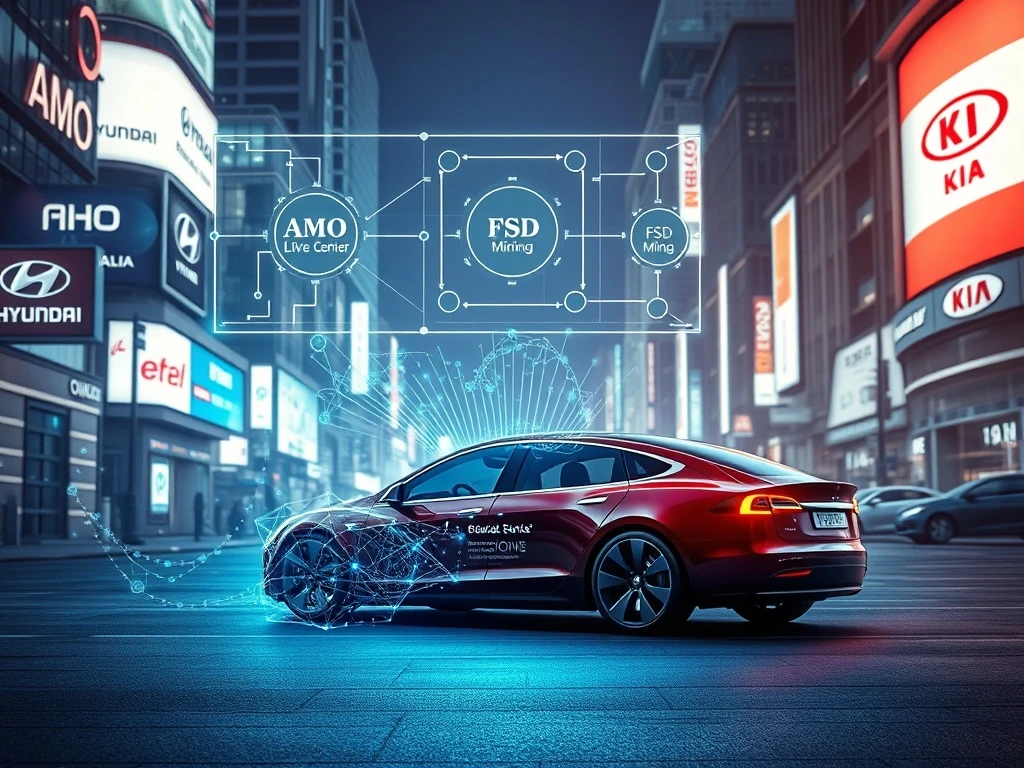
In a significant move for the convergence of automotive and blockchain technology, AMO Block has officially charted its course for 2026, revealing a comprehensive roadmap that aims to fundamentally reshape how vehicle data is valued and traded. The developer of the AMO Coin (AMO) cryptocurrency platform plans to leverage real-world automotive data streams, most notably from Tesla vehicles, to power its next-generation ecosystem. This announcement, made public in Seoul, South Korea, on November 26, 2024, signals a pivotal step towards a more decentralized and user-empowered data economy. The roadmap’s core pillars include an evolved Drive-to-Earn model, a transparent Live Data Center, a novel Full Self-Driving mining concept, and strategic outreach to major automakers.
Decoding the AMO Block 2026 Roadmap
AMO Block’s 2026 strategy represents a maturation of its core thesis: that vehicle-generated data holds immense, untapped economic value for drivers. The company first gained attention for creating a peer-to-peer marketplace where car owners could sell anonymized vehicle data—such as driving patterns, sensor readings, and diagnostic information—directly to data consumers, including insurance companies, urban planners, and service providers. Consequently, the new roadmap builds upon this foundation with more sophisticated and integrated offerings. The plan is not merely an incremental update but a structured expansion into new technological and partnership frontiers. Industry analysts view this as a direct response to growing consumer demand for data sovereignty and the automotive industry’s increasing reliance on big data analytics.
The Evolution of Drive-to-Earn
The headline initiative is the development of Drive-to-Earn (D2E) 2.0. This program directly incentivizes drivers for the data their vehicles produce. While the original D2E model rewarded basic telematics, D2E 2.0 specifically targets high-value data sets from connected and electric vehicles. A primary focus will be on integrating data from Tesla’s extensive fleet, known for its rich suite of sensors and connectivity. For instance, data points could include detailed battery performance metrics, autonomous driving system engagement statistics, and real-time traffic interaction data. This shift aims to create a more granular and valuable data commodity. Furthermore, the move signifies blockchain’s potential to create direct economic channels between data producers (drivers) and data consumers, bypassing traditional intermediaries.
Infrastructure and Innovation: The AMO Live Data Center and FSD Mining
To support D2E 2.0 and ensure transparency, AMO Block will launch the AMO Live Data Center. This platform will serve as a public-facing dashboard and verification engine. Essentially, it will allow anyone to view aggregated, anonymized data flows in real-time, verifying the volume and type of data being contributed to the network. This transparency is crucial for building trust among participants and validating the rewards distributed via AMO Coin. The Data Center will likely employ advanced cryptographic techniques to ensure privacy while proving data authenticity.
Perhaps the most technically ambitious item on the roadmap is the Full Self-Driving (FSD) mining mode. This concept proposes a paradigm where a vehicle’s autonomous driving system, when active, contributes computational resources or specialized data to the network. In theory, while a car navigates using FSD, it could process minor tasks for the AMO blockchain network or generate unique environmental mapping data. However, experts caution that the practical and regulatory implementation of such a system, especially involving safety-critical systems, will be complex. It raises important questions about cybersecurity, vehicle system integrity, and regulatory approval from transportation authorities.
Strategic Expansion: API Integration with Hyundai and Kia
Beyond Tesla, AMO Block’s roadmap explicitly mentions exploring potential API integrations with automakers Hyundai and Kia. This is a strategic move to diversify its data sources and embed its technology deeper into the automotive manufacturing ecosystem. A formal API (Application Programming Interface) partnership would allow these manufacturers to offer AMO Block’s data monetization platform as a value-added service to their customers directly from the vehicle’s infotainment or connected services system.
| Initiative | Core Function | Potential Impact | Key Challenge |
|---|---|---|---|
| D2E 2.0 (Tesla Focus) | Monetize high-fidelity EV/AV data | Higher rewards per driver, attracts premium data buyers | Data privacy compliance, user adoption |
| AMO Live Data Center | Transparent data flow verification | Builds network trust and auditability | Technical infrastructure cost |
| FSD Mining Mode | Leverage autonomous driving compute/data | Creates entirely new data asset class | Technical feasibility, safety regulations |
| OEM API (Hyundai/Kia) | Native integration into vehicle software | Massive user base scalability | Long partnership negotiation cycles |
Such an integration could dramatically scale the AMO network by providing access to millions of new vehicles. It also reflects a broader industry trend where automakers are seeking new revenue streams from software and services long after the initial vehicle sale. The success of this initiative hinges on aligning incentives between the blockchain platform’s decentralized model and the automakers’ controlled, brand-centric ecosystems.
The Broader Context of Data Ownership
This roadmap arrives amid a global conversation about data ownership and digital rights. Regulations like the EU’s General Data Protection Regulation (GDPR) and various consumer privacy laws have empowered individuals regarding their personal data. AMO Block’s model operationalizes this principle for the automotive sector. By using blockchain’s immutable ledger, the platform can provide a clear, unchangeable record of data provenance and transactions. This gives drivers both control and a direct financial stake in the data economy their vehicles generate, a model often called “data capitalism” or “the citizen-centric data economy.”
Conclusion
The AMO Block 2026 roadmap presents a bold and detailed vision for the future of vehicle data commerce. By focusing on high-value data from Tesla, building transparent infrastructure with the Live Data Center, pioneering the novel concept of FSD mining, and pursuing strategic OEM integrations with Hyundai and Kia, the company is positioning itself at a complex intersection of automotive innovation, blockchain technology, and data economics. The execution of this ambitious AMO Block roadmap will be closely watched, as its success could validate a new paradigm for how individuals interact with and profit from the digital footprints of their physical assets. The journey toward 2026 will test not only technical prowess but also the ability to navigate partnership landscapes and evolving regulatory frameworks.
FAQs
Q1: What is AMO Coin, and how is it used in this roadmap?
AMO Coin (AMO) is the native cryptocurrency of the AMO Block platform. It serves as the medium of exchange for all data transactions. In the 2026 roadmap, drivers will earn AMO Coin for contributing data through D2E 2.0 and potentially FSD mining. Data buyers will use AMO Coin to purchase access to these data sets.
Q2: How will AMO Block access data from Tesla vehicles?
AMO Block will not access data directly from Tesla’s servers. Instead, the model relies on vehicle owners voluntarily connecting their car’s data-sharing capabilities (via Tesla’s existing APIs for owners or third-party dongles) to the AMO Block application. The data is anonymized and encrypted before being sent to the blockchain network.
Q3: Is FSD Mining safe? Could it interfere with my car’s self-driving system?
According to the principles outlined by AMO Block, safety is paramount. Any FSD mining function would be designed as a low-priority background process that utilizes only surplus computational capacity or captures specific non-critical sensor data logs. It would be rigorously isolated from the vehicle’s primary safety-critical control systems. Regulatory approval from bodies like the NHTSA would be essential before any real-world deployment.
Q4: What are the benefits for automakers like Hyundai and Kia to integrate AMO’s API?
Automakers benefit by offering an innovative, value-added service that can generate recurring revenue, increase customer engagement and brand loyalty, and provide them with aggregated, consented insights into how their vehicles are used—all without bearing the primary cost of data incentives, which is managed by the AMO network and its tokenomics.
Q5: When will these roadmap features actually launch?
The roadmap is a plan for 2026. Specific launch timelines for each initiative (D2E 2.0, Live Data Center, etc.) will be released in phases by AMO Block throughout 2025. Development is iterative, and features may be released in beta versions before full public availability.