Key Financial Events This Week: Fed Decision and Global Speeches That Will Shape Markets
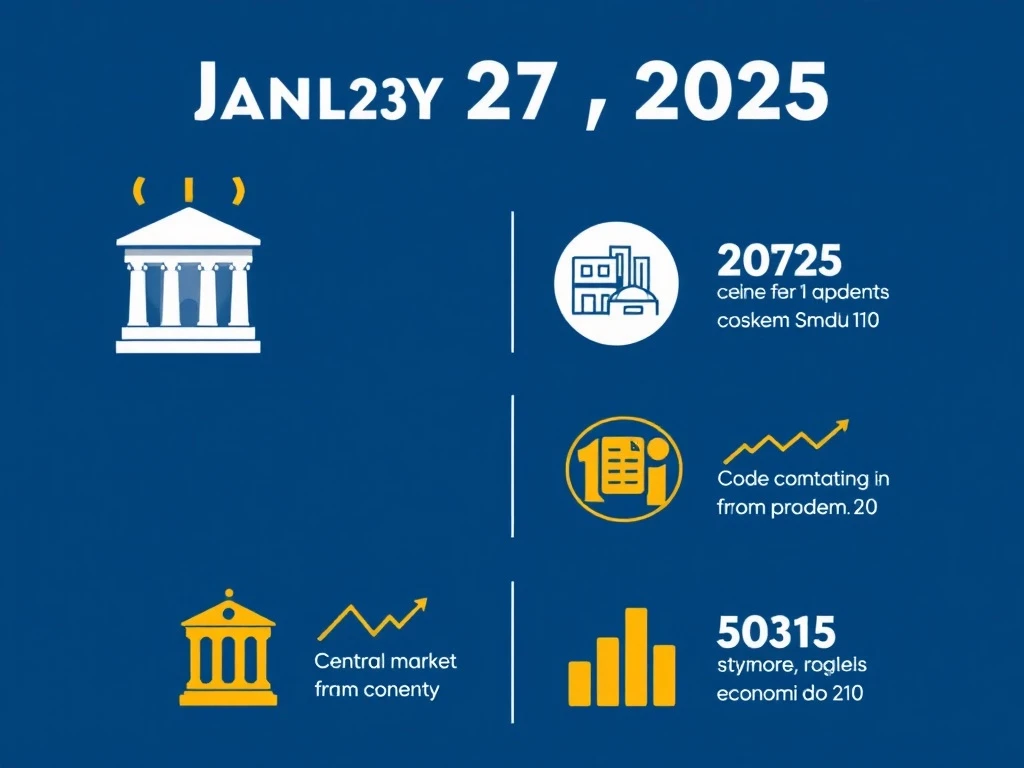
Global Financial Markets, January 2025: This week presents a critical series of key financial events that will command the attention of investors, policymakers, and analysts worldwide. The convergence of major central bank communications and significant economic data releases creates a high-stakes environment for global markets. From Washington to Frankfurt, the words and decisions emanating from financial authorities will provide crucial signals about the trajectory of monetary policy, economic stability, and investor sentiment in the coming months.
Key Financial Events Calendar: A Detailed Breakdown
The financial week from January 27 to January 29, 2025, is densely packed with scheduled events that carry substantial weight. Market participants typically prepare for such weeks by adjusting portfolios, hedging risks, and analyzing potential outcomes. The sequence begins with political commentary that can influence fiscal policy expectations, moves through the core monetary policy decision from the world’s most influential central bank, and concludes with a vital labor market health indicator. Each event interconnects, creating a narrative about the global economic condition.
Financial calendars serve as essential tools for professionals navigating volatile markets. They allow for the anticipation of volatility spikes, often referred to as “event risk.” This particular week’s concentration of events increases the likelihood of significant price movements across asset classes including equities, bonds, currencies, and commodities. Historical analysis shows that weeks featuring both Federal Reserve decisions and major speeches from other central bank heads typically see a 30-40% increase in trading volume compared to average weeks.
Central Bank Spotlight: The Federal Reserve’s Crucial Decision
The centerpiece of this week’s key financial events is undoubtedly the U.S. Federal Reserve’s interest rate decision, scheduled for 7:00 p.m. UTC on January 28. This announcement represents the culmination of the Federal Open Market Committee’s (FOMC) two-day policy meeting. The Fed Funds Rate, the primary tool of U.S. monetary policy, influences borrowing costs for consumers and businesses globally. The decision will be based on recent economic data, including inflation trends, employment figures, and GDP growth.
Following the rate decision, at 7:30 p.m. UTC, the FOMC will hold a press conference chaired by the Federal Reserve Chair. This event often carries more market-moving potential than the decision itself. Analysts scrutinize the accompanying policy statement for changes in language regarding terms like “transitory,” “patient,” or “vigilant.” The press conference allows for questions on the economic outlook, balance sheet policy (quantitative tightening), and forward guidance. The market’s reaction hinges on the perceived “dovish” or “hawkish” tone of the communications.
- Policy Statement: Released simultaneously with the rate decision, it outlines the Committee’s view of the economy and risks.
- Summary of Economic Projections (SEP): Includes the famous “dot plot,” showing individual FOMC members’ rate forecasts.
- Press Conference Q&A: Provides nuance and clarifies the Committee’s intent, often moving markets.
Historical Context of Fed Decisions
The Federal Reserve has operated in a complex environment since the pandemic era, navigating from emergency zero-interest-rate policy and quantitative easing to a rapid hiking cycle to combat inflation. As of early 2025, the central bank is likely in a delicate phase of managing the final stages of inflation normalization while avoiding triggering a recession. Previous cycles indicate that the transition from rate hikes to a holding pattern, and eventually to cuts, requires careful communication to prevent market overreaction. This week’s decision sits within that critical narrative.
Global Voices: Speeches from Trump and Lagarde
Complementing the Fed’s actions are scheduled speeches from two other pivotal figures in the global financial landscape. U.S. President Donald Trump is scheduled to speak at 1:30 p.m. UTC on both January 27 and 28. While not a central banker, the U.S. President’s commentary on trade policy, fiscal stimulus, regulation, or the Federal Reserve itself can significantly impact market sentiment. Investors analyze such speeches for clues on future economic policy direction, which affects corporate earnings forecasts and currency valuations.
On January 27 at 5:00 p.m. UTC, European Central Bank (ECB) President Christine Lagarde will deliver remarks. As head of the central bank for the Eurozone, Lagarde’s speeches are meticulously parsed for insights into ECB policy regarding interest rates, its pandemic emergency purchase programme (PEPP), and its outlook on European growth and inflation. Given the interconnectedness of global markets, signals from the ECB can influence expectations for other central banks, including the Fed, through currency cross-rates and capital flows.
| Date | Time (UTC) | Event | Primary Market Impact |
|---|---|---|---|
| Jan. 27 | 1:30 p.m. | U.S. President Donald Trump speaks | Fiscal Policy, Trade Sentiment |
| Jan. 27 | 5:00 p.m. | ECB President Christine Lagarde speaks | Eurozone Monetary Policy, EUR/USD |
| Jan. 28 | 1:30 p.m. | U.S. President Donald Trump speaks | General Economic Sentiment |
| Jan. 28 | 7:00 p.m. | U.S. Federal Reserve Interest Rate Decision | Global Rates, USD, Equities |
| Jan. 28 | 7:30 p.m. | FOMC Press Conference | Forward Guidance, Market Volatility |
| Jan. 29 | 1:30 p.m. | U.S. Initial Jobless Claims | Labor Market Health, Fed Policy Path |
Economic Data Pulse: Initial Jobless Claims
The week concludes with the release of U.S. initial jobless claims data on January 29 at 1:30 p.m. UTC. This high-frequency indicator provides a near-real-time snapshot of the labor market’s health. It measures the number of individuals who filed for unemployment insurance for the first time during the past week. While a single week’s data can be volatile, it is a critical piece of the mosaic the Federal Reserve examines when assessing the balance between employment and inflation—its dual mandate.
In the current economic context, jobless claims are monitored for any sign of weakening in the historically strong labor market. A sustained rise in claims could signal economic softening, potentially influencing the Fed to consider a more accommodative stance sooner. Conversely, persistently low claims support the case for maintaining restrictive policy to ensure inflation is fully contained. This release, coming just one day after the Fed decision, will be read as an early validation or challenge to the Committee’s stated economic outlook.
How Markets Synthesize the Information
Professional traders and algorithms do not view these key financial events in isolation. They build complex models that weigh the probabilities of different outcomes from each event and their combined effect. For instance, a hawkish Fed coupled with strong jobless claims might strengthen the U.S. dollar significantly. A dovish Fed paired with a weak labor signal could trigger a rally in bonds and growth stocks. The speeches from Trump and Lagarde add layers of geopolitical and cross-currency considerations. The net effect is a dynamic repricing of risk across the entire financial system.
Conclusion
This week’s lineup of key financial events represents a powerful convergence of policy, commentary, and data. The Federal Reserve’s interest rate decision and press conference stand as the core events, with the potential to set the tone for global monetary policy in the first quarter of 2025. The surrounding speeches from President Trump and ECB President Lagarde will provide critical context on fiscal and international monetary dynamics. Finally, the jobless claims data will offer a timely check on the health of the U.S. labor market. For anyone with exposure to financial markets, understanding the implications and interplay of these events is not just academic—it is essential for informed decision-making and risk management. The outcomes will shape investment strategies and economic forecasts for weeks to come.
FAQs
Q1: Why is the Federal Reserve’s interest rate decision so important for global markets?
The U.S. dollar is the world’s primary reserve currency, and U.S. interest rates act as a benchmark for global capital costs. Changes influence everything from mortgage rates worldwide to emerging market debt sustainability and corporate investment decisions.
Q2: What is the difference between the Fed’s rate decision and the FOMC press conference?
The decision announces the policy action (e.g., hold, cut, hike). The press conference explains the reasoning, provides economic forecasts, and offers forward guidance about future policy intentions, which markets often find more significant.
Q3: How can a political speech from the U.S. President be a key financial event?
Presidential comments can signal changes in fiscal policy, trade relations, regulatory approaches, or even pressure on the independent Fed. These factors directly impact corporate profits, economic growth expectations, and investor confidence.
Q4: What do analysts look for in Christine Lagarde’s ECB speeches?
They listen for hints on the timing of future ECB rate moves, changes to bond-buying programs, and assessments of inflation risks in the Eurozone. This affects the Euro’s value and European stock and bond markets.
Q5: Why are weekly initial jobless claims considered a high-impact release?
They provide the most timely data on U.S. labor market conditions. The Fed’s mandate includes maximum employment, so sudden shifts in layoffs can immediately alter perceptions of the economic outlook and the appropriate path for monetary policy.
Q6: How should a retail investor approach a week with so many key financial events?
Retail investors should be aware of increased volatility, avoid making impulsive trades based on headlines, and consider that major moves often occur after the events as the market digests the full context. Long-term strategies typically advise against trying to time markets based on scheduled events.