Crypto Futures Liquidations Trigger $114 Million Market Shock in Volatile Trading Hour
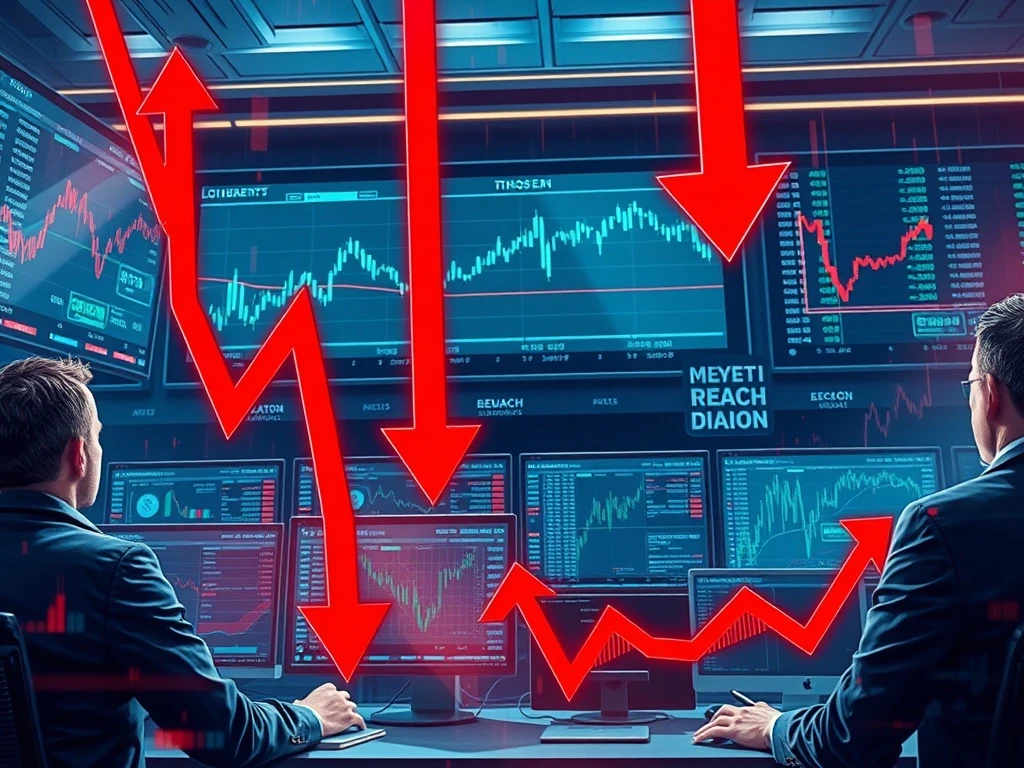
Global cryptocurrency markets experienced significant turbulence today as $114 million worth of futures positions faced liquidation within a single hour, according to real-time data from major derivatives exchanges. This substantial market movement represents a concentrated period of volatility that has captured the attention of institutional and retail traders worldwide. The rapid liquidations occurred across multiple platforms simultaneously, indicating broader market forces at play rather than isolated exchange events. Market analysts immediately began examining the underlying causes and potential implications for cryptocurrency valuations moving forward.
Crypto Futures Liquidations Reach Critical Levels
Derivatives markets witnessed an extraordinary surge in forced position closures during the past trading hour. Major cryptocurrency exchanges including Binance, Bybit, OKX, and Deribit collectively processed approximately $114 million in futures liquidations. The breakdown reveals that long positions accounted for approximately $78 million of these liquidations, while short positions represented the remaining $36 million. This distribution pattern suggests that bullish traders faced particularly severe pressure during this volatile period. Consequently, market participants are now reassessing their risk management strategies in response to these developments.
Historical data indicates that such concentrated liquidation events often precede significant price movements in either direction. The cryptocurrency derivatives market has grown exponentially since 2020, with total open interest frequently exceeding $50 billion across all platforms. This substantial market depth means that liquidation cascades can create self-reinforcing price movements as margin calls trigger additional selling or buying pressure. Market structure analysts emphasize that understanding these mechanics proves essential for navigating today’s increasingly sophisticated trading environment.
Technical Analysis of Market Conditions
Technical indicators preceding the liquidation event showed several warning signs that experienced traders typically monitor. The funding rate across perpetual futures contracts had reached elevated levels on multiple exchanges, particularly for Bitcoin and Ethereum derivatives. Additionally, the estimated leverage ratio across major platforms indicated that traders were employing higher-than-average margin positions. When combined with decreasing market depth on order books, these conditions created a fragile environment where relatively modest price movements could trigger outsized liquidation events.
Twenty-Four Hour Market Context and Trends
Expanding the analysis to a broader timeframe reveals that the past 24 hours witnessed $236 million in total futures liquidations across cryptocurrency markets. This extended period of volatility reflects ongoing uncertainty regarding macroeconomic factors and regulatory developments. The table below illustrates the distribution across major cryptocurrencies during this timeframe:
| Cryptocurrency | 24-Hour Liquidations | Percentage of Total |
|---|---|---|
| Bitcoin (BTC) | $127 million | 53.8% |
| Ethereum (ETH) | $68 million | 28.8% |
| Solana (SOL) | $22 million | 9.3% |
| Other Altcoins | $19 million | 8.1% |
This distribution pattern demonstrates Bitcoin’s continued dominance in derivatives markets, accounting for more than half of all liquidations. Ethereum maintains its position as the second most significant derivatives market, while newer platforms like Solana show increasing activity. The concentration of liquidations in major assets suggests that market-wide factors rather than individual token developments drove the volatility. Several key elements contributed to this market environment:
- Macroeconomic uncertainty surrounding interest rate decisions
- Regulatory announcements from multiple jurisdictions
- Institutional positioning changes ahead of quarterly reports
- Technical breakdowns at key support and resistance levels
Exchange-Specific Analysis and Risk Management
Individual cryptocurrency exchanges implemented varying risk management protocols during the liquidation event. Binance, as the largest derivatives platform by volume, processed approximately $47 million in liquidations during the critical hour. Bybit followed with $32 million, while OKX and Deribit accounted for the remainder. Each exchange employs distinct liquidation engines and margin systems that can influence the speed and severity of position closures. Consequently, traders must understand these platform-specific mechanics when constructing their risk management frameworks.
Exchange representatives have emphasized their commitment to maintaining orderly markets during periods of extreme volatility. Most major platforms utilize sophisticated risk engines that gradually liquidate positions rather than executing immediate market orders. This approach aims to minimize market impact and prevent cascading liquidations that could destabilize broader markets. However, during particularly rapid price movements, even these systems can struggle to maintain optimal execution prices for liquidated positions.
Historical Comparison and Market Evolution
Comparing current liquidation events with historical precedents reveals important market evolution trends. The infamous March 2020 liquidation cascade saw over $1 billion in positions closed within 24 hours, representing a significantly larger market impact relative to total open interest. Since that event, exchanges have implemented numerous safeguards including:
- Improved risk management systems with more granular position monitoring
- Enhanced insurance funds to cover potential system deficits
- Advanced price oracle systems with multiple data sources
- Auto-deleveraging protocols as last-resort protection mechanisms
These improvements have generally reduced the frequency and severity of liquidation cascades, though concentrated volatility periods still present significant challenges. Market participants who experienced previous cycles often approach current conditions with heightened caution, having witnessed firsthand how rapidly positions can unwind during extreme market movements.
Trader Psychology and Behavioral Patterns
The psychology of derivatives traders plays a crucial role in liquidation events. During periods of accumulating profits, traders frequently increase leverage to maximize returns, creating conditions ripe for rapid reversals. Behavioral finance research indicates that cryptocurrency traders exhibit particular susceptibility to overconfidence during bull markets, often underestimating downside risks. This psychological dynamic contributes to the asymmetric nature of liquidation events, where long positions typically face greater pressure during initial volatility spikes.
Professional trading firms employ sophisticated monitoring systems to detect early warning signs of potential liquidation cascades. These systems track multiple metrics including:
- Aggregate leverage ratios across different trader cohorts
- Funding rate anomalies that indicate excessive positioning
- Order book depth changes that suggest thinning liquidity
- Cross-exchange arbitrage opportunities that signal market fragmentation
Retail traders increasingly access similar analytics through third-party platforms, though interpretation expertise remains a significant differentiator. Educational resources focusing on risk management have proliferated across the cryptocurrency ecosystem, reflecting growing recognition that sustainable trading requires more than directional speculation.
Market Structure Implications and Future Outlook
The structure of cryptocurrency derivatives markets continues evolving in response to liquidation events. Institutional participants increasingly demand more sophisticated risk management tools, including options-based hedging strategies and portfolio margin systems. Regulatory developments in major jurisdictions may further shape market structure, potentially introducing additional safeguards or reporting requirements. Market makers and liquidity providers adjust their algorithms based on liquidation patterns, creating feedback loops that influence future market behavior.
Technological innovations also promise to reshape derivatives trading infrastructure. Decentralized derivatives platforms have gained traction, though they currently represent a small fraction of total volume. These platforms employ novel liquidation mechanisms including peer-to-peer insurance pools and dynamic position auctions. While still experimental, such approaches may eventually influence mainstream exchange design as the industry matures.
Conclusion
The $114 million crypto futures liquidations event highlights the ongoing volatility and complexity of cryptocurrency derivatives markets. This concentrated period of position closures within a single hour demonstrates how rapidly conditions can change in digital asset trading. The broader $236 million in 24-hour liquidations provides important context for understanding market dynamics and trader behavior. As cryptocurrency markets continue maturing, participants must prioritize robust risk management frameworks that account for potential liquidation scenarios. Market structure improvements and educational initiatives will likely play crucial roles in reducing the frequency and severity of such events moving forward.
FAQs
Q1: What causes futures liquidations in cryptocurrency markets?
Futures liquidations occur when traders’ positions lose sufficient value to trigger automatic closure by exchange systems. This typically happens when market movements cause margin balances to fall below maintenance requirements, forcing the platform to sell or buy assets to cover potential losses.
Q2: How do exchanges determine which positions to liquidate first?
Exchanges typically liquidate positions based on risk metrics including leverage levels, margin ratios, and position sizes. Most platforms employ sophisticated algorithms that prioritize the most under-margined positions while attempting to minimize market impact through gradual execution.
Q3: Can traders prevent futures liquidations?
Traders can reduce liquidation risk through several methods including using lower leverage, maintaining adequate margin buffers, setting stop-loss orders, and actively monitoring positions during volatile periods. Some platforms also offer risk management tools like partial liquidation options.
Q4: What happens to liquidated positions in cryptocurrency futures markets?
Exchanges automatically close liquidated positions through their matching engines, often executing market orders. The exchange’s insurance fund may cover any remaining deficits if liquidations cannot recover sufficient funds, though traders typically lose their entire margin on liquidated positions.
Q5: How do liquidation events affect broader cryptocurrency prices?
Significant liquidation events can create selling or buying pressure that influences spot market prices, particularly during periods of low liquidity. This relationship forms a feedback loop where price movements trigger liquidations, which then cause further price movements in the same direction.