Bitcoin Payments Stalled by Crippling Tax Policy, Not Technology, Industry Leaders Warn
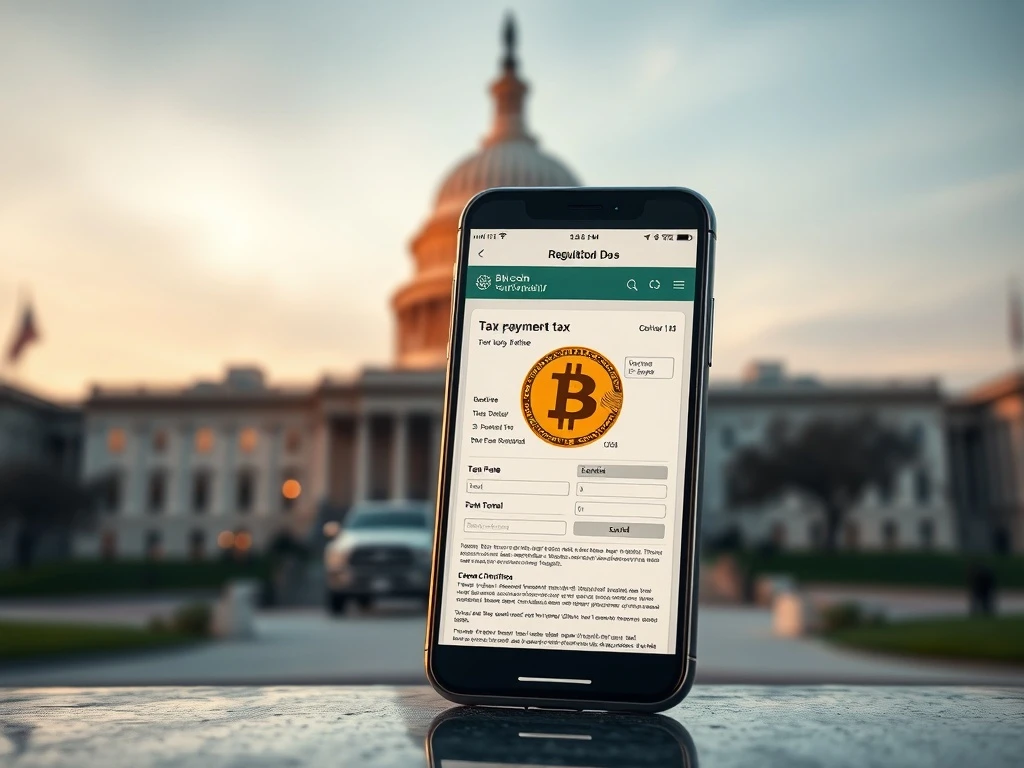
WASHINGTON, D.C., December 2025 — Bitcoin’s potential as a mainstream payment method faces a significant regulatory barrier rather than a technological one, according to industry executives who argue that current United States tax policies create unnecessary friction for everyday cryptocurrency transactions. While scaling solutions like the Lightning Network have dramatically improved Bitcoin’s transaction speed and cost efficiency, experts contend that tax reporting requirements for every small purchase effectively discourage its use as digital cash.
Bitcoin Payments Face Tax Policy Roadblocks
The fundamental issue centers on capital gains taxation for every Bitcoin transaction under current US law. Consequently, each time someone uses Bitcoin to buy coffee or make a small purchase, they must calculate and report any gain or loss relative to their original acquisition cost. This administrative burden creates what Pierre Rochard, a board member at Bitcoin treasury company Strive, describes as a “disincentive structure” that undermines Bitcoin’s utility as a medium of exchange.
Rochard employs a compelling metaphor to illustrate the situation. “The best athlete can win against the worst athlete 100% of the time, if the best athlete plays,” he explains. “It drops to 0% if he doesn’t play and lets the weak athlete win.” In this analogy, Bitcoin represents the superior athlete with proven technological capabilities, while tax policy represents the artificial constraint preventing its participation in the payments arena.
The De Minimis Exemption Debate Intensifies
In December 2025, the Bitcoin Policy Institute issued a policy brief highlighting the critical need for a de minimis tax exemption for small cryptocurrency transactions. This type of exemption, common in other tax contexts, would eliminate reporting requirements for transactions below a specific dollar threshold. Currently, the absence of such an exemption means that even minor Bitcoin purchases trigger tax reporting obligations, creating compliance complexity for ordinary users.
Lawmakers have proposed conflicting approaches to this issue. Some legislation would limit de minimis exemptions exclusively to overcollateralized dollar-pegged stablecoins. These digital assets maintain a 1:1 value with the US dollar through reserves of cash or government securities. However, this selective approach has generated substantial criticism from Bitcoin advocates who argue it creates an unfair regulatory advantage for centralized digital dollars over decentralized cryptocurrency.
Legislative Responses and Industry Reactions
Wyoming Senator Cynthia Lummis, a prominent crypto industry ally, introduced significant legislation in July 2025 addressing these concerns. Her bill proposes a de minimis tax exemption for digital asset transactions under $300, with an annual cap of $5,000 per taxpayer. Additionally, the legislation includes provisions for charitable cryptocurrency donations and defers taxation on staking and mining rewards until those assets are sold.
Industry leaders have voiced strong support for regulatory changes. Jack Dorsey, founder of payments company Square, emphasized the urgency of reform. “We want Bitcoin to be everyday money ASAP,” Dorsey stated, highlighting how his company integrated Bitcoin payments into point-of-sale systems in October 2025. Meanwhile, Bitcoin advocate Marty Bent criticized the stablecoin-only exemption proposals as “nonsensical,” arguing they miss the fundamental point of cryptocurrency’s decentralized nature.
Comparative Analysis: Technology vs. Policy Readiness
Bitcoin’s technological infrastructure has advanced substantially, making it increasingly viable for everyday transactions. The table below contrasts Bitcoin’s current capabilities with the regulatory environment:
| Aspect | Technological Status | Regulatory Status |
|---|---|---|
| Transaction Speed | Near-instant with Layer 2 solutions | No impact from regulation |
| Transaction Cost | Pennies per transaction | Compliance costs add overhead |
| Scalability | Millions of transactions per second possible | Regulatory uncertainty limits adoption |
| User Experience | Wallet interfaces simplified | Tax reporting complexity remains |
This disparity highlights the central argument: Bitcoin’s payment functionality faces greater constraints from policy than from technology. Layer 2 solutions like the Lightning Network have effectively addressed earlier concerns about blockchain scalability and transaction fees. However, no technological innovation can circumvent the tax reporting requirements imposed by current legislation.
The Global Regulatory Context
The United States is not alone in grappling with cryptocurrency taxation issues, but its approach carries disproportionate weight in global markets. Other jurisdictions have implemented more favorable frameworks:
- Portugal: Exempts cryptocurrency transactions from capital gains tax when not conducted as professional activity
- Germany: Offers tax exemptions for crypto held more than one year
- Singapore: Treats cryptocurrency as property rather than currency, with specific exemptions
- El Salvador: Made Bitcoin legal tender with no capital gains tax on transactions
These international approaches create competitive pressure on US policymakers. Furthermore, the Netherlands’ proposed unrealized gains tax on cryptocurrency and stocks has raised concerns about capital flight, demonstrating how tax policy directly influences cryptocurrency adoption and market activity.
Economic Implications of Current Policy
The existing tax treatment of Bitcoin transactions creates several economic distortions. First, it encourages holding rather than spending—the opposite behavior desired for a functioning medium of exchange. Second, it disadvantages Bitcoin relative to traditional payment methods that don’t trigger capital gains reporting. Third, it creates compliance burdens that fall disproportionately on individual users rather than institutional participants.
Economists note that these policies may inadvertently reinforce Bitcoin’s perception as a speculative investment rather than a practical payment tool. This outcome contradicts the original vision of cryptocurrency as peer-to-peer electronic cash and potentially limits innovation in the digital payments space.
Pathways Forward for Policy Reform
Several legislative approaches could address the tax barriers to Bitcoin payments. The most straightforward solution involves establishing a reasonable de minimis exemption threshold, similar to existing provisions for foreign currency transactions. Alternative approaches include:
- Creating a separate category for “personal use” cryptocurrency transactions
- Implementing simplified reporting methods for small transactions
- Developing clear guidelines for cryptocurrency as a medium of exchange versus investment asset
- Harmonizing state and federal cryptocurrency tax treatment
Policy experts emphasize that any solution must balance multiple objectives: reducing compliance burdens, maintaining tax revenue integrity, preventing abuse, and fostering innovation. The ongoing debate reflects broader questions about how governments should regulate emerging financial technologies in the digital age.
Conclusion
Bitcoin payments face substantial hurdles from United States tax policy rather than technological limitations. While scaling solutions have addressed earlier concerns about transaction speed and cost, the absence of a de minimis exemption for small transactions creates unnecessary friction for everyday use. Legislative proposals from Senator Cynthia Lummis and advocacy from industry leaders like Jack Dorsey highlight growing recognition of this issue. As the cryptocurrency ecosystem evolves, regulatory frameworks must adapt to distinguish between investment activity and transactional use, potentially unlocking Bitcoin’s full potential as a modern payment method. The resolution of these tax policy questions will significantly influence whether Bitcoin transitions from primarily a store of value to a genuine medium of exchange in the United States economy.
FAQs
Q1: What is a de minimis tax exemption for cryptocurrency?
A de minimis exemption would eliminate tax reporting requirements for small cryptocurrency transactions below a specific dollar threshold, similar to exemptions for minor foreign currency transactions.
Q2: How does current US tax policy affect Bitcoin payments?
Current policy treats every Bitcoin transaction as a taxable event, requiring users to calculate and report capital gains or losses regardless of transaction size, creating compliance burdens that discourage everyday use.
Q3: What technological solutions have improved Bitcoin’s payment capabilities?
Layer 2 solutions like the Lightning Network enable faster, cheaper Bitcoin transactions, making the technology itself viable for everyday payments despite regulatory barriers.
Q4: How do other countries handle cryptocurrency transaction taxes?
Approaches vary widely, with some countries like Portugal offering exemptions for non-professional activity and others like Germany providing holding period incentives, creating a global patchwork of regulations.
Q5: What legislation has been proposed to address these tax issues?
Senator Cynthia Lummis introduced a bill in July 2025 proposing a $300 de minimis exemption with a $5,000 annual cap, along with provisions for charitable donations and deferred taxation on staking rewards.