SpaceCoin SPACE Token Unveils Strategic Airdrop Plan to Boost Satellite Internet Project
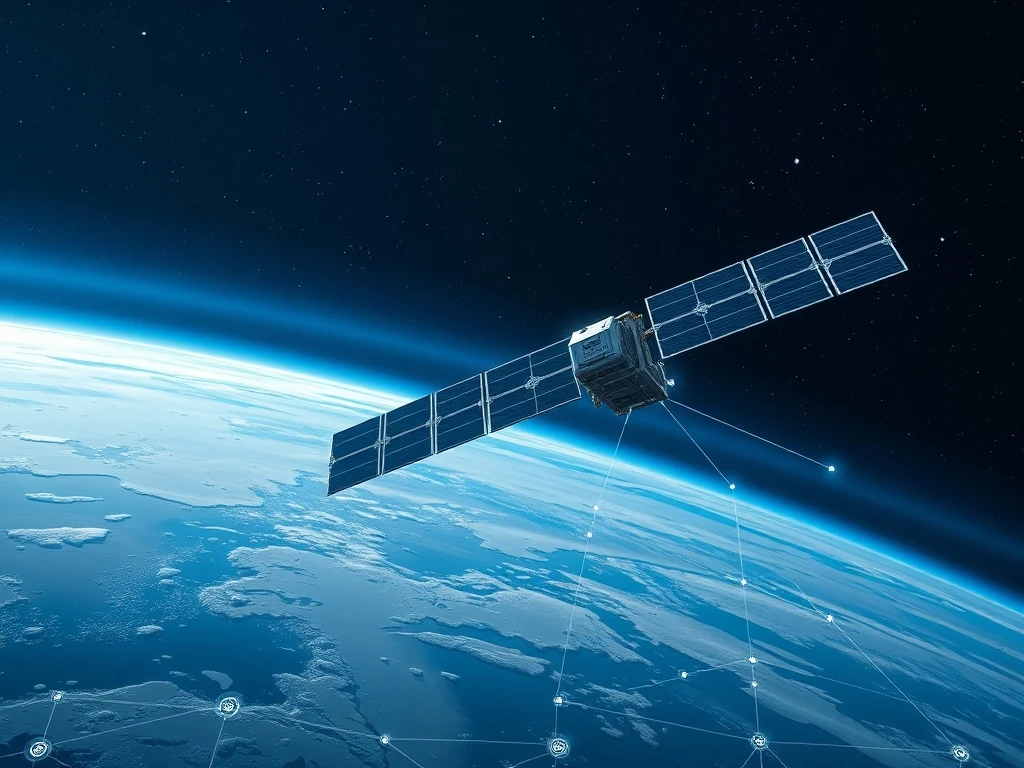
In a significant development for the Web3 infrastructure sector, the SpaceCoin project has formally announced the detailed distribution plan for its SPACE token airdrop. This move, reported by the industry news source Wu Blockchain, represents a pivotal step for the decentralized satellite-based internet initiative. Consequently, the project aims to strategically distribute its native asset to early supporters and align long-term incentives for its ambitious goal of building a blockchain-integrated global communications network.
SpaceCoin SPACE Token Airdrop Mechanics and Schedule
The SpaceCoin team has structured its airdrop distribution across two distinct seasons, designed to balance immediate accessibility with sustained project engagement. For Season One, participants will receive 25% of their total allocation unlocked immediately at the Token Generation Event (TGE). The remaining 75% will then vest linearly, distributed in equal monthly installments over the subsequent three months. This phased approach helps mitigate potential market volatility from a sudden large token influx.
Furthermore, Season Two is scheduled to commence precisely one month after the TGE. Its distribution follows a different model, featuring a monthly unlock of 33.3% over three consecutive months. This tiered, multi-season framework is a common mechanism in decentralized finance (DeFi) to reward early community members while encouraging continued participation in the project’s ecosystem.
Staking Program and Previous Strategic Partnership
Alongside the airdrop announcement, SpaceCoin revealed a complementary limited-time staking program. This initiative offers participants an annual percentage rate (APR) of 10% for locking their SPACE tokens. Staking mechanisms are crucial for securing proof-of-stake blockchain networks and typically provide token holders with a yield in return for contributing to network security and stability.
This development follows a previously established token swap partnership between SpaceCoin and World Liberty Financial (WLFI). Strategic partnerships like this often facilitate liquidity, cross-community exposure, and integrated utility between different blockchain projects. They form a foundational element for broader ecosystem growth.
Context and Analysis: The Convergence of Space Tech and Blockchain
The SpaceCoin project operates at the intersection of two rapidly advancing fields: satellite communications and decentralized ledger technology. Traditional satellite internet, while providing global coverage, often faces challenges with centralization, high costs, and access limitations. Blockchain technology proposes a novel framework for managing network access, data routing, and payment settlements in a transparent, trustless manner.
Projects exploring similar concepts have gained attention in recent years. For instance, initiatives like Helium Network have demonstrated a model for decentralized wireless infrastructure, though primarily focused on terrestrial coverage. SpaceCoin’s model extends this concept into low Earth orbit (LEO), potentially addressing connectivity gaps in remote and underserved regions. The tokenomics, including the airdrop and staking program, are engineered to bootstrap a decentralized community of users, node operators, and service providers essential for such a network’s success.
Potential Impacts and Market Considerations
The structured vesting schedule for the SPACE airdrop serves multiple purposes. Primarily, it protects the token’s price discovery phase from excessive sell pressure that can occur when large volumes are unlocked at once. Additionally, it incentivizes recipients to remain engaged with the project over several months to receive their full allocation. This can foster a more dedicated and informed community, which is vital for decentralized governance.
However, potential participants should conduct thorough due diligence. The success of such an ambitious infrastructure project depends on numerous technical, regulatory, and economic factors beyond token distribution. These include successful satellite deployment, regulatory approvals for spectrum use, achieving competitive data latency and throughput, and achieving sustainable economic models for node operators. The 10% staking APR also requires analysis of the token’s inflation schedule and the real yield generated by network fees.
Conclusion
The announcement of the SpaceCoin SPACE token airdrop distribution plan marks a calculated step in launching the project’s ecosystem. By implementing a phased, two-season unlock schedule and coupling it with a staking rewards program, the team aims to cultivate a stable and invested community. This strategy is critical for a project whose ultimate goal—a decentralized, satellite-based internet—requires significant long-term coordination and resource commitment. The evolution of the SpaceCoin project will be a notable case study in the ongoing merger of physical infrastructure and cryptographic economic systems.
FAQs
Q1: What is the SpaceCoin project?
SpaceCoin is a decentralized initiative aiming to build a satellite-based internet network managed and operated via blockchain technology. Its native SPACE token facilitates network access, payments, and governance.
Q2: How does the SPACE token airdrop work?
The airdrop is split into two seasons. Season One unlocks 25% at launch, then vests the rest monthly over three months. Season Two starts a month later, unlocking 33.3% monthly for three months.
Q3: What is the staking program for SPACE tokens?
SpaceCoin is offering a limited-time staking program with a 10% Annual Percentage Rate (APR). Users can lock their tokens to earn rewards, which also helps secure the network.
Q4: What was the previous partnership with World Liberty Financial (WLFI)?
SpaceCoin and WLFI completed a token swap partnership. Such agreements typically allow each project’s community to access the other’s token, fostering collaboration and shared liquidity.
Q5: Why use a phased unlock schedule for the airdrop?
Phased unlocks, or vesting, prevent market flooding with new tokens all at once. This practice promotes price stability and encourages long-term alignment between token recipients and the project’s success.