Grayscale BNB ETF Filing: A Bold Gamble for SEC Approval in 2025’s Evolving Crypto Market
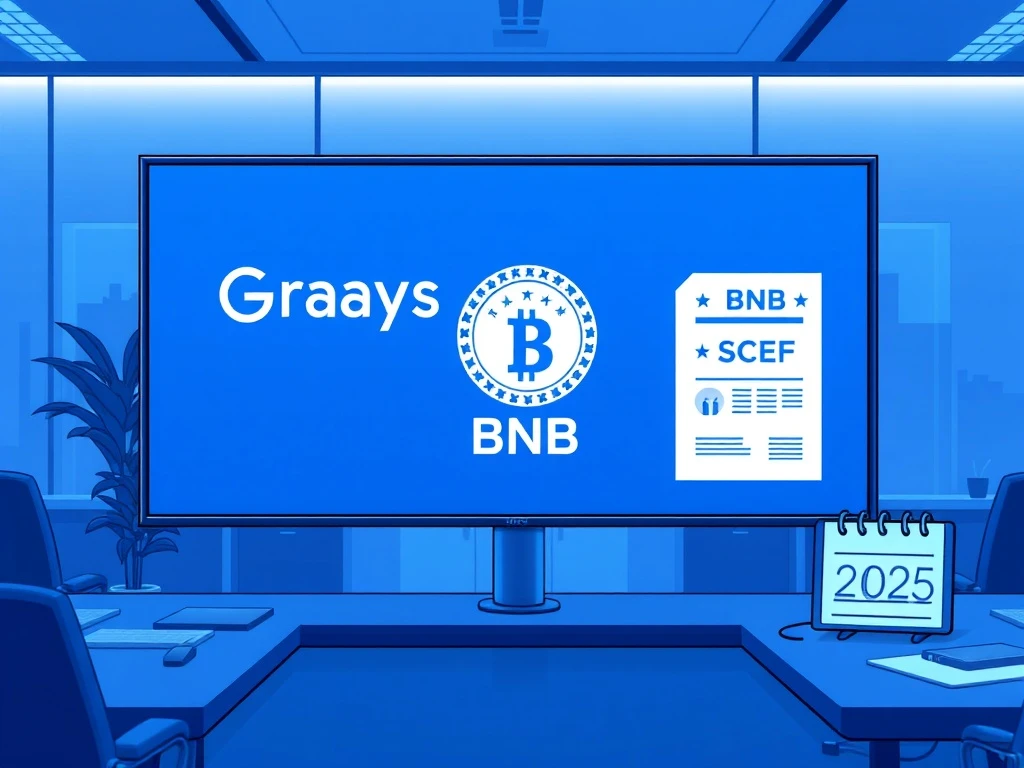
In a decisive move that signals the next frontier for regulated cryptocurrency investment, Grayscale Investments has formally requested the U.S. Securities and Exchange Commission (SEC) to approve a spot exchange-traded fund for BNB. This pivotal filing, submitted in early 2025, represents a strategic expansion beyond the now-established Bitcoin and Ether ETF products, aiming to bring regulated exposure to the world’s fourth-largest cryptocurrency directly to traditional brokerage accounts.
Grayscale BNB ETF Proposal Details and Market Context
According to the registration statement filed with the SEC, the proposed Grayscale BNB Trust would hold BNB tokens directly. The fund intends to list on the Nasdaq Stock Market under the ticker symbol GBNB, pending regulatory clearance. This structure mirrors the operational blueprint of Grayscale’s successful spot Bitcoin and Ether ETFs. Consequently, it would allow U.S. investors to gain price exposure to BNB without the technical complexities of direct custody or reliance on cryptocurrency exchanges.
The timing of this filing is particularly significant. It arrives as the total assets under management for U.S. spot Bitcoin and Ether ETFs have collectively surpassed the $100 billion threshold. This milestone demonstrates substantial institutional and retail demand for regulated, exchange-traded crypto vehicles. Grayscale’s application, therefore, is a direct response to this validated market appetite, seeking to extend the ETF wrapper to a major altcoin.
The Strategic Significance of a BNB-Based Product
BNB, the native token of the Binance ecosystem, presents a unique case for an ETF. Unlike Bitcoin or Ether, which are primarily seen as base-layer network assets, BNB’s value is intrinsically linked to the utility and growth of a specific, centralized ecosystem. The token is used for paying transaction fees on the BNB Smart Chain, participating in governance, and securing discounts on the Binance exchange. An ETF would, for the first time, offer a regulated conduit to invest in the performance of a major crypto exchange’s economic activity.
Grayscale is not the first firm to pursue this path. Investment manager VanEck has a similar BNB ETF proposal, filed under the ticker VBNB, which is further along in the regulatory review process. This parallel filing indicates a growing consensus among traditional finance players about BNB’s investment thesis. The competitive landscape suggests that whichever product gains approval first could capture significant early market share.
Regulatory Hurdles and the SEC’s Evolving Stance
The path to approval for a spot BNB ETF is fraught with regulatory complexity. The SEC’s primary concerns historically revolve around market manipulation, custody, and liquidity. While these issues were addressed for Bitcoin and Ether, BNB introduces additional layers. Regulators will scrutinize its status as an exchange-linked token and the potential for conflicts of interest. Furthermore, the ongoing global regulatory scrutiny of Binance itself adds a layer of geopolitical risk that the SEC must weigh.
Industry analysts point to the Fermi hard fork on BNB Chain, which targeted sub-second transaction finality, as evidence of the network’s technical development. Such upgrades are critical data points the SEC may consider when evaluating the underlying blockchain’s resilience and maturity. The approval process will likely hinge on Grayscale’s ability to present robust surveillance-sharing agreements with regulated markets and demonstrate sufficient liquidity in the spot BNB market to support an ETF.
Potential Impact on the Broader Cryptocurrency Ecosystem
The introduction of a spot BNB ETF would have profound ripple effects. Firstly, it would legitimize BNB as an institutional-grade asset, potentially attracting billions in new capital from pension funds, endowments, and financial advisors currently restricted from direct crypto purchases. Secondly, it could set a precedent for ETFs tied to other large-cap altcoins, fundamentally altering the accessibility of the entire crypto asset class.
A comparison of potential impacts illustrates the shift:
| Aspect | Pre-ETF Environment | Post-ETF Potential |
|---|---|---|
| Investor Access | Limited to crypto exchanges and self-custody | Available via traditional brokerage accounts (IRA, 401k) |
| Regulatory Clarity | Uncertain, treated as a security by some | Defined through ETF approval process |
| Market Liquidity | Concentrated on crypto-native platforms | Diversified across traditional and crypto markets |
| Price Discovery | Driven by retail and crypto funds | Influenced by broad institutional participation |
This evolution would mark a decisive step toward the full integration of digital assets into the global financial system. However, it also raises questions about centralization, given BNB’s close ties to a single corporate entity, Binance.
Conclusion
Grayscale’s filing for a spot BNB ETF is a bold strategic maneuver in the 2025 financial landscape. It seeks to capitalize on the proven demand for crypto ETFs while navigating the untested regulatory waters of an exchange-linked token. The success of this Grayscale BNB ETF proposal hinges not just on Grayscale’s arguments but on the SEC’s willingness to expand its framework beyond pure monetary assets like Bitcoin. Approval would unlock a new wave of institutional capital and redefine access to the crypto economy, while rejection would reaffirm the current boundaries of regulated crypto investment. The decision will serve as a critical benchmark for the future of altcoin-based financial products.
FAQs
Q1: What is a spot BNB ETF?
A spot BNB ETF is an exchange-traded fund that holds actual BNB tokens. Its share price is designed to track the live market price of BNB, allowing investors to buy and sell exposure through a traditional stock brokerage without owning the cryptocurrency directly.
Q2: Why is Grayscale’s BNB ETF filing significant?
It represents a major attempt to expand regulated cryptocurrency investment products beyond Bitcoin and Ether. If approved, it would provide a first-of-its-kind, SEC-sanctioned way for U.S. investors to gain exposure to the performance of a major crypto exchange ecosystem through the stock market.
Q3: What are the main hurdles for SEC approval?
The SEC must be convinced that the spot BNB market is resistant to manipulation, that Grayscale has secure custody solutions, and that there is sufficient liquidity. Additional scrutiny will focus on BNB’s regulatory status and its relationship with the Binance exchange.
Q4: How does this differ from VanEck’s BNB ETF filing?
Both Grayscale and VanEck have filed for similar products. VanEck’s filing (VBNB) is generally considered to be further along in the regulatory process, but both are subject to the same SEC review and approval standards. The market could potentially see multiple competing BNB ETFs.
Q5: How would a BNB ETF affect the average investor?
For the average investor, it would simplify access to BNB. Instead of navigating cryptocurrency exchanges and managing private keys, they could buy shares of GBNB through their existing retirement or brokerage account, integrating crypto exposure seamlessly into a traditional portfolio.