Davos Crypto Clash: How Geopolitical Tensions Redefined Digital Asset Regulation in 2026
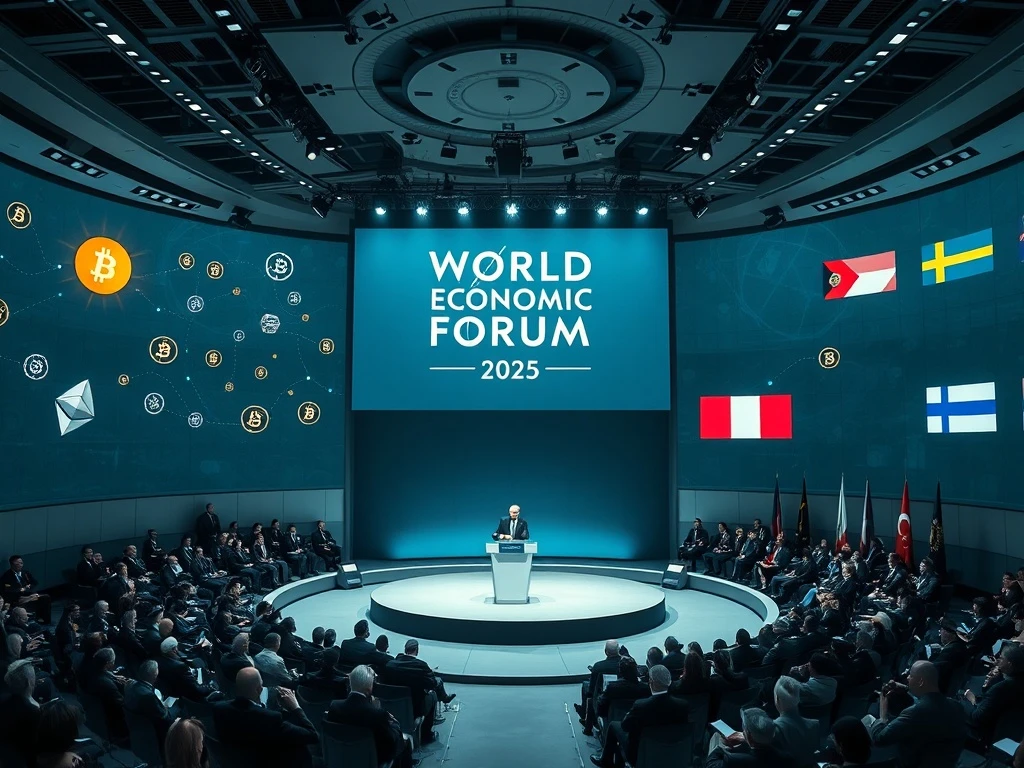
The crisp Alpine air of Davos, Switzerland, carried more than just winter chill in January 2026—it carried the weight of a global financial transformation. Against a backdrop of geopolitical tensions and the lingering Greenland standoff, cryptocurrency emerged as a secondary but profoundly consequential theme at the World Economic Forum. The discussions revealed a fundamental clash between political ambition and monetary sovereignty that will shape digital asset regulation for years to come.
Davos Crypto Discussions Reveal Deep Philosophical Divide
The World Economic Forum’s 2026 meeting provided a unique stage where political leaders, central bankers, and cryptocurrency executives converged. Notably, the conversations exposed a clear philosophical rift. On one side stood political figures framing digital assets as geopolitical tools. Conversely, central bankers emphasized threats to financial stability and national sovereignty. This division represents more than mere policy disagreement—it reflects competing visions for the future of global finance.
Historical context illuminates this tension. Cryptocurrency’s journey from niche technology to mainstream financial instrument has accelerated dramatically since the early 2020s. The sector survived major setbacks including the 2022 Terra collapse and subsequent regulatory crackdowns. By 2026, the industry had matured significantly, with institutional adoption reaching critical mass. This evolution set the stage for the high-stakes debates witnessed at Davos.
Trump’s Geopolitical Gambit: Crypto as National Priority
United States President Donald Trump delivered a speech that framed cryptocurrency regulation as a matter of urgent national security. His remarks, introduced by BlackRock CEO Larry Fink, positioned digital assets within broader geopolitical competition. “We have to make it so that China doesn’t have a hold of it,” Trump declared, referring to cryptocurrency dominance. This statement reflects a strategic shift in how major powers view technological financial innovation.
The President specifically referenced the pending CLARITY Act, legislation designed to establish comprehensive cryptocurrency market structure. Although the bill faced delays after industry players like Coinbase withdrew support, Trump expressed confidence in its eventual passage. His administration views cryptocurrency leadership as both politically advantageous and strategically essential. This perspective marks a significant departure from earlier regulatory approaches that emphasized consumer protection over competitive positioning.
The GENIUS Act Connection
Trump connected his advocacy to the previously signed GENIUS Act, legislation promoting blockchain innovation. This linkage demonstrates how cryptocurrency policy has become embedded within broader technology and economic strategies. The White House’s ambition to establish the United States as the global cryptocurrency capital represents a conscious effort to leverage regulatory frameworks as competitive weapons in the digital age.
Central Bank Resistance: The Sovereignty Argument
European central bankers presented a markedly different perspective during panel discussions. Banque de France Governor François Villeroy de Galhau offered cautious praise for tokenization’s potential to modernize financial infrastructure. However, his enthusiasm diminished considerably when discussions turned to monetary sovereignty. The governor articulated a fundamental principle: “Money is inseparable from sovereignty.”
Villeroy de Galhau’s concerns centered on two specific areas. First, he warned against surrendering monetary control to private systems. Second, he expressed particular apprehension about interest-bearing stablecoins, suggesting they could destabilize existing financial architectures. These concerns reflect deeper anxieties about the erosion of state monetary authority in an increasingly digital economy.
| Stakeholder | Primary Position | Key Concern |
|---|---|---|
| US Administration | Crypto as geopolitical asset | Losing technological edge to China |
| European Central Bankers | Protect monetary sovereignty | Private money destabilizing systems |
| Crypto Industry | Regulatory clarity for growth | Being excluded from traditional finance |
| Asset Managers | Tokenization efficiency | Missing investment opportunities |
The Coinbase-Banque de France Exchange
One of the most revealing moments occurred during a panel featuring Coinbase CEO Brian Armstrong and Governor Villeroy de Galhau. Armstrong presented Bitcoin as a modern successor to the gold standard, arguing it could check excessive government spending. The French central banker responded that decentralized systems don’t eliminate control—they merely transfer it to different entities. Armstrong countered by highlighting Bitcoin’s decentralized structure as more independent than fiat systems.
This exchange exemplified the core tension between cryptocurrency advocates and traditional monetary authorities. Armstrong framed the relationship as “healthy competition,” drawing a chuckle from Villeroy de Galhau. However, the underlying disagreement reflects fundamentally different conceptions of money’s nature and purpose. Where cryptocurrency proponents see innovation and freedom, central bankers see potential instability and lost control.
Industry Perspectives: Binance, Circle, and Regulatory Realities
Cryptocurrency industry leaders navigated these complex discussions with varying approaches. Binance co-CEO Richard Teng adopted a cautious stance regarding potential return to United States markets. His “wait-and-see” approach reflects the regulatory uncertainty that continues to challenge global cryptocurrency exchanges. Meanwhile, founder Changpeng Zhao, present after his legal resolution, emphasized cryptocurrency’s permanence and growing government engagement.
Circle CEO Jeremy Allaire addressed specific concerns about interest-bearing stablecoins potentially destabilizing banking systems. He dismissed bank run fears as “totally absurd,” arguing that incentive structures make systemic disruption unlikely. Allaire pointed to money market funds as historical precedent, noting that approximately $11 trillion has flowed into these instruments without collapsing bank lending.
The Tokenization Consensus
Despite philosophical disagreements, participants found common ground on tokenization’s potential. Both cryptocurrency executives and central bankers acknowledged that representing real-world assets on blockchain networks could revolutionize finance. The technology promises increased efficiency, transparency, and accessibility in markets ranging from real estate to government bonds. This agreement suggests that practical applications may eventually bridge ideological divides.
Stablecoins: From Pariah to Policy Priority
The transformation of stablecoins’ reputation represents one of cryptocurrency’s most remarkable narratives. Following the 2022 TerraUSD collapse, which erased billions in value, these digital assets faced intense skepticism. By Davos 2026, however, stablecoins had become central to policy discussions. Their estimated $300 billion market capitalization commands attention from even the most cautious regulators.
Key developments driving this shift include:
- Improved transparency: Major stablecoin issuers now provide regular reserve attestations
- Regulatory progress: Multiple jurisdictions have established clearer frameworks
- Institutional adoption: Traditional finance increasingly utilizes stablecoins for settlement
- Technological advancement: More robust mechanisms for maintaining peg stability
The Path Forward: Regulation Amid Division
Davos 2026 revealed that cryptocurrency regulation will proceed along divergent paths across major economies. The United States appears committed to leveraging digital assets for geopolitical advantage. Meanwhile, European approaches prioritize financial stability and sovereignty preservation. These differences will likely produce fragmented regulatory landscapes with significant implications for global cryptocurrency markets.
Several factors will influence how this regulatory divergence unfolds:
- Technological development: Advances in cryptocurrency and blockchain capabilities
- Economic conditions: Global financial stability and currency dynamics
- Political changes: Election outcomes and shifting policy priorities
- International coordination: Efforts to establish cross-border standards
Conclusion
The Davos crypto discussions of 2026 crystallized a global conversation that has been building for years. Digital assets have moved beyond technological novelty to become instruments of geopolitical strategy and subjects of monetary policy. The tension between innovation and stability, between decentralization and control, will define cryptocurrency’s next chapter. As the world’s financial systems continue their digital transformation, the debates witnessed in Davos will reverberate through regulatory offices, trading floors, and central bank meeting rooms worldwide. The cryptocurrency industry’s future will be shaped not just by technological innovation, but by the resolution of these fundamental philosophical disagreements about money, power, and sovereignty in the digital age.
FAQs
Q1: What was the main cryptocurrency disagreement at Davos 2026?
The central conflict pitted political leaders viewing crypto as a geopolitical tool against central bankers concerned about monetary sovereignty. US President Trump framed regulation as a competitive necessity, while European central bankers warned against private money threatening financial stability.
Q2: How did Trump approach cryptocurrency regulation in his Davos speech?
President Trump positioned cryptocurrency leadership as a matter of national security and geopolitical competition. He emphasized preventing Chinese dominance and expressed support for pending market structure legislation, framing it as both politically popular and strategically essential.
Q3: What were central bankers’ primary concerns about cryptocurrency?
European central bankers, particularly France’s governor, expressed concerns about private money systems undermining monetary sovereignty and interest-bearing stablecoins destabilizing traditional financial architectures. They viewed money as inherently connected to state authority.
Q4: Did any consensus emerge about cryptocurrency at Davos?
While fundamental disagreements persisted, participants broadly acknowledged tokenization’s potential to modernize financial infrastructure. Both cryptocurrency executives and traditional financial authorities recognized the technology’s value for representing real-world assets on blockchain networks.
Q5: How has the perception of stablecoins changed since 2022?
Stablecoins have undergone a remarkable reputation transformation. Following the 2022 Terra collapse, they faced intense skepticism. By 2026, they had become central to policy discussions, with improved transparency, regulatory progress, and institutional adoption contributing to their rehabilitation.