Ethereum’s Unstoppable Rise: BlackRock CEO Declares It the ‘One Common Blockchain’ for a Tokenized World
DAVOS, SWITZERLAND – January 23, 2026: The vision for a tokenized global financial system gained its most powerful endorsement yet as BlackRock Chairman and CEO Larry Fink positioned Ethereum at the epicenter of this transformation. Speaking at the World Economic Forum, Fink’s advocacy for a “one common blockchain” to drive institutional adoption has ignited a pivotal debate about infrastructure, with Ethereum emerging as the clear frontrunner backed by hard data and trillion-dollar balance sheets.
Ethereum Emerges as the Institutional Backbone for Tokenization
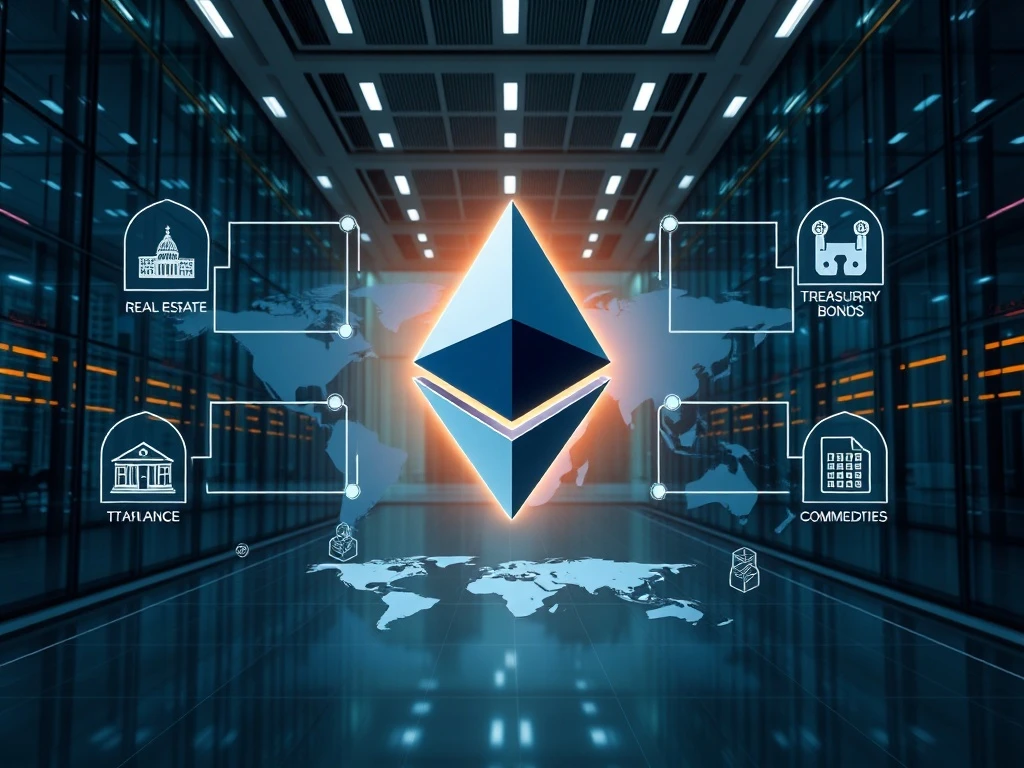
The 2025 market cycle witnessed a decisive pivot from speculative trading to utility-driven adoption. While the 2024 ETF launches provided crucial regulatory credibility, analysts now identify the explosive growth of the Real World Asset (RWA) sector as the true catalyst for institutional capital. This sector involves digitizing traditional assets—like bonds, real estate, and commodities—onto a blockchain. Consequently, tokenization is no longer a theoretical concept but a multi-billion-dollar operational reality. Larry Fink has repeatedly called this shift “necessary” for market efficiency, and his latest comments provide a specific technological roadmap.
The ‘One Common Blockchain’ Vision Gains Traction
Fink’s World Economic Forum remarks highlighted rapid adoption in nations like India and Brazil. However, his call for a unified technological standard—a “one common blockchain”—resonated most profoundly across financial markets. This vision seeks to prevent fragmentation and ensure interoperability, liquidity, and security at a global scale. Market participants immediately began evaluating which network could fulfill this role. A consensus quickly formed around Ethereum, not based on speculation, but on its established dominance in the very sector Fink champions.
Quantifying Dominance: Ethereum’s Commanding Lead in Real World Assets
Theoretical support gives way to empirical evidence when examining the RWA landscape. Data from industry aggregators like RWA.xyz reveals a stark hierarchy.
- Ethereum commands approximately 60% of the total $22.6 billion RWA market.
- Binance Smart Chain holds a distant second place with just 10.2%.
- Other competing chains individually account for single-digit percentages.
This dominance is actively reinforced by the world’s largest financial institutions. BlackRock’s own USD Institutional Digital Liquidity Fund (BUIDL) has surpassed $1.5 billion in assets on the Ethereum network. Simultaneously, JPMorgan recently launched its tokenized collateral network, further cementing Ethereum’s position as the preferred settlement layer for TradFi giants. These are not pilot programs but substantial, live financial operations.
Fee Revolution: How Ethereum’s Upgrades Enable Institutional Adoption
Larry Fink consistently emphasizes a critical advantage of tokenization: dramatically lower costs. In traditional finance, asset transactions incur layers of fees from custodians, brokers, and platforms. Tokenization promises to compress these costs. The pertinent question is whether Ethereum’s infrastructure can deliver on this promise. The network’s 2025 upgrades, including the successful implementation of proto-danksharding and other scalability enhancements, provide a clear answer.
On-chain metrics show transformative results. According to Etherscan, the average gas price has plummeted to a multi-year low of 0.5 Gwei. Crucially, this reduction in cost has not come at the expense of activity. Glassnode reports a sharp spike in Month-over-Month Activity Retention, indicating that lower fees are attracting and retaining new users and transactions. This positive feedback loop—lower costs driving higher usage—validates the institutional use case. The technology upgrades are directly facilitating the economic utility Fink describes.
The Bull Case: Network Effects and Institutional Validation
The convergence of three factors creates a powerful institutional bull case for Ethereum. First, its first-mover advantage in smart contracts has fostered the largest developer ecosystem and the most battle-tested DeFi and institutional infrastructure. Second, its overwhelming market share in RWA creates powerful network effects; new institutional players are incentivized to build where the liquidity and major counterparts already exist. Finally, explicit validation from entities like BlackRock and JPMorgan reduces perceived risk for other large institutions, creating a virtuous cycle of adoption. This combination of technology, market leadership, and credibility is currently unmatched.
Conclusion: Ethereum Solidifies Its Role as Financial Infrastructure
The narrative around Ethereum has fundamentally evolved. It is transitioning from a platform for decentralized applications to a foundational layer for global financial infrastructure. Larry Fink’s “one common blockchain” vision finds its most tangible expression in Ethereum’s 60% dominance of the $22.6 billion RWA market, its hosting of BlackRock’s $1.5 billion BUIDL fund, and its proven ability to scale while reducing costs. While other blockchains will continue to operate in niche areas, the data and institutional momentum strongly suggest that for the tokenization of real-world assets at scale, Ethereum is not just a contender—it is the established platform.
FAQs
Q1: What did BlackRock CEO Larry Fink actually say about Ethereum?
At the 2026 World Economic Forum, Fink emphasized the necessity of rapid tokenization adoption and pointed to the concept of a “one common blockchain” to drive this shift. While not naming Ethereum explicitly in the quote, the financial community widely interpreted his comments as an endorsement, given BlackRock’s $1.5 billion BUIDL fund is built on Ethereum and the network’s dominance in the tokenized asset sector.
Q2: What is the Real World Asset (RWA) sector and why is it important?
The RWA sector involves representing traditional financial assets (like treasury bonds, real estate, or private credit) as digital tokens on a blockchain. It is critically important because it represents the direct bridge between trillion-dollar traditional finance (TradFi) and blockchain technology, driving utility and institutional capital into the crypto ecosystem beyond speculative trading.
Q3: How much of the RWA market does Ethereum control?
According to current data from trackers like RWA.xyz, Ethereum controls approximately 60% of the total $22.6 billion Real World Asset market. This represents a commanding lead, with the next closest competitor, Binance Smart Chain, holding about 10.2%.
Q4: Have Ethereum’s gas fees really dropped enough for institutional use?
Yes, key on-chain metrics show significant improvement. Following major network upgrades in 2025, the average gas price on Ethereum has fallen to a multi-year low of around 0.5 Gwei. More importantly, this lower cost environment is correlating with increased network activity and user retention, as reported by analytics firms like Glassnode.
Q5: Are other major financial institutions besides BlackRock using Ethereum for tokenization?
Yes. JPMorgan has launched its tokenized collateral network on Ethereum, and other global banks and asset managers are actively piloting or deploying similar projects. The presence of these established institutions provides significant validation and reduces the operational and regulatory risk for others to follow.