Worldcoin Announces Groundbreaking 2026 World Build Korea Hackathon in Seoul to Combat AI Impersonation
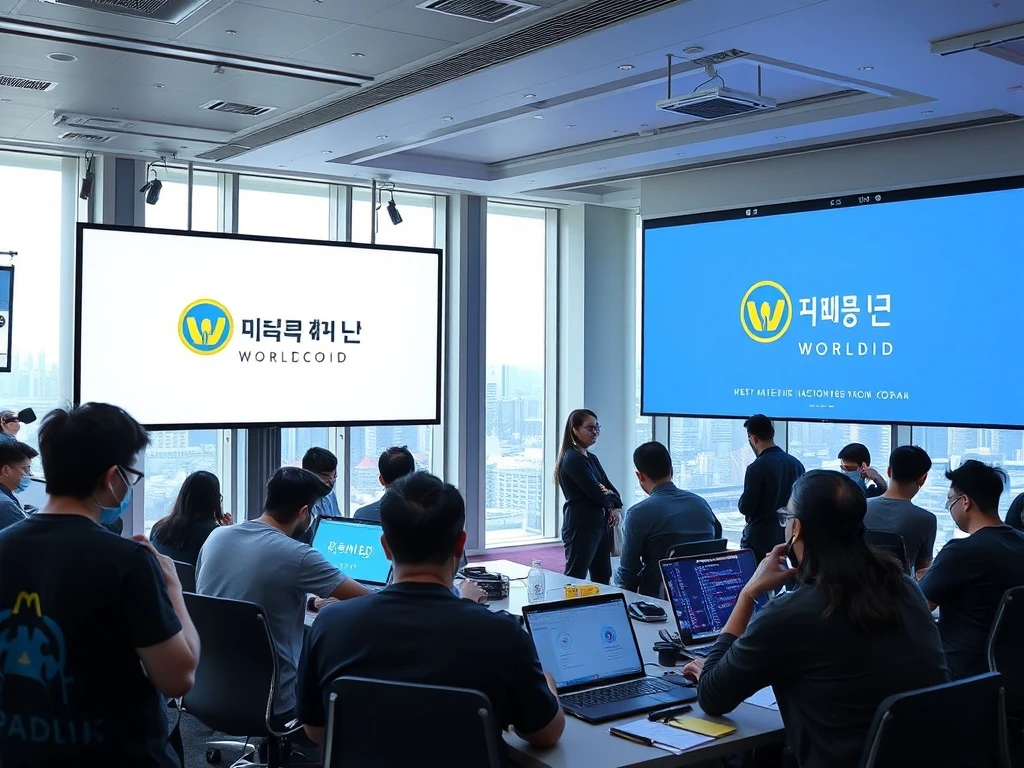
SEOUL, South Korea – December 2025: Worldcoin (WLD) has announced plans to host the groundbreaking 2026 World Build Korea Hackathon in Seoul, marking a significant expansion of its global developer ecosystem into one of Asia’s most vibrant technology hubs. This strategic move comes as the cryptocurrency project intensifies its focus on solving one of Web3’s most pressing challenges: reliable human verification in an era dominated by artificial intelligence and automated bots. The Worldcoin hackathon represents a substantial investment in South Korea’s blockchain talent, offering developers a unique platform to build next-generation applications that distinguish real human users from synthetic identities.
World Build Korea Hackathon Targets Core Web3 Verification Challenge
The upcoming Worldcoin hackathon in Seoul specifically addresses the growing problem of Sybil attacks and AI impersonation in decentralized systems. According to blockchain security firm Chainalysis, Sybil attacks accounted for approximately 15% of all decentralized finance (DeFi) exploits in 2024, resulting in losses exceeding $2.3 billion globally. Meanwhile, the rapid advancement of generative AI has made automated bot networks increasingly sophisticated and difficult to detect. The World Build Korea event will task participants with developing Web3 services that require verified human users through World ID, Worldcoin’s privacy-preserving digital identity protocol.
Participants will design and build prototype Miniapps accessible exclusively to verified users, creating what organizers describe as “human-gated” digital experiences. These applications could span multiple domains including artificial intelligence interfaces, decentralized social platforms, gaming ecosystems, community management tools, and governance systems. The hackathon’s focus on human verification responds directly to increasing regulatory pressure worldwide for more accountable digital identity solutions, particularly following the European Union’s Digital Identity Framework implementation in 2024 and South Korea’s own Digital Bill of Rights legislation.
Technical Framework and Development Environment
Developers participating in the World Build Korea hackathon will work with Worldcoin’s recently upgraded SDK 2.0, which includes enhanced privacy features and improved integration capabilities. The development kit now supports zero-knowledge proof implementations that allow users to prove their humanity without revealing unnecessary personal data. According to technical documentation released by Tools for Humanity, Worldcoin’s contributing development company, the updated protocol reduces verification latency by 40% compared to previous versions while maintaining the same security guarantees.
The hackathon will emphasize practical implementation over theoretical design, with judging criteria weighted toward working prototypes that demonstrate:
- Real-world utility in addressing specific verification challenges
- Privacy preservation through minimal data collection
- Scalability potential for mass adoption scenarios
- User experience that balances security with accessibility
- Innovation in applying World ID to novel use cases
South Korea’s Blockchain Ecosystem Provides Strategic Backdrop
Worldcoin’s selection of Seoul as the host city reflects South Korea’s established position as a global blockchain innovation center. The country boasts one of the world’s highest cryptocurrency adoption rates, with approximately 10% of its population actively participating in digital asset markets according to 2024 data from the Financial Services Commission. South Korea’s government has simultaneously pursued aggressive digital transformation initiatives while implementing comprehensive regulatory frameworks, creating what industry analysts describe as a “sandbox with guardrails” approach to blockchain development.
The hackathon has secured support from multiple prominent South Korean blockchain organizations, creating a collaborative ecosystem rarely seen in competitive developer events. Supporting societies and communities include:
| Organization | Specialization | Contribution |
|---|---|---|
| Decipher | Blockchain Research | Technical mentorship |
| Oracle | Developer Education | Workshop facilitation |
| BADG | Gaming & NFTs | Industry-specific guidance |
| Identei | Digital Identity | Verification expertise |
| Ewhachain | University Blockchain | Student recruitment |
| SKKrypto | Campus Community | Talent pipeline development |
This broad coalition indicates strong local institutional support for Worldcoin’s verification-focused approach, particularly significant given South Korea’s historically cautious stance toward global cryptocurrency projects. Media partnerships with HumanLabs, TokenPost, Crypto News Insights, and 071Labs will ensure comprehensive coverage of the event’s technical innovations and potential industry impacts.
Prize Structure and Long-Term Ecosystem Opportunities
The World Build Korea hackathon offers a total prize pool of $5,000 distributed across multiple categories, but organizers emphasize that financial rewards represent only one dimension of the event’s value proposition. Top-performing teams will gain direct access to Worldcoin’s global developer network, including potential collaboration opportunities with Tools for Humanity’s engineering teams. Previous Worldcoin hackathon participants have subsequently secured positions at blockchain startups, received venture funding for their projects, or contributed code that became part of Worldcoin’s core protocol.
According to historical data from Worldcoin’s previous hackathons in Berlin, Tokyo, and San Francisco:
- Approximately 35% of participating teams continue developing their projects post-event
- Roughly 20% secure additional funding or partnership opportunities
- Around 15% integrate their solutions with existing Worldcoin ecosystem projects
- An estimated 10% eventually launch independent products or services
The Seoul event’s timing aligns strategically with South Korea’s broader technology development calendar, occurring just months before the country hosts the 2026 Web3 Summit Asia conference. This scheduling creates potential pathways for standout projects to gain additional visibility and investment opportunities within the regional blockchain community.
Expert Perspectives on Verification-First Development
Industry analysts view Worldcoin’s verification-focused hackathon as responding to fundamental shifts in digital trust architecture. “The proliferation of generative AI has fundamentally altered the economics of digital impersonation,” explains Dr. Min-ji Park, a digital identity researcher at Seoul National University. “Where previously creating convincing fake identities required substantial human effort, AI systems can now generate millions of plausible digital personas at negligible cost. This changes the security assumptions underlying virtually all online systems.”
Blockchain security expert Kenji Tanaka of Oracle adds: “Worldcoin’s approach of using biometric verification through specialized hardware (the Orb) creates what cryptographers call a ‘trusted setup’ for digital identity. While controversial from a privacy perspective, this method provides cryptographic guarantees about human uniqueness that purely algorithmic approaches cannot match. The hackathon’s challenge is to build applications that leverage this verification while respecting user autonomy and data minimization principles.”
Global Context and Competitive Landscape
The World Build Korea hackathon occurs amid intensifying competition in the digital identity space. Since Worldcoin’s mainnet launch in 2023, several alternative approaches to human verification have emerged, including social graph analysis, behavioral biometrics, and hardware-based attestation. Notably, Ethereum co-founder Vitalik Buterin has proposed “soulbound tokens” as a non-biometric alternative for establishing unique digital identity, while the Decentralized Identity Foundation continues promoting standards-based approaches using verifiable credentials.
South Korea’s own digital identity initiatives add another layer of complexity and opportunity. The country’s government-led Digital ID system, scheduled for full implementation in 2026, will provide citizens with state-verified digital identities that could potentially integrate with private sector solutions like World ID. This creates possibilities for hybrid verification models that combine government-issued credentials with blockchain-based attestations, though such integration would require careful navigation of regulatory and technical compatibility issues.
Worldcoin’s expansion into South Korea also follows significant regulatory developments affecting the project globally. In 2024, Tools for Humanity reached settlements with multiple data protection authorities regarding its biometric data collection practices, implementing enhanced privacy controls and clearer user consent mechanisms. These developments have shaped the technical parameters within which hackathon participants must operate, emphasizing privacy-by-design principles from the initial development phase.
Conclusion
The 2026 World Build Korea Hackathon represents a strategic initiative by Worldcoin to foster innovation in human-verified Web3 services while expanding its developer ecosystem into South Korea’s vibrant technology landscape. By focusing on the critical challenge of distinguishing real human users from AI and automated bots, the event addresses one of the most pressing issues facing decentralized systems as artificial intelligence capabilities advance. The Worldcoin hackathon’s success will depend not only on the technical innovations produced but also on how effectively participants balance verification rigor with privacy preservation and user experience. As digital identity becomes increasingly central to online interaction, events like World Build Korea will play crucial roles in shaping the technical and ethical frameworks governing our digital futures.
FAQs
Q1: What is the main objective of the World Build Korea Hackathon?
The primary objective is to develop Web3 services and applications that require verification of real human users using World ID, addressing challenges posed by AI, bots, and Sybil accounts in decentralized ecosystems.
Q2: Who can participate in the Seoul hackathon event?
The event is open to developers, designers, and entrepreneurs interested in building human-verified applications. While specific eligibility criteria will be announced closer to the event, previous Worldcoin hackathons have welcomed both individual participants and teams.
Q3: What are the potential application areas for projects developed at the hackathon?
Potential application areas include AI interfaces, Web3 platforms, social networks, gaming ecosystems, community management tools, and governance systems—any domain where verifying human users provides significant value or security improvements.
Q4: How does World ID verification work technically?
World ID uses zero-knowledge proofs and biometric verification through specialized hardware (the Orb) to create unique digital identities. Users can prove they’re human without revealing unnecessary personal information, with verification integrated through software development kits.
Q5: What long-term opportunities exist for hackathon participants beyond prize money?
Beyond the $5,000 prize pool, participants gain networking opportunities with South Korea’s blockchain community, potential collaboration within Worldcoin’s global ecosystem, mentorship from supporting organizations, and visibility that could lead to funding or partnership opportunities.