South Korea Bitcoin Theft: Stunning $47M Phishing Hack Exposes Law Enforcement Vulnerabilities
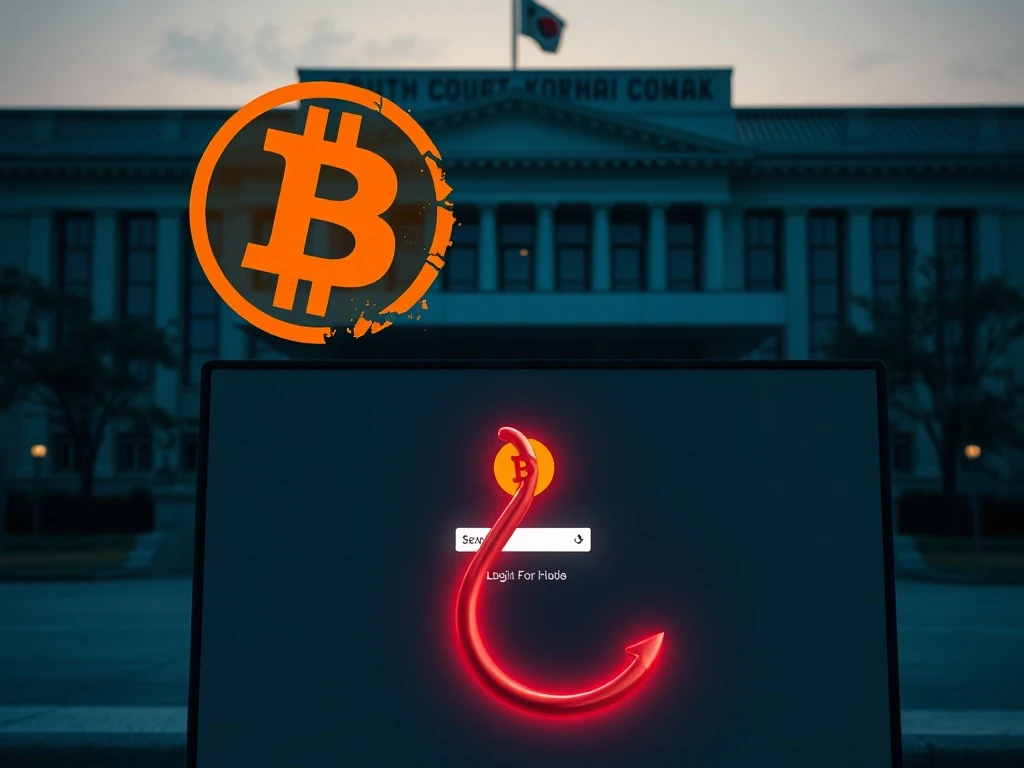
In a stunning security breach that exposes critical vulnerabilities in how authorities handle digital assets, prosecutors in South Korea have reportedly lost approximately $47 million worth of seized Bitcoin to a sophisticated phishing attack, sending shockwaves through the global law enforcement and cryptocurrency communities this week.
South Korea Bitcoin Theft Details Emerge
Officials at the Gwangju District Prosecutors’ Office discovered the massive shortfall during a routine inspection of confiscated financial assets. According to detailed reports from major local media outlets, including The Chosun Daily, the theft occurred after an external password leak. An investigation swiftly revealed that a prosecutor’s office employee had inadvertently accessed a fraudulent website, falling victim to a classic yet devastating phishing scheme. Consequently, the attackers gained access to the wallet containing the seized Bitcoin. The office has formally declined to confirm the exact amount or the origin case of the seized crypto, citing the ongoing and sensitive nature of the investigation. However, a prosecution official confirmed to Yonhap News Agency that authorities are actively “tracking the circumstances and whereabouts of the seized items.”
Anatomy of the Phishing Attack
Phishing remains one of the most pervasive threats in the digital asset space. This attack method typically involves bad actors deploying deceptive emails or messages that mimic legitimate communications. The goal is to trick recipients into revealing sensitive credentials, such as private keys or login passwords. In this high-profile case, the scam successfully targeted a government employee with access to a substantial crypto vault. Notably, this incident starkly contrasts with broader 2025 trends. For instance, blockchain security firm Scam Sniffer reported earlier this month that global crypto losses from phishing had plummeted by over 80% this year, falling to around $83.85 million. The number of individual victims also dropped by nearly 70%. This South Korean case, therefore, represents a significant and alarming outlier—a targeted, high-value attack on a state institution rather than a broad campaign against retail users.
The Growing Challenge of Crypto Custody for Authorities
This theft underscores a monumental and often under-discussed challenge facing governments worldwide: secure cryptocurrency custody. As regulatory actions and criminal investigations increase, law enforcement agencies globally are accumulating vast holdings of seized digital assets. However, the protocols for safeguarding these assets are frequently opaque and, as this event proves, can be dangerously fallible. The incident prompts urgent questions about the security standards, employee training, and technological infrastructure used by public institutions to manage volatile and attractive digital treasures. Unlike traditional fiat currency held in state-guaranteed banks, cryptocurrency requires specialized digital security knowledge, presenting a steep learning curve for many traditional institutions.
Global Context of Seized Crypto Assets
The South Korean debacle is not an isolated concern but part of a global narrative. Law enforcement agencies internationally now sit on billions of dollars in confiscated cryptocurrency, creating complex logistical and security dilemmas.
- United States: In June 2024, U.S. exchange Coinbase assisted the Secret Service in seizing a record $225 million in crypto from scammers.
- United Kingdom: British authorities deliberated in late 2024 on whether to retain $6.4 billion in Bitcoin seized in 2018 from a massive investment fraud targeting Chinese investors, weighing asset forfeiture against victim compensation.
- South Korea’s Own Crackdown: Ironically, this theft followed closely on the heels of a successful operation by South Korean customs authorities, who just days earlier dismantled a major international crypto money-laundering network. This juxtaposition highlights the dual reality of enforcement success and institutional vulnerability.
| Country/Agency | Asset Value (Approx.) | Year | Context |
|---|---|---|---|
| South Korea (Gwangju Prosecutors) | $47 Million (Lost) | 2025 | Stolen via phishing attack |
| U.S. Secret Service | $225 Million (Seized) | 2024 | Largest seizure via exchange partnership |
| United Kingdom | $6.4 Billion (Held) | 2018-Present | Seized from Chinese investment scam |
Broader Implications for Crypto Regulation and Security
This event will inevitably influence ongoing policy debates, particularly in tech-forward nations like South Korea. The country is already reevaluating its crypto framework, including reconsidering the restrictive “one-bank” real-name account rule for exchanges. A massive theft from a government entity itself could accelerate calls for more robust, standardized national security protocols for digital asset custody. It serves as a potent reminder that security is a chain, and its strength depends on the weakest link—often human oversight. For the public, it may erode trust in the state’s ability to manage and protect digital property, potentially impacting the legitimacy of future seizures and asset forfeitures. Furthermore, it provides a case study for other nations, highlighting the non-negotiable need for military-grade cybersecurity, multi-signature wallet solutions, and comprehensive staff training when handling seized crypto.
Conclusion
The South Korea Bitcoin theft represents a pivotal moment, illustrating that the challenges of cryptocurrency security extend far beyond individual investors and exchanges to the very authorities tasked with enforcement. The loss of $47 million from the Gwangju District Prosecutors’ Office via a phishing scam is a stark warning about the critical importance of evolving security postures in the digital age. As global adoption grows, this incident will likely catalyze stricter internal controls, transparent custody protocols, and enhanced cooperation with private cybersecurity experts within law enforcement agencies worldwide. Ultimately, securing seized digital assets is not just a technical necessity but a fundamental requirement for maintaining public trust and the integrity of the judicial process.
FAQs
Q1: How did the South Korean prosecutors lose the Bitcoin?
The theft resulted from a phishing attack. An employee at the prosecutor’s office accessed a fraudulent website, leading to the leak of credentials that secured the wallet containing the seized Bitcoin.
Q2: What is a phishing attack in the context of cryptocurrency?
A phishing attack is a cyber scam where attackers impersonate legitimate entities via email, messages, or websites to deceive individuals into surrendering private keys, passwords, or other sensitive access information to their crypto wallets.
Q3: Is this the first time a government has lost seized cryptocurrency?
While one of the most significant publicly reported losses, it highlights a known risk. The opaque nature of government crypto custody makes it difficult to know if similar, smaller incidents have occurred undisclosed.
Q4: What does this mean for the future of crypto seizures by law enforcement?
This event will likely force agencies globally to adopt enterprise-grade, institutional custody solutions, involve third-party security auditors, and implement far stricter internal access controls and employee training programs.
Q5: Was the stolen Bitcoin related to a specific criminal case?
The Gwangju District Prosecutors’ Office has not disclosed which case the Bitcoin was seized from, stating that details cannot be confirmed due to the active investigation into the theft itself.