Crypto Mining Zoning Breakthrough: Kingsport, Tennessee Embraces Transformative Digital Economy
Kingsport, Tennessee made a significant economic development decision on November 15, 2024, when the city council approved groundbreaking zoning regulations specifically designed to accommodate cryptocurrency mining operations and data centers, positioning this Northeast Tennessee community at the forefront of the emerging digital infrastructure landscape.
Crypto Mining Zoning Approval Process and Requirements
The Kingsport City Council voted unanimously to amend the municipal zoning code, creating specific provisions for cryptocurrency mining facilities and data centers. This measure represents the culmination of six months of committee review and public hearings. Furthermore, the ordinance requires one additional procedural vote before final implementation, which city officials anticipate will occur during the December 2024 council session.
City planning documents reveal that the new regulations establish specific zones where these operations can locate, primarily in industrial and mixed-use districts. The zoning framework addresses several key operational aspects:
- Noise mitigation requirements for cooling systems and equipment
- Electrical infrastructure standards matching industrial power demands
- Security protocols for high-value digital operations
- Visual screening standards for outdoor equipment installations
- Emergency response coordination with local fire and police departments
Municipal records indicate that the planning department developed these regulations after studying similar ordinances in Rockdale, Texas and Massena, New York, communities that have successfully integrated cryptocurrency operations into their local economies.
Economic Context and Regional Development Strategy
Kingsport’s decision occurs within a broader regional economic development context. Northeast Tennessee has experienced significant industrial transition since 2020, with traditional manufacturing employment declining by approximately 8% according to Tennessee Department of Labor statistics. Meanwhile, the digital infrastructure sector has grown steadily across the Southeast United States.
The Tennessee Valley Authority (TVA), which provides electricity to Kingsport, reported a 34% increase in industrial power demand from data-related operations between 2022 and 2024. This energy availability represents a strategic advantage for Kingsport, as cryptocurrency mining operations require substantial, reliable electricity supplies. TVA’s predominantly nuclear and hydroelectric generation mix also offers relatively low carbon intensity compared to fossil fuel-dependent grids.
Economic development officials project that properly regulated cryptocurrency operations could generate between 50-75 direct jobs in Kingsport within three years, with additional indirect employment in maintenance, security, and technical support services. The city’s strategic location along Interstate 81 and proximity to major fiber optic routes further enhances its appeal for digital infrastructure investments.
Expert Perspectives on Municipal Crypto Regulation
Urban planning specialists emphasize that Kingsport’s approach represents a measured, regulatory-forward strategy. Dr. Eleanor Vance, professor of urban economics at the University of Tennessee, notes, “Municipalities face a delicate balance between embracing emerging technologies and protecting community interests. Kingsport’s zoning framework appears to address legitimate concerns about noise, visual impact, and infrastructure strain while creating clear pathways for responsible development.”
Energy analysts highlight the importance of power management considerations. According to Grid Strategies Consulting, cryptocurrency mining operations typically require between 50-200 megawatts of continuous power, equivalent to the electricity consumption of 15,000-60,000 average American homes. Kingsport’s ordinance includes provisions for energy use reporting and coordination with TVA for load management.
The following table compares Kingsport’s approach with other municipalities that have addressed cryptocurrency mining regulation:
| Municipality | Regulatory Approach | Year Implemented | Key Provisions |
|---|---|---|---|
| Kingsport, TN | Zoning ordinance with specific districts | 2024 (pending) | Noise limits, security requirements, visual screening |
| Plattsburgh, NY | 18-month moratorium (2018) | 2018 | Temporary ban to assess infrastructure impacts |
| Missoula County, MT | Renewable energy requirement | 2020 | 100% renewable energy mandate for crypto operations |
| Cheyenne, WY | Economic development incentives | 2021 | Tax abatements for data centers meeting job targets |
Technical Infrastructure and Community Considerations
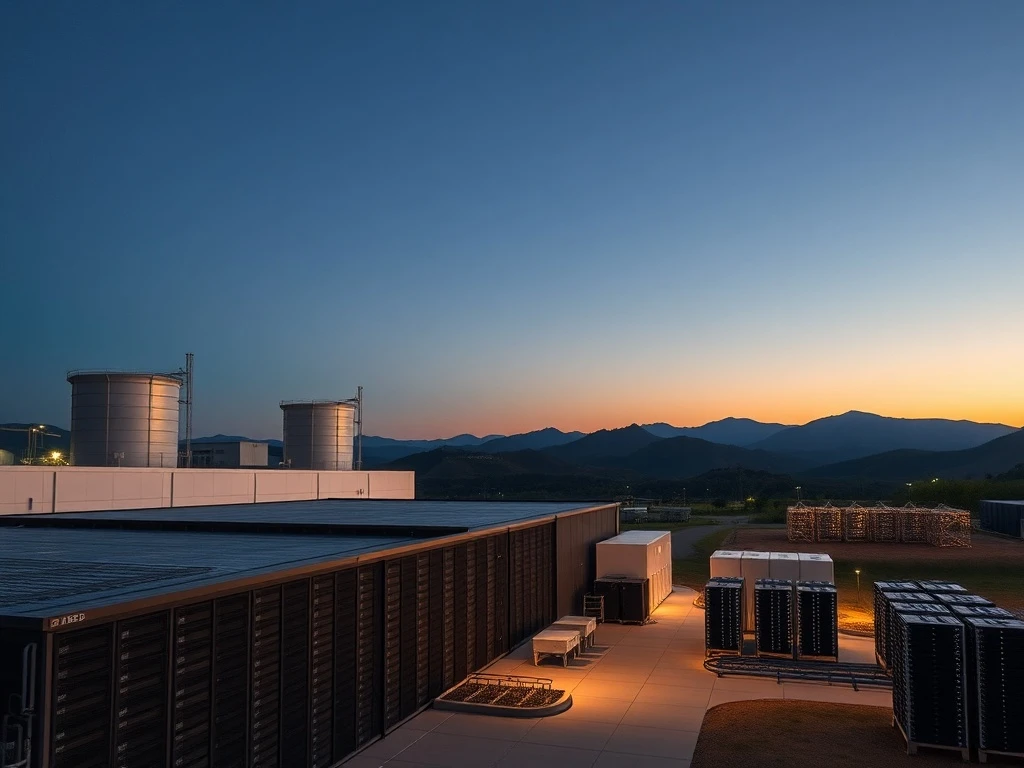
Cryptocurrency mining operations utilize specialized computer hardware to validate transactions on blockchain networks, a process that requires substantial computational power. These facilities typically consist of hundreds or thousands of application-specific integrated circuit (ASIC) miners arranged in warehouse-style configurations with sophisticated cooling systems.
Kingsport’s ordinance addresses community concerns that emerged during public hearings, particularly regarding potential noise from cooling fans and visual impacts of industrial-scale operations. The regulations mandate sound attenuation measures limiting external noise to 60 decibels during daytime hours, comparable to normal conversation levels. Additionally, outdoor equipment must receive screening through architectural features or landscaping.
Electrical infrastructure represents another critical consideration. Existing industrial zones in Kingsport already possess three-phase power distribution capable of supporting high-demand operations. However, the ordinance requires operators to coordinate with the Kingsport Power Board for any necessary upgrades, with costs borne by the developers rather than existing ratepayers.
Regional Competitive Landscape and Future Implications
Tennessee has emerged as an increasingly attractive location for digital infrastructure development. Neighboring states including Kentucky, Georgia, and North Carolina have all implemented various approaches to cryptocurrency and data center regulation. Kentucky offers tax incentives for cryptocurrency operations, while Georgia has focused on traditional data center development near Atlanta.
Kingsport’s strategic decision positions it competitively within this regional landscape. The city offers lower land costs than major metropolitan areas while providing essential infrastructure and a skilled workforce developed through regional technical colleges and Northeast State Community College’s information technology programs.
Industry analysts suggest that properly regulated cryptocurrency operations can serve as anchor tenants for broader technology ecosystems. These facilities often require local technical support, cybersecurity services, and hardware maintenance, potentially stimulating complementary business development. Furthermore, the high-density computing infrastructure can sometimes support additional applications beyond cryptocurrency mining, including artificial intelligence training and scientific computing.
Conclusion
Kingsport, Tennessee’s approval of crypto mining zoning represents a forward-looking approach to economic development that balances innovation with community protection. The carefully crafted ordinance addresses legitimate concerns about noise, visual impact, and infrastructure while creating clear regulatory pathways for responsible operators. This strategic positioning could attract significant investment to Northeast Tennessee, potentially creating new employment opportunities in the growing digital infrastructure sector. As municipalities nationwide grapple with emerging technologies, Kingsport’s regulatory framework offers a potential model for communities seeking to participate in the digital economy while maintaining local quality of life standards.
FAQs
Q1: What exactly did the Kingsport City Council approve regarding cryptocurrency mining?
The Kingsport City Council approved a zoning ordinance amendment that creates specific regulations and designated zones where cryptocurrency mining operations and data centers can legally operate within city limits. The measure requires one additional procedural vote before final implementation.
Q2: Why is Kingsport specifically attractive for cryptocurrency mining operations?
Kingsport offers several advantages including reliable electricity from the Tennessee Valley Authority, available industrial land, proximity to major fiber optic routes, and a strategic location along Interstate 81. The TVA’s electricity mix also has relatively low carbon intensity compared to fossil fuel-dependent grids.
Q3: What community protections does the new zoning ordinance include?
The ordinance includes noise limitations (60 decibels maximum during daytime), visual screening requirements for outdoor equipment, security protocols, electrical infrastructure standards, and emergency response coordination requirements with local authorities.
Q4: How does cryptocurrency mining affect local employment and economy?
Properly regulated operations can generate direct employment in facility management and technical roles, plus indirect jobs in maintenance, security, and support services. Economic development officials project 50-75 direct jobs within three years of implementation.
Q5: What happens next in the approval process?
The ordinance requires one additional procedural vote, anticipated in December 2024. Following final approval, the zoning amendments become effective, and operators can begin applying for permits through the Kingsport Planning Department following established municipal processes.